
At a glance
- 1What it is: shoulder blades that sit or move differently from usual. This is often seen as sticking out or moving unevenly.
- 2How physiotherapy helps: targeted strengthening and posture habits aim to improve control.
What is shoulder blade weakness?
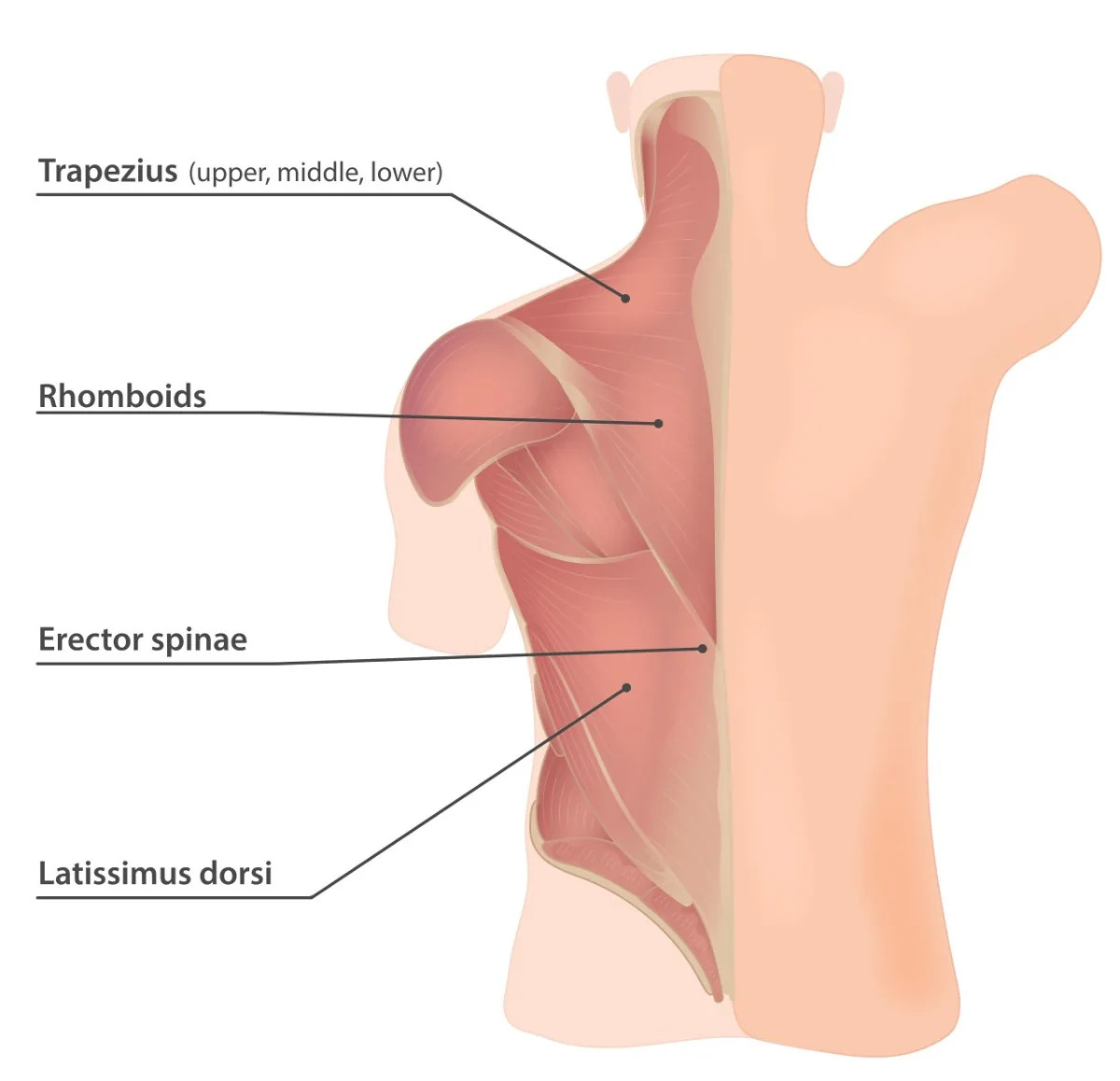
Your shoulder blade (scapula) is a flat, triangle-shaped bone on your upper back. It glides over your ribcage every time you move your arm. It also forms the base your arm moves from.
Muscles in your upper back, between your shoulder blades and around the side of your ribs hold the blade close to your body. They also tilt and turn it, so your arm can reach, lift and push smoothly.
Sometimes these muscles are weak, tight, tired or not working well together. The shoulder blade may then stick out at the edge, rise too early as you lift your arm, or move differently on each side. Physiotherapists call this scapular dyskinesis.
Many people call it weak shoulder blades, but weakness is only one piece. Muscle timing and pain can also play a part.
When the base does not move well, the muscles around your shoulder and neck may work harder. Many people with this pattern notice:
- An ache around or between the shoulder blades
- Shoulder discomfort when lifting the arm, especially overhead
- Neck tightness after desk work
- One shoulder blade looking more prominent than the other
- The shoulder tiring quickly during gym sessions or sport
These can have other causes too, and some shoulder blades naturally look a little more prominent than others. An assessment by a physiotherapist can help you understand what is happening in your shoulder.
Common causes
Often more than one thing plays a part:
- Long desk hours: slouching, long phone use and a badly placed screen can round the shoulders forward.
- Gym training: lifting more than your shoulder can tolerate, rushing technique or an unbalanced programme can overload the shoulder blade muscles.
- Overhead and throwing sports: repeated arm movements in cricket, badminton or swimming can tire these muscles.
- Less activity: little regular exercise, or a long break, can leave the supporting muscles weaker.
- Tight chest muscles: these can pull the shoulder blade forward.
- A stiff upper back: this can limit how freely the shoulder blade glides over the ribcage.
- A past injury: after a sprain or fall, some people keep moving in a guarded way. Pain itself can also change how the shoulder blade moves.
How physiotherapy at Mobiphysio can help
Your one-on-one plan is built around your assessment, your work and your goals. We aim to help your shoulder blade move with better control, which may ease strain on your shoulder and neck.
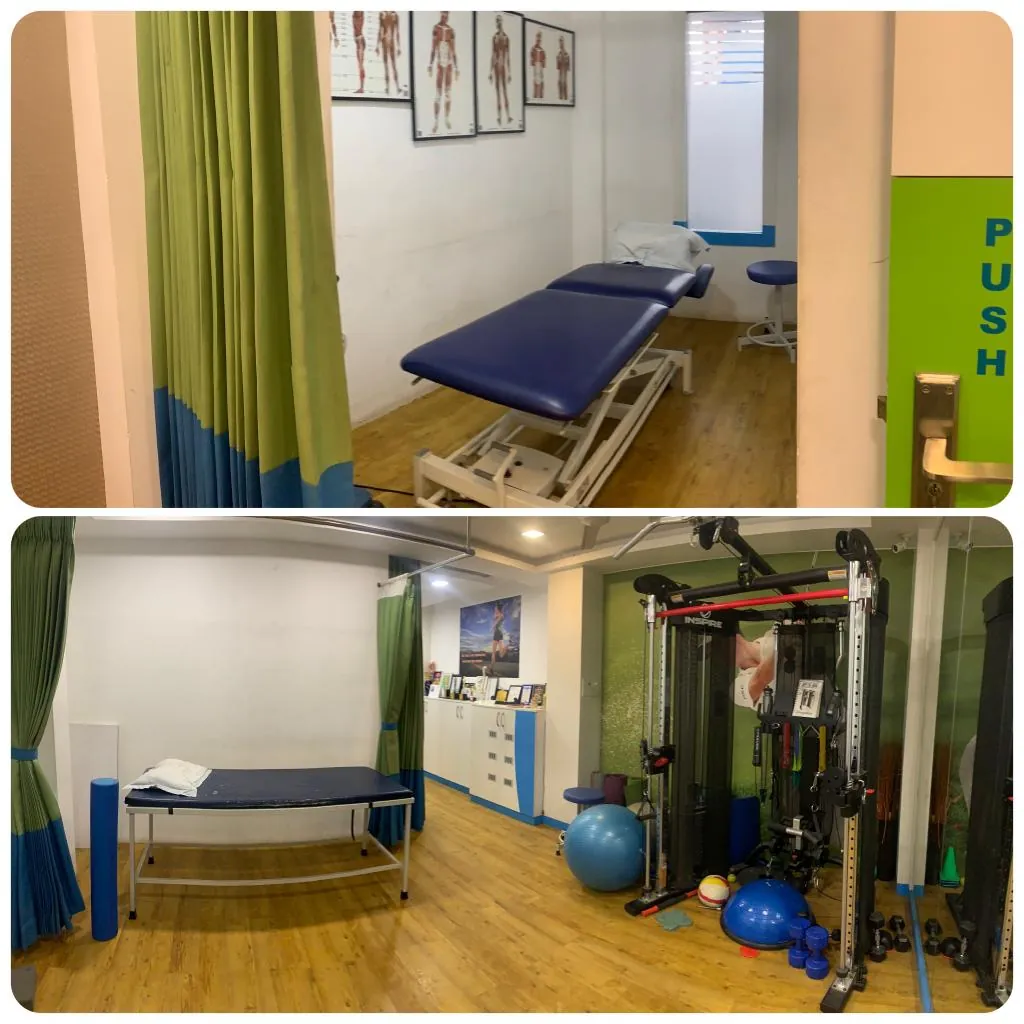
Assessment first. We check how far and how freely your arm moves, your strength, your posture and how steady the joint is. We also watch how your shoulder blades move as you lift and lower your arms.
Step-by-step exercise. We aim to improve mobility first, then stability, then strength. Exercises may include movements lying face down, with a band or with light weights, chosen to suit you. Please do these only with guidance, as the right exercises and amount differ from person to person.
Hands-on care. Joint mobilisation uses gentle, small glides and rotations of the joint. It aims to improve movement and ease pain. Where they suit you, our physiotherapists also use McKenzie, Mulligan and Stecco methods.
Posture and desk habits. We look at how you sit, stand and move. We review your desk setup and suggest changes that suit your job.
Training and sport. If you lift weights or play sport, we guide your load, technique, rest and recovery to help avoid overloading your shoulder.
Other options for pain. Depending on your pain, we may also use electrotherapy (mild electrical currents), ultrasound therapy or massage.
What to expect at your visits
Your first visit takes 45 to 60 minutes. Follow-up visits take 30 to 45 minutes. At your first visit:
- We ask about your pain, past health, work, and any gym training or sport.
- We examine your shoulder, shoulder blades and posture to find the likely cause.
- We explain your treatment plan in simple words. We listen, and you decide.
- You learn a few simple home exercises and daily habits to start with.
Follow-up visits check how you are doing and adjust your plan. Our team speaks Tamil and English.
Things you can try at home
These are gentle, general ideas, not a personal plan. Move slowly and stay within a comfortable range.
If you have had a recent shoulder injury or an operation, check with your physiotherapist before trying these. A recent injury includes a shoulder that has popped out. After an operation, follow your surgeon's instructions alongside physiotherapy.
- Shoulder blade squeezes.
Sit or stand tall. Gently draw your shoulder blades back and slightly down, keeping your shoulders away from your ears. Hold for a few seconds, then relax. Repeat a few times.
- Wall slides.
Stand facing a wall with your forearms resting on it. Slowly slide your arms up as far as is comfortable, then back down. Keep your neck relaxed and the movement smooth.
- Gentle band rows.
Loop a light exercise band around a sturdy anchor at chest height. Check the band is not worn or torn, and use an anchor that cannot slip or open. Hold the ends and pull your elbows back as you gently squeeze your shoulder blades together. Return slowly and keep the effort easy, not forceful.
- Regular desk breaks.
Every so often, stand up, roll your shoulders gently and walk a little. Sit in a chair with good back support and keep your screen at eye level.
Stop and get advice if pain gets worse. Your physiotherapist can check your technique.
Common questions
Can a shoulder blade that sticks out improve with exercise?
Many people find that targeted strengthening and better posture habits help their shoulder blade move with more control. Results differ from person to person. An assessment helps us choose the right exercises for you.
Is my desk job to blame?
Long hours of sitting, slouching and a badly placed screen can play a part. Weak or tight muscles, a stiff upper back or training overload can add to it. We look at how you sit, stand and move to find what applies to you.
Should I stop going to the gym?
Not always. We can help you adjust load, technique and exercise choice to help your shoulder cope better. Stop any exercise that makes your pain worse until you get advice.
Will I need to do exercises at home?
Yes. Home exercises and daily habits are an important part of your plan. We start you with a few simple ones and adjust them at your follow-up visits.
Do I need a referral to visit Mobiphysio?
No, you do not need a referral. Please bring any reports, scans or prescriptions you have.
Can I ask for a female physiotherapist?
Yes. You can ask for a female physiotherapist, or a particular physiotherapist, at both branches. Just mention it when you book.
Book an assessment
 Mobiphysio physiotherapists · RS Puram and Goldwins
To book at either branch, message us on WhatsApp or call +91 73385 65909.
- RS Puram: No.28, Captain Palaniswamy Layout, opposite the municipal park, RS Puram, Coimbatore 641 002. Map
- Goldwins, Avinashi Road: 11/23, Avinashi Road, opposite Sri Sai Dental Clinic, Karuparampalayam Pirivu, Coimbatore 641 014. Map
Opening hours: RS Puram, Monday to Saturday, 10 AM to 8 PM. Goldwins, Monday to Saturday, 8 AM to 1 PM and 4 PM to 8 PM. Both are closed on Sundays and major festival days such as Pongal and Diwali.
Our team of physiotherapists has 25+ years of experience and has treated 3000+ patients.
Have questions before you book? Message us on WhatsApp or call; we will answer your questions.