
At a glance
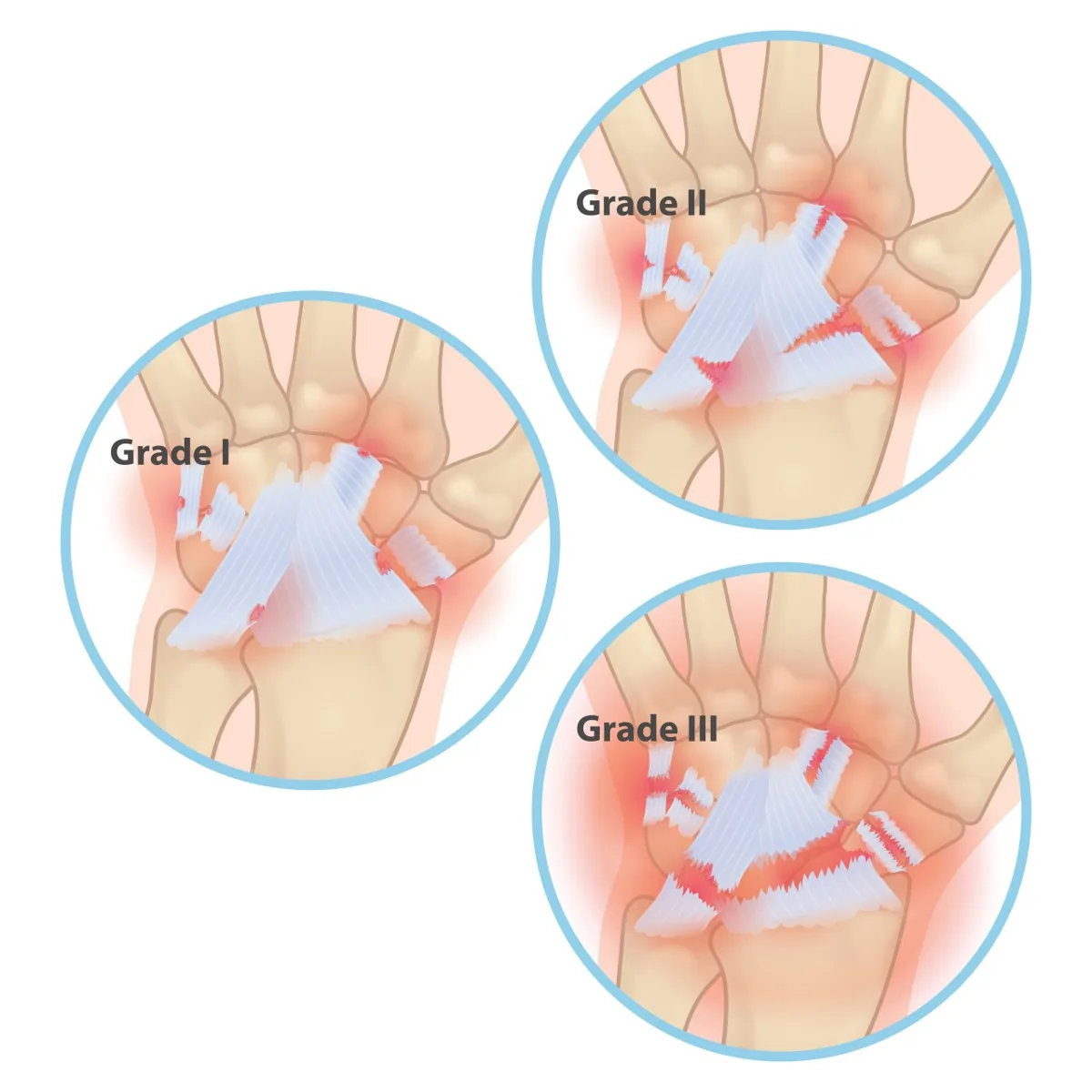
- 1A wrist sprain means a wrist ligament is overstretched or torn.
- 2Physiotherapy aims to ease pain, restore movement and rebuild grip.
What is a wrist sprain?
Your wrist is where the ends of the two forearm bones meet eight small bones at the base of the hand. Strong bands of tissue called ligaments hold these bones together. They keep the wrist steady as it bends and moves, and while you grip. A sprain happens when one or more of these ligaments is stretched too far or torn.
Sprains can be mild or more serious. In a mild sprain, the ligament is overstretched. A more serious sprain can involve a partial or full tear. People often notice pain, swelling, tenderness, bruising, stiffness or a weaker grip. Movements such as turning a key, pushing up from a chair or holding a bat may hurt.
Wrist pain after a fall or a twist can come from different structures, not only ligaments. That is why a careful assessment by a physiotherapist matters before treatment starts. Your physiotherapist will look at how the injury happened and how your wrist moves and works today.
Common causes
Wrist sprains are common in sport and active life. They often happen in a split second, when the hand takes a sudden load or twist.
- Landing on an outstretched hand: diving for a catch in cricket or slipping on a court can force the wrist to bend back sharply.
- Twisting during play: a sudden turn of the wrist in badminton, or a mistimed shot, can overstretch the ligaments.
- Blocking, setting and diving in volleyball: a hard ball can push the wrist back, and diving for the ball can mean landing on your hand.
- Gym training: loading the wrist while it is bent far back can strain the ligaments. Push-ups, bench press and front squats are examples. So can losing control of a bar or dumbbell.
Other things may also play a part:
- tired muscles late in a long match
- skipping a warm-up
- weak forearm muscles
- returning too soon after an earlier wrist injury
How physiotherapy at Mobiphysio can help
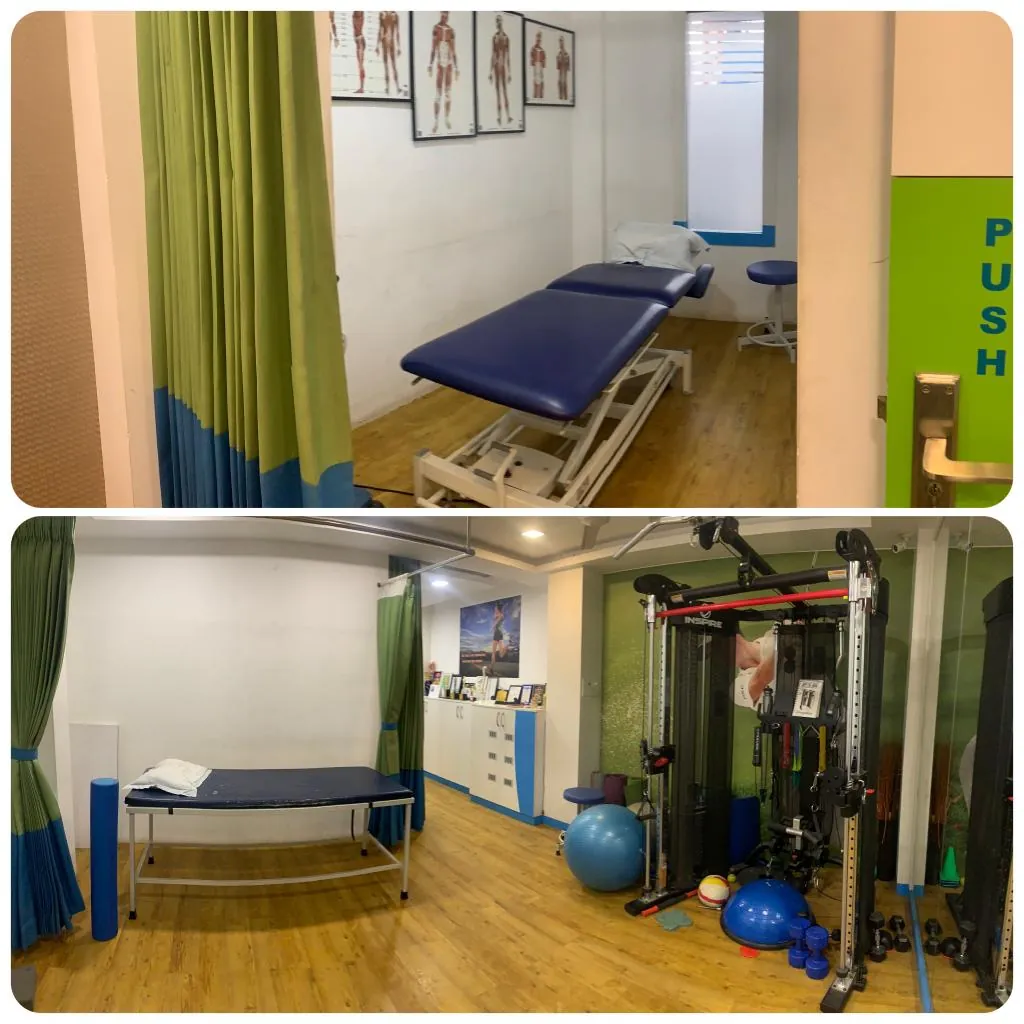
At Mobiphysio, treatment is one-on-one and always starts with an assessment. Our team of physiotherapists, led by Dr. T.R. Vandana, PT, plans care around your injury, your sport and your daily needs. We work in stages and move on only when your wrist is ready.
Settling pain and swelling
Early on, the aim is to calm the injured area. We use cryotherapy only for recent (acute) sports injuries. It applies controlled cold without needles or cuts to help ease pain and swelling. Your physiotherapist will first check whether it suits you.
Your plan may also include advice on R.I.C.E. This means a short rest from activities that hurt, ice, compression and elevation. Manual lymphatic drainage may help swelling settle. It is a light hands-on technique that aims to help fluid drain. A support may also help where suitable.
Both branches also offer electrotherapy (treatment using mild electrical currents) and ultrasound therapy (treatment using sound waves). Your physiotherapist will tell you if they suit your plan.
Restoring movement
When your wrist is ready, guided movement aims to bring back three things:
- bending and straightening at your wrist
- side-to-side movement at your wrist
- turning of your forearm
Our physiotherapists use hands-on manual therapy. Where they suit you, this may include these methods:
- Mulligan: your physiotherapist gently guides the joint while you move it.
- Stecco: hands-on work on the fascia, the layer of tissue around your muscles.
Exercises stay within comfort and are progressed gradually.
Rebuilding grip and strength
A weak grip is common after a wrist injury. Your physiotherapist may design exercises to build grip and forearm strength, and shoulder strength if needed. These exercises also aim to improve control of the wrist. Load is added step by step, from light squeezes to heavier holds. The exercises aim to support the joint and lower the risk of hurting it again. No one can promise it will never happen.
Getting back to your sport
Later stages can bring in movements that match your game. Examples are catching, throwing, a badminton smash, a volleyball set or holding a bar. Your physiotherapist will guide each step and help you judge when to add more. We listen, and you decide the pace with us.
What to expect at your visits
Your first visit takes about 45 to 60 minutes. Follow-up visits take about 30 to 45 minutes. Each visit is one-on-one with your physiotherapist.
- You tell us how the injury happened, where it hurts and how it affects your sport, work and day.
- Your physiotherapist examines your wrist, checking swelling, movement, strength and grip. They may also check your forearm, elbow and shoulder.
- We explain what we find, the plan step by step, and what each session involves.
- You may begin gentle treatment, with simple advice to follow at home.
Please bring any reports, scans or prescriptions you have. Our staff speak Tamil and English.
Things you can try at home
These simple ideas are gentle and safe for most people. Go slowly, and stop and get advice if pain gets worse.
These ideas do not replace an assessment. If your wrist hurt after a fall or a hard twist, book an assessment with a physiotherapist so your plan suits your injury.
- Wrapped cold pack.
Early on, a cold pack or ice wrapped in a thin cloth may ease pain and swelling. Use it for short spells. Never put ice straight on your skin.
- Gentle wrist circles.
Slowly circle your wrist a few times in each direction. Keep the movement small and within comfort. This may help ease stiffness.
- Break from heavy gripping.
Rest your wrist from tasks like lifting weights, holding a bat tightly or carrying heavy shopping bags. Use your other hand or ask for help where you can.
- Rest it raised.
When sitting, rest your hand and forearm on a cushion so the wrist is a little raised. This may help swelling settle.
Your physiotherapist can give you home exercises that suit your wrist at each stage.
Common questions
Should I use ice on a sprained wrist?
Many people find a cold pack wrapped in a thin cloth eases pain and swelling early on. Use it for short spells and never put ice straight on your skin. Stop and get advice if pain gets worse.
Should I keep my wrist completely still?
Not always. Gentle movement within comfort may help stop the wrist getting stiff, but take a break from heavy gripping. Your physiotherapist will guide you on how much to move.
Should I massage a sprained wrist?
It is best not to rub or press hard on a freshly hurt, swollen wrist, as this may make it more sore. After an assessment, your physiotherapist can use gentle hands-on techniques that suit your injury.
Can I keep playing cricket or badminton on it?
Playing through pain may make the injury worse. It is best to rest from your sport until your wrist has been assessed. Your physiotherapist can then plan a step-by-step return that suits your game.
Do I need a doctor's referral?
No, you do not need a referral to visit Mobiphysio. You can simply WhatsApp or call to book.
Can I ask for a female physiotherapist?
Yes. When you book, you can ask for a particular physiotherapist or a female physiotherapist at both branches.
Book an assessment
 Mobiphysio physiotherapists · RS Puram and Goldwins
Is your wrist sore after sport? WhatsApp (wa.me/917338565909) or call Mobiphysio on +91 73385 65909 to book an assessment. You can visit either of our two branches in Coimbatore:
- RS Puram: No.28, Captain Palaniswamy Layout, opposite the municipal park, RS Puram, Coimbatore 641 002. Open Monday to Saturday, 10 AM to 8 PM. Google Maps
- Goldwins, Avinashi Road: 11/23, Avinashi Road, opposite Sri Sai Dental Clinic, Karuparampalayam Pirivu, Coimbatore 641 014. Open Monday to Saturday, 8 AM to 1 PM and 4 PM to 8 PM. Google Maps
Both branches are closed on Sundays and major festival days such as Pongal and Diwali. Both have ample car parking.
Dr. T.R. Vandana, PT, and her team bring 25+ years of experience in physiotherapy and have treated 3000+ patients. Every plan starts with listening to you. Have a question before you visit? Message us on WhatsApp or call; we will answer your questions.