
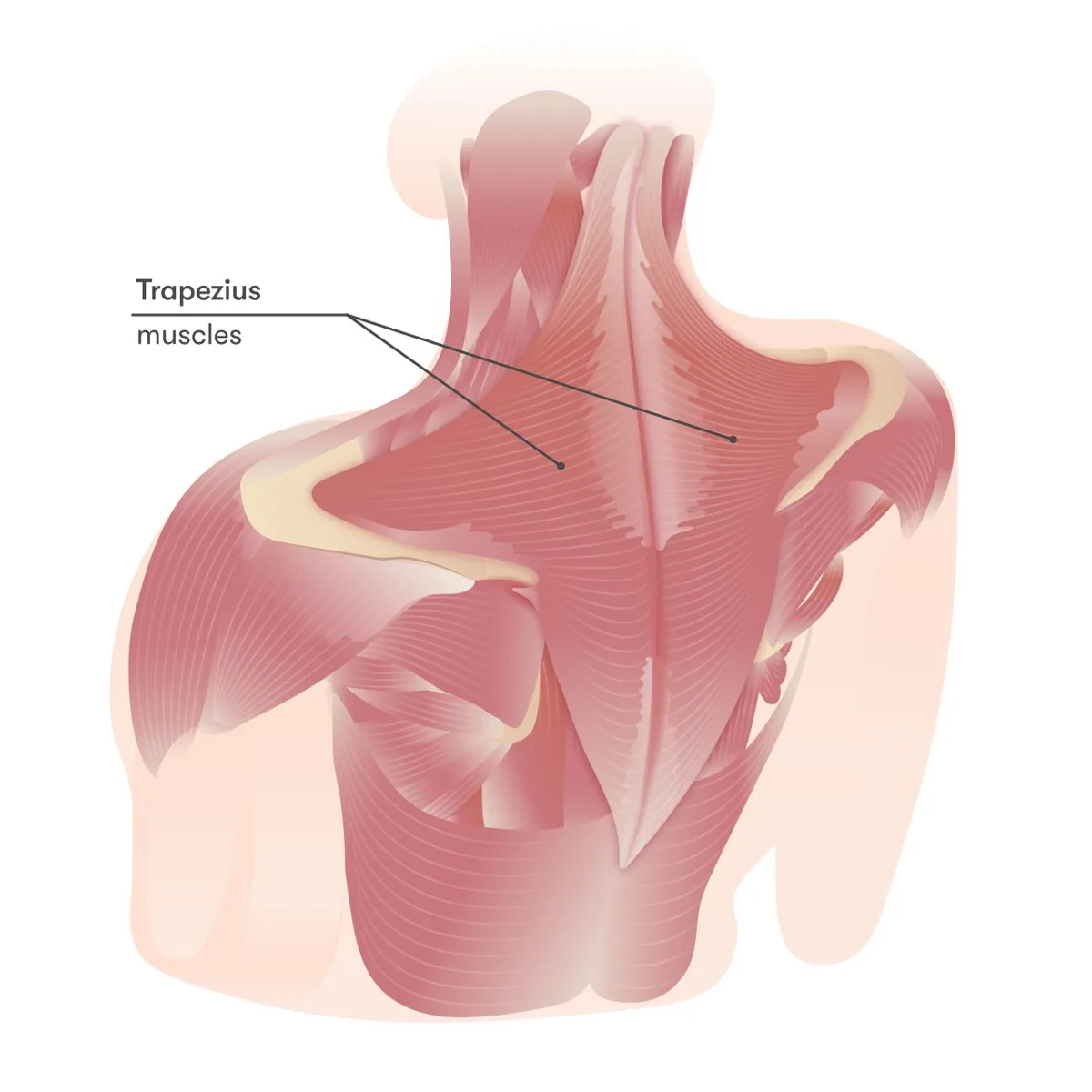
At a glance
- 1Myofascial pain: muscle pain linked to tender knots, which can also cause aching nearby.
- 2Physiotherapy aims to ease tight muscles with hands-on care and exercise.
What is myofascial pain syndrome?
Myofascial pain syndrome is a long name for ongoing muscle pain linked to trigger points. "Myo" means muscle. "Fascia" is the thin layer of tissue that wraps around and through your muscles.
A trigger point is a small, tight and tender spot in a muscle. Many people call it a knot. You may feel it as a firm lump or a tight band under the skin. Pressing on it can be sore.
Trigger points can also send pain into nearby areas. This is called referred pain. For example, a knot at the top of the shoulder may cause an ache that spreads up the neck.
Common spots are the neck, the tops of the shoulders, around the shoulder blades and the lower back. The muscle may also feel stiff.
Not every sore spot is a trigger point, and other problems can feel similar. That is why an assessment matters. Your physiotherapist checks where the pain is coming from before suggesting a plan.
Common causes
Trigger points often build up slowly. Things that may play a part include:
- Long hours in one position, such as sitting at a desk, driving or looking down at a phone
- Repeating the same movement at work or at home, such as lifting, carrying or reaching overhead
- Muscle or joint strain, including sports injuries
- Holding your shoulders tense, or staying in one posture for a long time
- Stress, which can make you tense your neck and shoulders without noticing
- Not moving much during the day, or going back to exercise too quickly
- Sleeping in an awkward position
Often more than one of these is involved. At your assessment, we look at your daily routine as well as the sore spot.
How physiotherapy at Mobiphysio can help
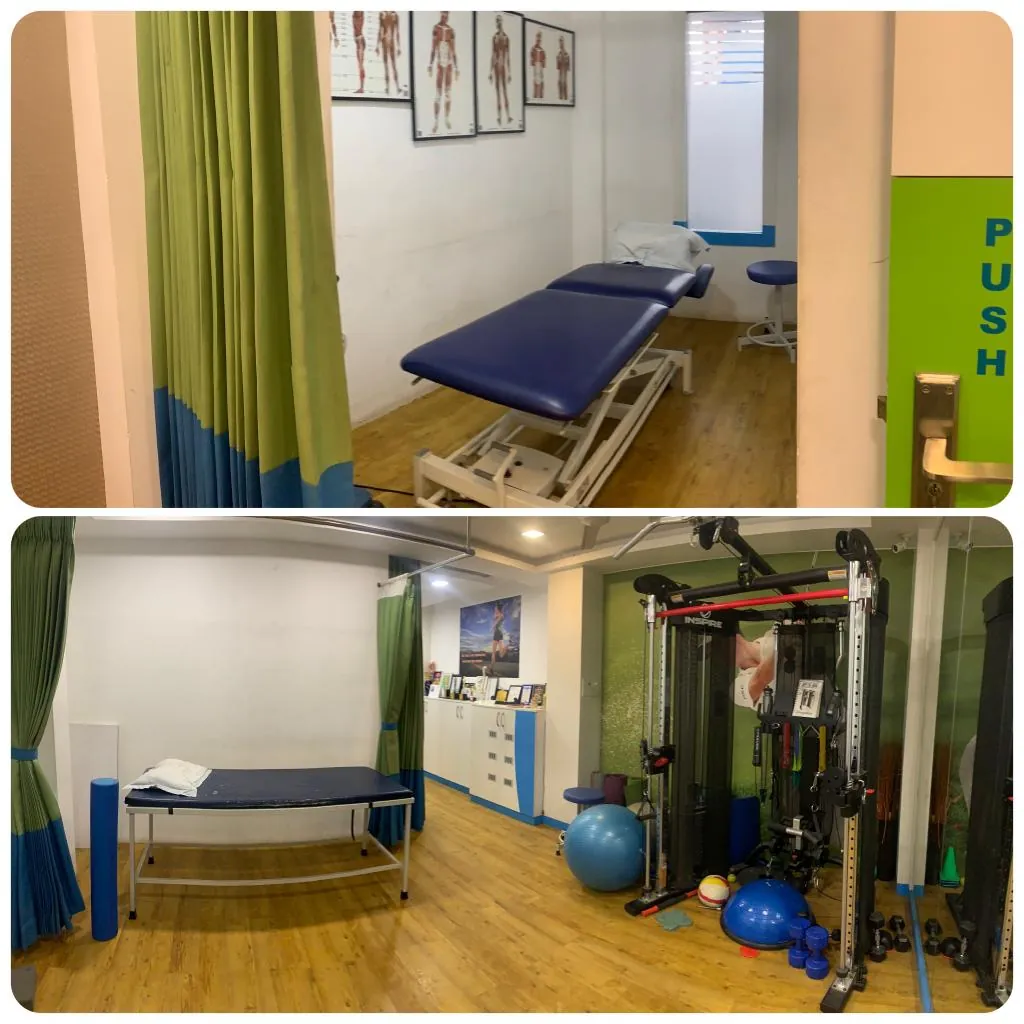
At Mobiphysio, treatment is one-on-one and starts with a thorough assessment. Our founder and senior physiotherapist is Dr. T.R. Vandana, PT. She and her team look for what is causing your pain, not just where it hurts. Your plan may include some of these options:
- Manual therapy.These are hands-on techniques that aim to ease pain and improve movement. Examples include steady pressure on a tight spot or careful stretching of the muscle.
- Stecco Fascial Manipulation.This is a hands-on method that works on the fascia. It uses firm, focused pressure at specific points. Dr. Vandana has trained in Stecco Fascial Manipulation levels 1 to 4 in Padua, Italy. Tell your physiotherapist if the pressure feels too strong.
- Dry needling, where suitable.Very thin needles are placed into a trigger point, with the aim of helping the tight muscle relax. No medicine is used. Dr. T.R. Vandana, PT is trained in dry needling; ask us whether it may suit you. It is explained to you first so you can decide. Tell your physiotherapist if you are pregnant, take blood-thinning medicine or feel uneasy about needles.
- Ultrasound therapy and electrotherapy.Both branches offer these. They may be used alongside hands-on care where suitable.
- Therapeutic exercises.These are stretches and exercises that aim to build strength, flexibility and mobility, so your muscles can cope better with daily tasks.
We explain each option and why we suggest it. You decide what feels right for you. If you are pregnant or have recently had a baby, please get your doctor's okay before treatment. Results differ from person to person.
Selected Google reviews
> "Since my lower back injury, I've never been able to relax my back, glutes, and legs. … From my very first visit, I immediately felt Dr. Vandana's professionalism and experience. The care I received was excellent."
>
> — Marco R., Google review
Individual experiences vary. Review text as shown on Google on 12 Nov 2026. Read more reviews on Google: RS Puram · Goldwins
What to expect at your visits
Your first visit takes 45 to 60 minutes. Follow-up visits take 30 to 45 minutes. At your first visit:
- We listen to your story: where it hurts, when it started and what makes it better or worse.
- Your physiotherapist checks how you move and tests key muscles with gentle pressure.
- We explain what may be causing the pain and suggest a plan.
- You may begin treatment, along with simple exercises to try at home.
Treatment is one-on-one, and staff speak Tamil and English. You can ask for a particular physiotherapist at both branches.
You do not need a doctor's referral. Please bring any reports, scans or prescriptions you have. If stairs are hard for you, tell us when you book.
Muscles may feel a little sore after hands-on treatment or dry needling. Let your physiotherapist know how you felt, so your plan can be adjusted.
Things you can try at home
These are gentle, general ideas. Go slowly and stay within comfort.
- Gentle ball massage.
Place a ball, such as a tennis ball, between a wall and your upper back or shoulder. Lean in gently and roll slowly over the tight spot for a minute or so. Keep the pressure comfortable, stay off the bones of your spine, and avoid your neck. Skip any bruised or broken skin.
- Comfortable warmth.
A warm shower or a warm towel on the tight area may help the muscle relax. Keep it comfortably warm, never hot. Do not fall asleep with anything warm on your skin. Skip warmth on a fresh, swollen injury or on skin where feeling is reduced.
- Slow, easy stretches.
Gently stretch the tight area, for example by slowly tilting your ear towards your shoulder. Hold for a few slow breaths. Stretch only to a mild pull, never into sharp pain.
- Regular movement breaks.
If you sit at a desk or look at your phone for long hours, get up every so often. Walk a little and roll your shoulders. A gentle reminder on your phone can help you remember.
Stop and get advice if pain gets worse, or if anything does not feel right. If you are pregnant or have recently had a baby, please get your doctor's okay first.
Common questions
Are muscle knots and trigger points the same thing?
Many people use the two words for the same thing: a small, tight, tender spot in a muscle. Other problems can feel similar, so a physiotherapist can assess what is behind your pain.
Does dry needling hurt?
You may feel a brief ache or a small twitch in the muscle. Some people feel a little sore afterwards. Dry needling is used only where suitable, and it is explained to you first so you can decide.
Can I use a massage ball at home?
Yes, many people find gentle ball massage against a wall helpful. Keep the pressure comfortable, and avoid your neck and the bones of your spine. Stop and get advice if pain gets worse.
Why do my neck and shoulder knots keep coming back?
Long hours at a desk or phone, repeated tasks and stress can keep straining the same muscles. Physiotherapy aims to look at these habits as well as the sore spot, with exercises that suit you. Results differ from person to person.
Can I ask for a female physiotherapist?
Yes. You can ask for a female physiotherapist, or a particular physiotherapist, at both branches. Just mention it when you WhatsApp or call to book.
Book an assessment
 Mobiphysio physiotherapists · RS Puram and Goldwins
Are tight, knotted muscles getting in the way of work, sleep or daily life? We are here to help. WhatsApp or call +91 73385 65909 to book an assessment at either branch:
- RS Puram: No.28, Captain Palaniswamy Layout, opposite the municipal park, RS Puram, Coimbatore 641 002 (Google Maps). Open Monday to Saturday, 10 AM to 8 PM.
- Goldwins, Avinashi Road: 11/23, Avinashi Road, opposite Sri Sai Dental Clinic, Karuparampalayam Pirivu, Coimbatore 641 014 (Google Maps). Open Monday to Saturday, 8 AM to 1 PM and 4 PM to 8 PM.
Both branches are closed on Sundays and major festival days (Pongal, Diwali). Both have ample car parking.
With 25+ years of experience and 3000+ patients treated, our team aims to give you one-on-one care built around your needs. Have a question first? Message us on WhatsApp or call; we will answer your questions.