
At a glance
- 1A quadriceps strain is when fibres in a front thigh muscle are overstretched or torn.
- 2Physiotherapy aims to settle pain, restore movement and rebuild strength.
What is a quadriceps strain?
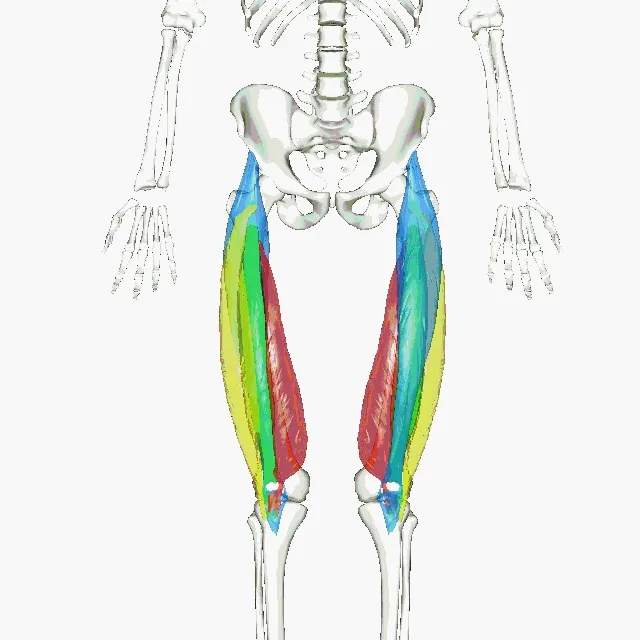
Your quadriceps, often called the "quads", are a group of four muscles at the front of your thigh. They straighten your knee, and one of them also helps lift your thigh at the hip. You use them every time you kick a ball, push off into a sprint, jump or land.
A strain happens when one of these muscles is stretched too far or made to work too hard, too fast. Some of the muscle fibres can be overstretched or torn. People often describe a sudden pull or sharp pain at the front of the thigh. Tenderness, swelling or bruising may follow. Kicking, running or climbing stairs can become hard.
Quadriceps or hamstring?
Your hamstrings sit at the back of the thigh. They bend the knee and help move the thigh backwards at the hip. A hamstring strain usually causes pain at the back of the thigh, often during fast running. A quadriceps strain causes pain at the front. It is often linked with kicking, sprint starts and jumping.
Pain at the front of the thigh can also come from other causes. Examples include a hard knock to the thigh (sometimes called a "dead leg") or a problem around the hip, knee or lower back. The right plan depends on what is going on, so we suggest an assessment with a physiotherapist rather than guessing.
Common causes
A quadriceps strain usually happens during a sudden, powerful movement. Common causes include:
- Kicking: a long, hard or mistimed kick in football.
- Sprinting: fast first steps from a standing start, or a sudden burst of speed.
- Jumping and landing: a powerful take-off or an awkward landing.
- Kabaddi moves: lunging, kicking out and quick escapes during a raid.
- Cricket: sudden sprints between the wickets or while chasing a ball in the field.
- Skipping the warm-up: starting hard with cold, stiff muscles.
- Tired muscles: pushing on late in a match or training session.
- Too much, too soon: training harder or more often than your body is used to, such as after a break.
- Past injury or weakness: an earlier thigh strain, or tight or weak thigh muscles.
Often, more than one of these plays a part.
How physiotherapy at Mobiphysio can help
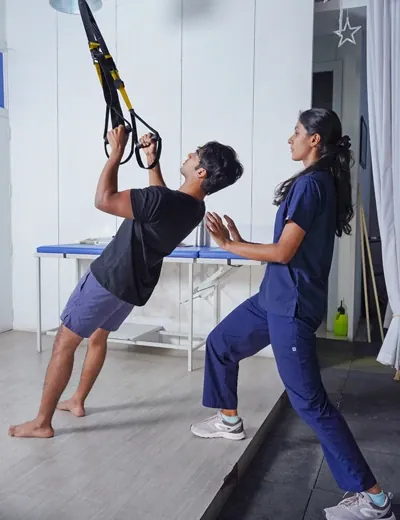
At Mobiphysio, treatment is one-on-one and starts with a thorough assessment. Your physiotherapist then plans care around your injury, your sport and your goals. Every plan is different, but it usually moves through these stages.
Settle pain and swelling. For a recent sports injury, your physiotherapist may use cryotherapy (controlled cold). We use it only for recent (acute) sports injuries. Electrotherapy or ultrasound therapy may also be used if your physiotherapist feels they suit you. Compression garments, which we can recommend and provide, give steady pressure to help with swelling.
Restore movement. Gentle, guided movement aims to help your knee and hip move comfortably again. When the time is right, hands-on manual therapy, using methods such as Mulligan and Stecco, may be used to ease stiffness and tension around the thigh.
Rebuild strength. Your physiotherapist designs exercises to strengthen the front thigh muscles. They also work the hip and trunk muscles that support them. The exercises start easy and build up as you are ready. This work aims to improve stability and lower the risk of re-injury, though no one can promise it will never happen.
Return to sport, step by step. When you are ready, the exercises move closer to the demands of your sport. The aim is to build up gradually through jogging, faster running, jumping and then kicking or sprinting at full effort. We explain each step, and you decide with us when to move on.
What to expect at your visits
Your first visit takes 45 to 60 minutes and usually includes:
- Your story. You tell us how the injury happened, which sport you play and how it affects training and daily life.
- Assessment. Your physiotherapist gently checks how your thigh, knee and hip move, where it is tender and how the muscle works.
- Your plan. We explain what we found and the plan, step by step, and answer your questions.
- Starting treatment. You may begin gentle treatment on the first visit, with advice and exercises for home.
Follow-up visits take 30 to 45 minutes. At these visits, your physiotherapist reviews how you are getting on. They adjust treatment and exercises as you are ready.
Please bring any reports, scans or prescriptions you have. Staff speak Tamil and English. You can ask for a particular physiotherapist, or a female physiotherapist, at both branches.
Things you can try at home
These gentle ideas may help in the early days. They are general tips, not a treatment plan. Stop and get advice from a physiotherapist if pain gets worse.
- Pause kicking and sprinting.
Take a break from kicking, sprinting, jumping and hard training for now. Your physiotherapist can guide you on when and how to return.
- Gentle knee bending.
Lie on your back and slowly slide your heel towards you to bend the knee, then slide it back. Go only as far as is comfortable. Repeat slowly a few times through the day.
- Easy thigh tightening.
Sit or lie with your leg straight. Gently tighten the front thigh muscle so the back of your knee presses down. Hold for a few seconds, then relax. Keep the effort light and within comfort.
- Let comfort guide you.
Keep everyday walking and movement within comfort, and avoid anything that brings on sharp pain. Stop and get advice from a physiotherapist if pain gets worse.
Common questions
How is a pulled front thigh muscle different from a pulled hamstring?
A quadriceps strain affects the muscles at the front of the thigh. It often happens with kicking, sprint starts or jumping. A hamstring strain affects the back of the thigh. Your physiotherapist will assess which area is involved and plan care to suit it.
Can I keep playing through the pain?
Playing on a strained muscle may make it worse. We suggest a break from kicking and sprinting until a physiotherapist has assessed you and helped plan a gradual return.
Should I stretch my thigh straight away?
Strong stretching soon after a strain may irritate the muscle. Gentle knee bending within comfort is a kinder start. Your physiotherapist will guide you on when to add stretches.
Does cold help a pulled thigh muscle?
Cold may help ease pain and swelling after a recent injury. At Mobiphysio, we use controlled cold (cryotherapy) only for recent sports injuries, after checking that it suits you. Your physiotherapist can also advise you on using cold at home.
Do I need a doctor's referral?
No, you do not need a doctor's referral. Please bring any reports, scans or prescriptions you have.
Can I ask for a female physiotherapist?
Yes. You can ask for a female physiotherapist, or a particular physiotherapist, at both branches. Just mention it when you book.
Book an assessment
 Mobiphysio physiotherapists · RS Puram and Goldwins
Does the front of your thigh hurt after kicking, sprinting or jumping? A physiotherapy assessment is a good first step. WhatsApp or call us on +91 73385 65909 to book your visit. Have a question first? Message us on WhatsApp or call; we will answer your questions.
Dr. T.R. Vandana, PT, and her team of physiotherapists have 25+ years of experience and have treated 3000+ patients. You can visit either of our two branches in Coimbatore:
- RS Puram: No.28, Captain Palaniswamy Layout, opposite the municipal park, RS Puram, Coimbatore 641 002. Monday to Saturday, 10 AM to 8 PM. Google Maps
- Goldwins, Avinashi Road: 11/23, Avinashi Road, opposite Sri Sai Dental Clinic, Karuparampalayam Pirivu, Coimbatore 641 014. Monday to Saturday, 8 AM to 1 PM and 4 PM to 8 PM. Google Maps
Both branches are closed on Sundays and major festival days such as Pongal and Diwali. Both have ample car parking. Appointments come first, so please book ahead.