
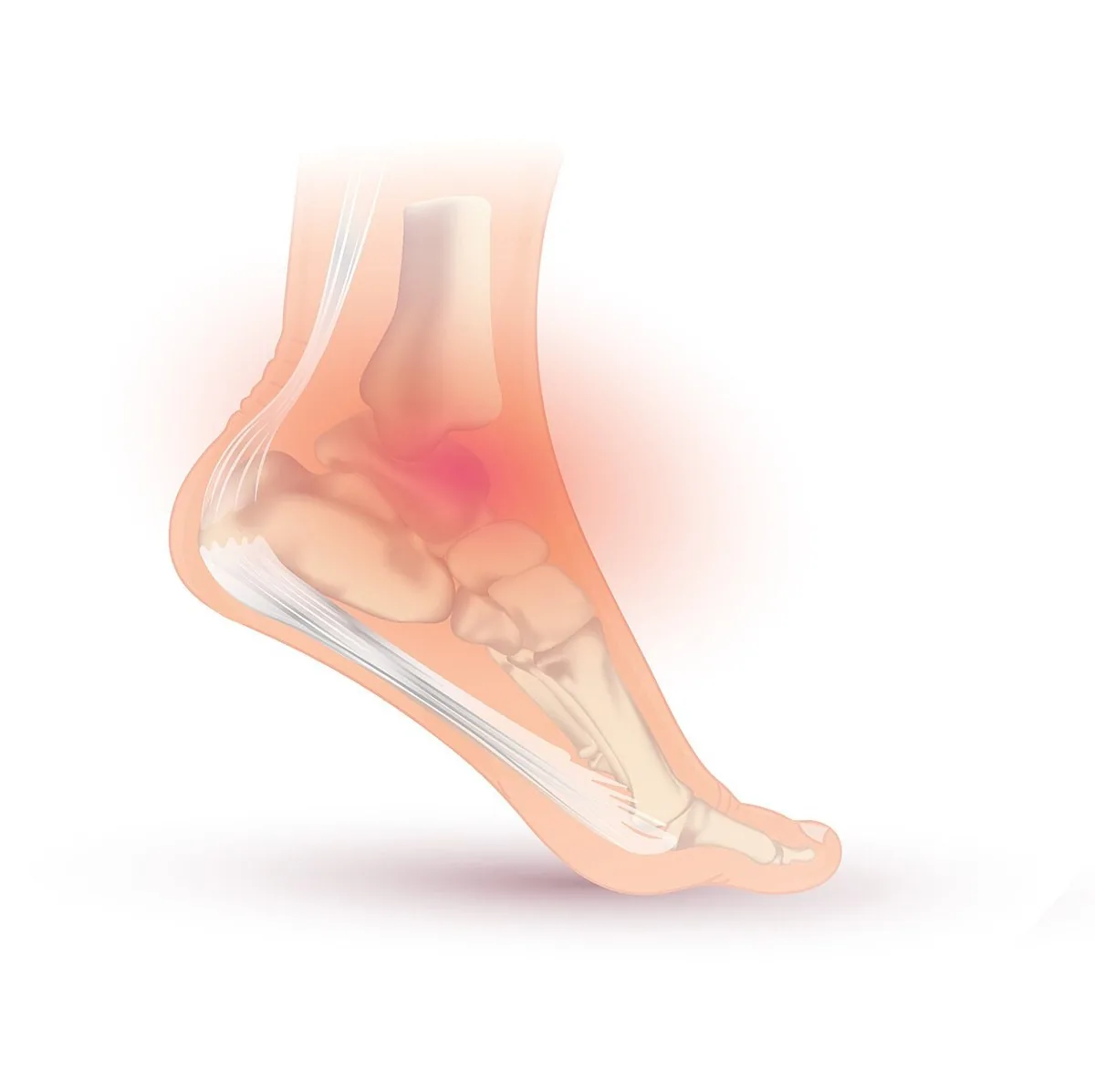
At a glance
- 1What it is: soft tissue or bone at the front of the ankle getting squeezed as the ankle bends. This can cause a pinch when you squat or lunge.
- 2How physiotherapy may help: mobilisation, calf flexibility and strengthening may ease the pinch.
What is ankle impingement?
Your ankle joint is where your lower leg bones meet your foot. When you squat, lunge or climb stairs, your shin moves forward over your foot and the front of the joint closes up. In front-of-ankle (anterior) impingement, soft tissue or bone at the front gets squeezed, or pinched, as the ankle bends. Impingement can also happen at the back of the ankle, but this guide covers the front.
People often describe a sharp pinch or a blocked sensation at the front of the ankle. It tends to come on with deep bending, such as squatting, lunging, stairs, running uphill or landing. Some people also notice that one ankle does not bend as far as the other.
Many things can cause pain at the front of the ankle, so this guide cannot tell you what is behind yours. A physiotherapist can assess your ankle and explain what they find.
Common causes
Several things may play a part. Some can crowd the front of the ankle joint, and others add to the strain:
- Gradual overuse. Sport and training that bend the ankle hard again and again can slowly irritate the tissues at the front of the joint. Examples include running, football, cricket, dance and gym squats. Over time, these tissues may thicken and take up more room.
- Old ankle sprains. An ankle that never fully regained its strength, balance and movement after a sprain may stay stiff or less steady. Some people also develop thickened or scarred tissue at the front of the joint, which can crowd it.
- Small bony bumps. After years of sport, some people develop small bony bumps at the front of the ankle. These can narrow the space when the ankle bends.
- Tight calf muscles. Tight calf muscles may add to it. Tight calves can limit how far the ankle bends. You may then reach the end of its movement sooner, and the front of the joint takes more pressure in a deep squat.
- Sudden changes. A quick jump in training, more stair or hill work, or new shoes may also play a part.
Often more than one of these is involved, so your physiotherapist looks at the whole picture.
How physiotherapy at Mobiphysio can help
At Mobiphysio, treatment is one-on-one and starts with a thorough assessment. We aim to ease the pinch, help your ankle move more freely and build strength for the things you enjoy. Your plan depends on what we find, your sport and your daily routine.
Care may include:
- Joint mobilisation.Gentle hands-on techniques that move the ankle joint may help it glide more freely, so the front is less crowded when you bend. We may use methods such as Mulligan (a hands-on method our physiotherapists use) where they suit you.
- Calf flexibility.Stretches and hands-on work for tight calf muscles aim to help your ankle bend more easily. This may include Stecco fascial techniques, a hands-on method for the soft tissues.
- Strengthening.Exercises for the calf, foot and leg aim to help your muscles absorb more of the load when you squat, run or land.
- Balance and movement training.Balance exercises can help lower the risk of future injuries. We also watch how you walk, squat and land, and help you move with less strain on the ankle.
- Ultrasound therapy.This is available at both branches. We may use it alongside hands-on care and exercise where suitable.
- Gradual return to sport.We bring back deep squats, jumping and sport in stages. You get home exercises and taping or bracing advice where it may help.
We listen to you, and you decide on your plan with us.
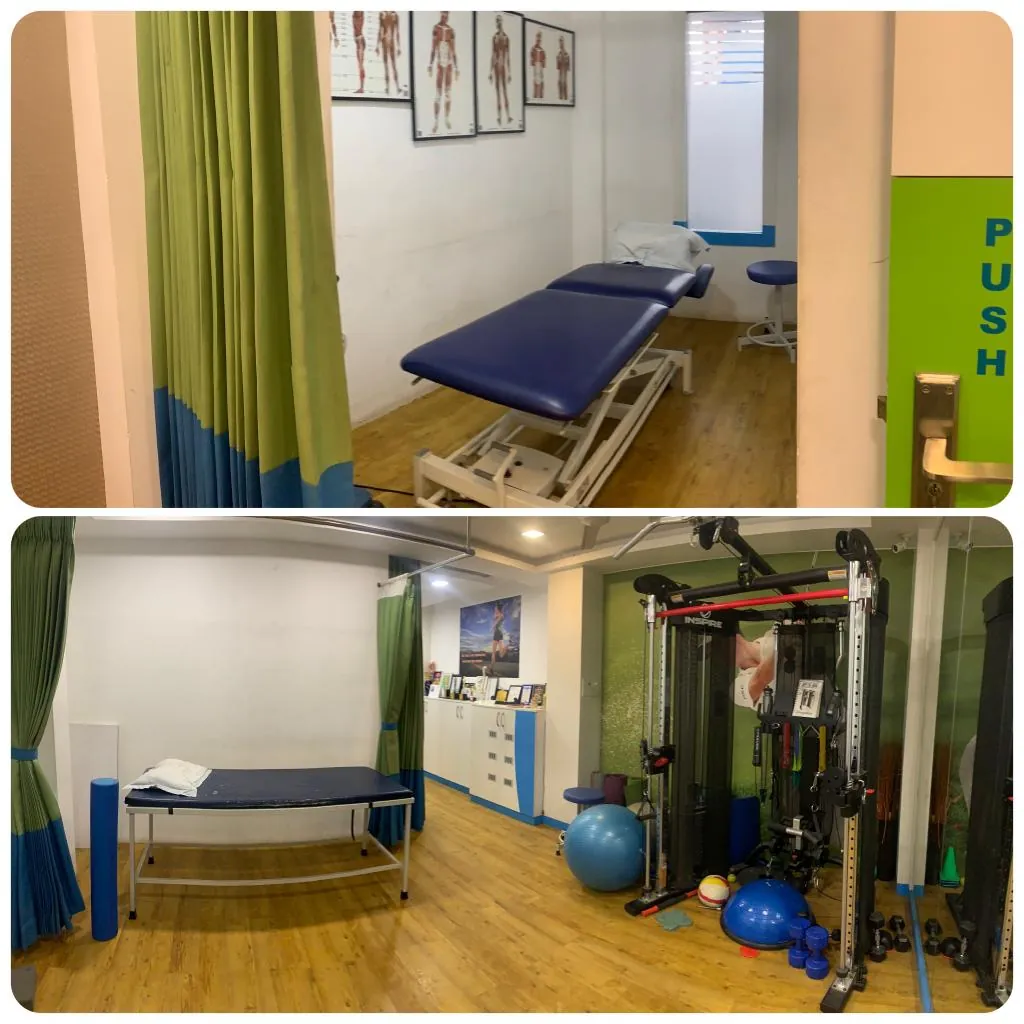
What to expect at your visits
Your first visit takes 45 to 60 minutes, and follow-up visits take 30 to 45 minutes.
- Talking it through. We listen to how the pain started, what brings it on and what it stops you doing. We also ask about old sprains and your sport.
- Checking your ankle. We check how far each ankle bends and where the pinch is. We also check your calf flexibility, strength and balance. We may watch you squat, lunge or step up.
- Your plan. We explain what we find and the plan in simple words. You learn first steps and home exercises to start right away.
- Follow-up visits. We check how your ankle is responding and adjust your exercises as needed.
Bring any reports, scans or prescriptions you have. Our staff speak Tamil and English, so you can talk to us in either language.
Things you can try at home
These gentle ideas suit most people. Move slowly and stay within comfort.
- Ease off deep squats.
For a while, cut back on deep squats, lunges, jumping and sitting low on the floor if they bring on the pinch. Where you can, sit on a chair or stool instead of squatting.
- Gentle calf stretch.
Stand facing a wall with your hands on it for support. Place one foot behind the other, with the back knee straight and the heel down. Lean forward only until you notice a mild pull in the calf, not at the front of the ankle. Hold for about 20 to 30 seconds. If the front of the ankle pinches, stop. Switch sides.
- Ankle circles and pumps.
Sit down. Slowly point your foot away and pull it back towards you, then draw slow circles in both directions. Keep the movement smooth and within a comfortable range. Stop if it pinches.
- Build back gradually.
If the pinch settles, bring squats, stairs and sport back slowly rather than all at once. Note which movements bring the pinch back, so you can tell your physiotherapist.
Stop and get advice from a physiotherapist if pain gets worse or an exercise brings on a sharp pinch.
Common questions
Why does my ankle pinch when I squat but not when I walk?
Deep squats and lunges bend the ankle much further than walking on flat ground does. That extra bend closes up the front of the joint, which may squeeze sore tissue. A physiotherapist can check what is happening in your ankle.
Can an old ankle sprain still cause trouble years later?
It can for some people. An ankle that never fully regained its strength, balance and movement may stay stiff or less steady. This can add strain at the front of the joint. An assessment can help find out whether this applies to you.
Do I have to stop playing sport?
Not always. Many people keep active by easing off the moves that bring on the pinch for a while. Your physiotherapist can help you plan what to keep doing and what to pause.
Is it okay to keep stretching if it pinches?
Stretch only to a mild, comfortable pull, never into a pinch. If a stretch brings on the pinch or pain gets worse, stop and get advice from a physiotherapist.
Do I need a doctor's referral to visit Mobiphysio?
No, you do not need a doctor's referral. Please bring any reports, scans or prescriptions you have.
Can I ask for a female physiotherapist?
Yes. You can ask for a particular physiotherapist, or a female physiotherapist, at both branches. Just mention it when you book.
Book an assessment
 Mobiphysio physiotherapists · RS Puram and Goldwins
Does your ankle pinch when you squat, lunge, climb stairs or land? An assessment can help you understand why and what to do next. Our team, led by Dr. T.R. Vandana, PT, has 25+ years of experience in physiotherapy and has treated 3000+ patients.
WhatsApp or call +91 73385 65909 to book at either branch:
- RS Puram: No.28, Captain Palaniswamy Layout, opposite the municipal park, RS Puram, Coimbatore 641 002. Monday to Saturday, 10 AM to 8 PM. Map
- Goldwins, Avinashi Road: 11/23, Avinashi Road, opposite Sri Sai Dental Clinic, Karuparampalayam Pirivu, Coimbatore 641 014. Monday to Saturday, 8 AM to 1 PM and 4 PM to 8 PM. Map
Both branches are closed on Sundays and major festival days such as Pongal and Diwali. Both have ample car parking. Tell us when you book if stairs are hard for you.
Have a question first? Message us on WhatsApp or call; we will answer your questions.