
At a glance
- 1Low back pain means pain or stiffness in your lower back.
- 2Physiotherapy uses exercise and hands-on care that aim to help you move better.
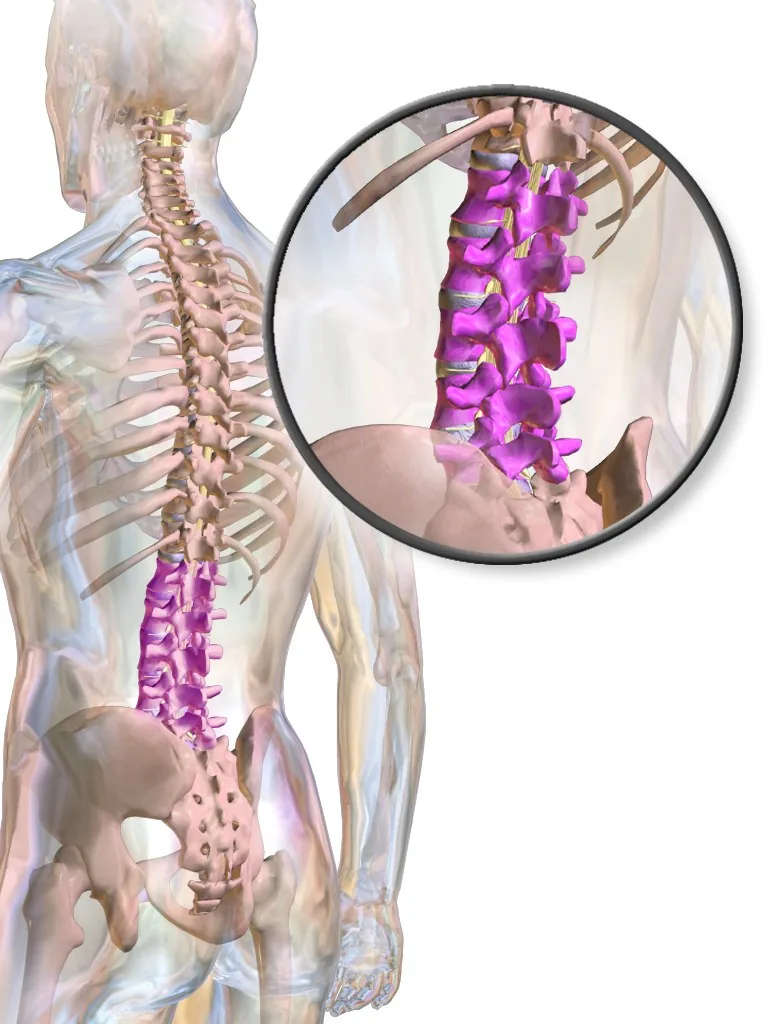
What is low back pain?
Low back pain is pain, stiffness or tightness in the lower part of your back. It may start suddenly, for example after lifting something. It may also build up slowly over weeks of long sitting.
This guide is about common low back pain in adults. It is often called mechanical or non-specific back pain, meaning it is affected by how you move, sit and stand. It may involve the joints, muscles, discs or fascia (the tissue that wraps around muscles) in your back. Often, though, no single source can be pinpointed.
People with this kind of back pain often notice:
- pain that changes with movement, position or long sitting
- some stiffness in the morning that eases soon after they start moving
An assessment with a physiotherapist can help you understand your own pain.
Common causes
Common things that can add to low back pain include:
- Long sitting: hours at a desk, in a car or on the sofa with few breaks
- Staying in one position: standing or leaning over a task for a long time
- Lifting more than you are used to: heavy, sudden or frequent lifting without breaks
- Muscle or joint strain: a sudden twist, a heavy load or more work than usual
- Not moving enough: a less active routine may leave the back feeling stiff
- Sports injuries: strains during games, gym work or training
How physiotherapy at Mobiphysio can help
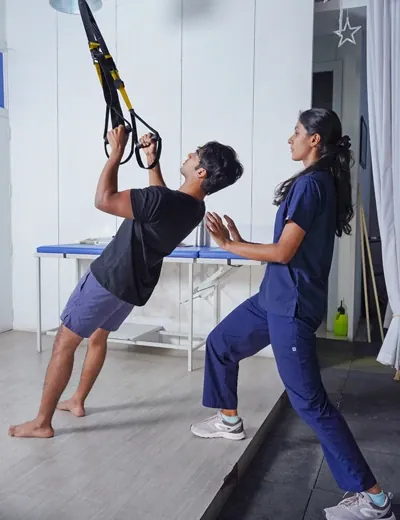
At Mobiphysio, your physiotherapist looks at what may be adding to your pain, not just where it hurts. Treatment is one-on-one and starts with a thorough assessment. Physiotherapy aims to ease pain, improve movement and build strength so daily life feels easier. Results differ from person to person.
Mobiphysio is a team of physiotherapists led by Dr. T.R. Vandana, PT, founder and senior physiotherapist. She is trained in McKenzie, Mulligan, Stecco Fascial Manipulation (levels 1-4, Padua, Italy) and Dynamic Neuromuscular Stabilization (DNS, Prague).
Your physiotherapist will choose what suits your back. Options include:
- McKenzie Method: an assessment-based approach that uses repeated movements and positions chosen for your back
- Mulligan Technique: your physiotherapist applies hands-on pressure to a joint while you move (mobilisation with movement)
- Stecco Fascial Manipulation®: hands-on work that aims to ease tension in the fascia and help you move more easily
- Manual therapy and myofascial release: hands-on techniques, including steady pressure on tight muscles and the tissue around them, that aim to relax muscles and ease movement
- Exercise programme: stretches and core exercises (for the deep muscles around your tummy and back) to build strength, flexibility and control
- Posture and ergonomic advice: tips on sitting, standing, lifting and ergonomics (how your desk, chair and screen are set up) that aim to lower the chance of pain returning
- Electrotherapy (treatment using small electrical currents) and ultrasound therapy: available at both branches and used when they suit your plan
We explain each option in plain words, and you decide.
What to expect at your visits
You do not need a doctor's referral to book. Please bring any reports, scans or prescriptions you already have.
Your first visit takes 45-60 minutes. It usually follows these steps:
- We listen to your story: when the pain started, what makes it better or worse and how it affects your day.
- Your physiotherapist checks your back and tests key muscles with gentle pressure.
- We explain what may be adding to your pain and suggest a plan.
- You may begin treatment or learn simple exercises to try at home.
Follow-up visits take 30-45 minutes. Your physiotherapist will check how your back is responding and update your treatment and exercises.
You can ask for a particular physiotherapist, or a female physiotherapist, at both branches. Our staff speak Tamil and English.
You can read our patient reviews on Google for RS Puram and Goldwins.
Things you can try at home
These gentle, general tips suit most people with common back pain. Stop and get advice if pain gets worse.
- Stay gently active.
Keep up light daily tasks instead of bed rest.
- Take short walks.
Walk at an easy pace a few times a day. Go only as far as feels comfortable, and build up slowly.
- Take posture breaks.
If you sit for long, get up and move every 20-30 minutes. Stand, stretch gently or walk.
- Use gentle heat.
A warm pack or warm towel on your lower back may help your muscles relax. Keep it warm, not hot, with a cloth between the pack and your skin. Use it for short spells and check your skin often. Do not use it on skin that feels numb, and do not sleep with it on.
- Try gentle movements.
Lie on your back with your knees bent. Slowly bring one knee towards your chest and hold it with both hands, then switch sides. Move only within a comfortable range. Skip it if you have had recent hip or back surgery, and stop if it makes your back or leg pain worse.
Your physiotherapist can show you exercises that suit your back.
Common questions
Do I need an X-ray or MRI before starting physiotherapy?
Many people with common low back pain do not need a scan early on. You do not need a doctor's referral to book, and you can bring any reports or scans you already have. Your physiotherapist will check how your back moves and explain what they find.
My scan report mentions a disc bulge. Can physiotherapy still help?
Physiotherapy may still help. Your physiotherapist will look at your report and check how your back moves, then plan treatment around what they find. Results differ from person to person.
Should I take complete bed rest until the pain settles?
Complete bed rest is not usually advised for common back pain. Many people find that gentle movement and light daily tasks help their back feel less stiff. Stop and get advice if pain gets worse.
Should I wear a back belt?
Ask your physiotherapist whether a belt suits you, as it is best not to rely on one alone. Core exercises chosen by your physiotherapist aim to build strength in the deep muscles that support your back. Stop and get advice if pain gets worse.
Should I keep doing my exercises if my back starts to feel better?
Keeping up the exercises your physiotherapist has given you, along with regular movement breaks, may help lower the chance of pain returning. Your physiotherapist can update your home programme as your back responds. Stop and get advice if pain gets worse.
Book an assessment
 Mobiphysio physiotherapists · RS Puram and Goldwins
To book, WhatsApp or call Mobiphysio on +91 73385 65909. Tell us which branch and time suit you.
- RS Puram: No.28, Captain Palaniswamy Layout, opposite the municipal park, RS Puram, Coimbatore 641 002. Open Monday to Saturday, 10 AM to 8 PM.
- Goldwins, Avinashi Road: 11/23, Avinashi Road, opposite Sri Sai Dental Clinic, Karuparampalayam Pirivu, Coimbatore 641 014. Open Monday to Saturday, 8 AM to 1 PM and 4 PM to 8 PM.
Both branches are closed on Sundays and major festival days (Pongal, Diwali). There is ample car parking at both branches. Goldwins is on the ground floor, and RS Puram has a ramp for easy access.