
At a glance
- 1The space around the nerves in the lower back becomes narrower. Your legs may ache when you walk or stand.
- 2Physiotherapy uses exercise, forward bending and pacing to try to make walking easier.
What is lumbar spinal stenosis?
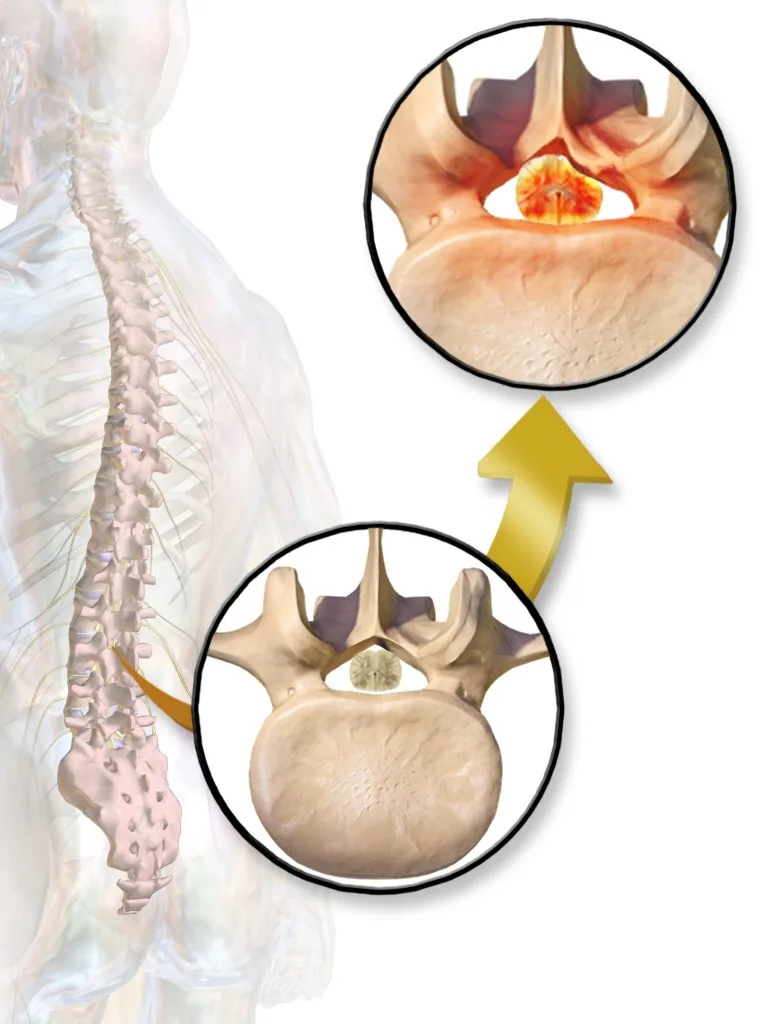
Your spine is a stack of bones with a channel running down the middle. Nerves travel through this channel and branch out through small openings on their way to your legs. In lumbar spinal stenosis, these spaces in the lower back become narrower than usual.
When the space is tight, the nerves can be squeezed or irritated. This can make the buttocks or legs ache, grow heavy or tired, or tingle with pins and needles. It usually shows up when you walk or stand for a while. It can make trips to the market or temple harder.
Posture makes a difference. Standing upright for a long time or leaning back makes the space a little smaller. Sitting or bending forward makes it a little bigger. This is why many people find relief when they sit down or lean forward on a railing or shopping trolley.
This kind of narrowing is more common in older adults. Leg aching can have other causes too, so an assessment by a physiotherapist is a good first step.
Common causes
Narrowing usually develops over many years as the spine changes with age. Common causes include:
- Age-related changes, including arthritis in the small joints of the spine
- Bony growths, called bone spurs, that form around these joints
- Discs between the spine bones that flatten or bulge
- Thickening of the strong bands (ligaments) that run inside the spine
- One spine bone slipping slightly forward on the one below
- Less often, a spinal channel that is narrower from birth
A scan does not always match how a person is managing day to day. That is why your physiotherapist looks closely at how you move, not only at your reports.
How physiotherapy at Mobiphysio can help
Physiotherapy does not change the shape of the spine. Instead, it aims to help you walk and stand with more comfort and confidence, and to stay active. At Mobiphysio, treatment is one-on-one and always starts with a thorough assessment. We listen, you decide: your plan is built around your daily life and goals.
Your physiotherapist may combine:
- Forward-bending movements: gentle exercises that curl the lower back forward. These aim to give the nerves more room.
- Strength and fitness: exercises for your core, hip and leg muscles. These aim to support your back and help you stay active for longer.
- Walking and pacing: a plan to walk in comfortable stretches with planned rests, building up slowly over time.
- Hands-on care: manual therapy that aims to ease pain and improve movement.
- Pain-easing therapies: where suitable, electrotherapy or ultrasound therapy may be used alongside exercise to help ease pain.
- Everyday habits: simple changes, such as sitting on a stool to chop vegetables or taking short seated breaks while shopping.
Pacing means doing activity in comfortable amounts with rests, rather than pushing through the ache. Little by little, this may help you do more of what matters to you.
Our physiotherapists use methods such as McKenzie, Mulligan and Stecco. Results differ from person to person, and your plan is adjusted as you go.
What to expect at your visits
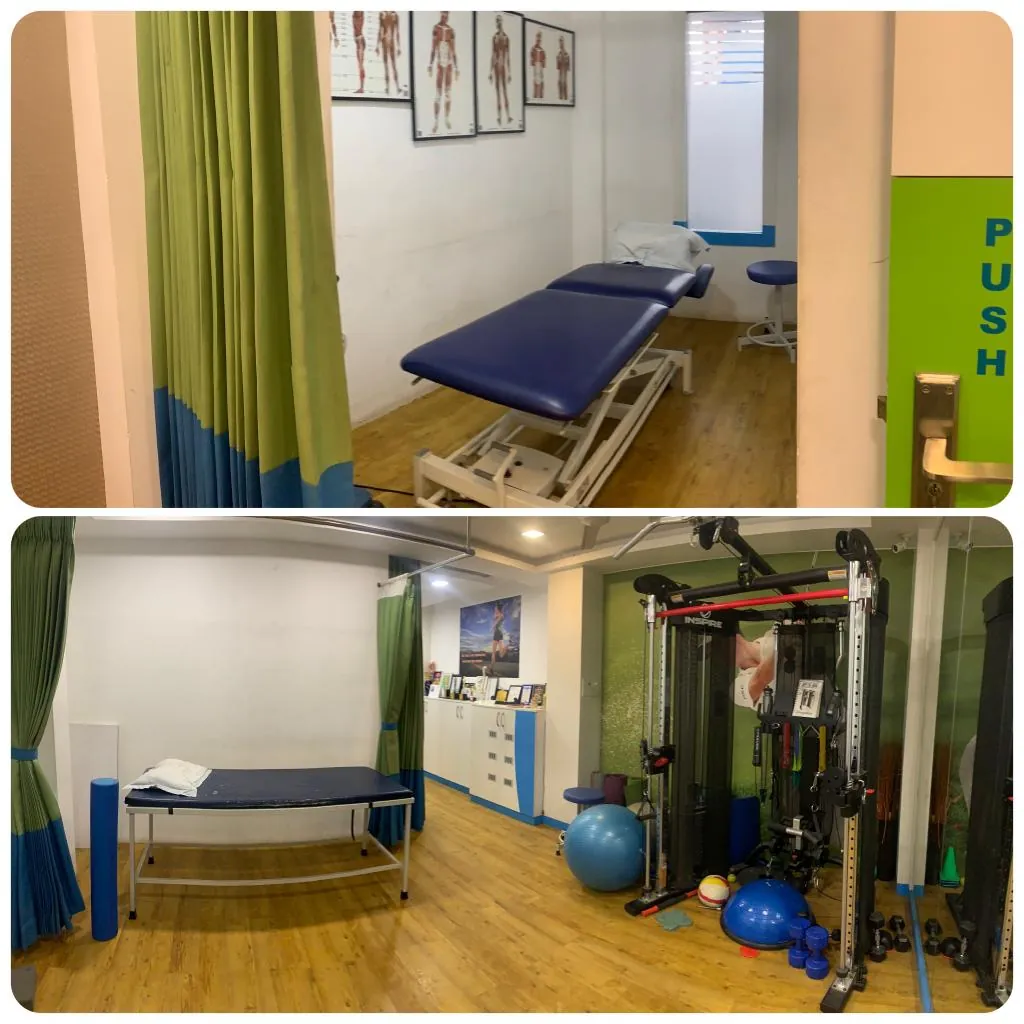
Bring any reports, scans or prescriptions you have. Your first visit takes 45 to 60 minutes. Follow-up visits take 30 to 45 minutes.
At your first visit:
- We listen to your story: when your legs ache, how far you can walk, and what eases it.
- Your physiotherapist checks your back, hips and legs, watches how you move, and tests key muscles with gentle pressure.
- We explain what may be causing your symptoms and suggest a plan.
- You may begin treatment or simple exercises to try at home.
You can ask for a particular physiotherapist, or a female physiotherapist, at both branches. Our staff speak Tamil and English.
Both branches have ample car parking. Goldwins is on the ground floor, and RS Puram has a ramp for easy access. Tell us when you book if stairs are hard for you.
Things you can try at home
These ideas are gentle and suit many people. Go at your own pace, and stop and get advice if pain gets worse.
If you have had an operation on your back, hip or knee, follow your surgeon's instructions alongside physiotherapy. Check with your physiotherapist before trying these ideas. If you have been told your bones are thin (osteoporosis), check with your physiotherapist before doing bending stretches.
- Walk in short stretches.
Walk for as long as is comfortable, then sit and rest before you carry on. Choose a flat, even path with places to sit, such as a park or temple compound. Use your walking stick if you have one. Over time, you may be able to walk a little longer before you need a rest.
- Rest by bending forward.
If your legs grow heavy while standing, sit down for a short while. You can also lean forward on something steady that will not move, such as a kitchen counter or railing. Many people find this eases the ache.
- Gentle knee-to-chest stretch.
Lie on your back on a firm bed with your knees bent. Use a floor mat only if you can get down and up safely. Hold one knee with both hands. Gently bring it towards your chest only as far as is comfortable, without pulling hard. Hold for up to 30 seconds, then switch sides.
- Try stationary cycling.
If you have access to a stationary cycle, try gentle pedalling at an easy pace. Start with a few minutes at an easy setting. Hold on to something steady as you get on and off. Many people find cycling easier than walking because they sit leaning slightly forward.
- Know when to stop.
If any movement makes your back or legs worse, stop and get advice. Your physiotherapist can change the exercise to suit you.
Common questions
Why do my legs ache less when I sit or bend forward?
If narrowing in the lower spine is the cause, sitting or bending forward opens up the space around the nerves a little. Standing upright for a long time or leaning back makes it a little smaller. Leg aching can have other causes too, so an assessment helps.
Should I stop walking if my legs ache?
You do not need to give up walking. When your legs start to ache, stop and sit until it eases, then carry on. You can also lean forward on something steady. Many people find short, comfortable walks with sitting rests work well. Your physiotherapist can help you plan a pace that suits you. Stop and get advice if pain gets worse.
Can physiotherapy help if I am in my 60s or 70s?
Age on its own does not stop you from having physiotherapy. Many people in their 60s and 70s find that exercises chosen for them help them stay active. Your exercises are chosen to suit your strength, balance and comfort. Results differ from person to person.
Which movements should I be careful with?
Many people find that standing for long or leaning backwards makes their legs ache more. Your physiotherapist will show you which movements suit you and how to adapt daily tasks.
Do I need a doctor's referral to visit Mobiphysio?
No, you do not need a doctor's referral. Please bring any reports, scans or prescriptions you have.
Book an assessment
 Mobiphysio physiotherapists · RS Puram and Goldwins
If walking or standing for a while has become harder, a physiotherapy assessment is a good first step. WhatsApp or call +91 73385 65909 to book at either branch:
- RS Puram: No.28, Captain Palaniswamy Layout, opposite the municipal park, RS Puram, Coimbatore 641 002
- Goldwins, Avinashi Road: 11/23, Avinashi Road, opposite Sri Sai Dental Clinic, Karuparampalayam Pirivu, Coimbatore 641 014
RS Puram is open Monday to Saturday, 10 AM to 8 PM. Goldwins is open Monday to Saturday, 8 AM to 1 PM and 4 PM to 8 PM. Both branches are closed on Sundays and major festival days such as Pongal and Diwali.
Our team, led by Dr. T.R. Vandana, PT, brings 25+ years of experience in physiotherapy and has treated 3000+ patients. Have a question before you book? Message us on WhatsApp or call; we will answer your questions.