
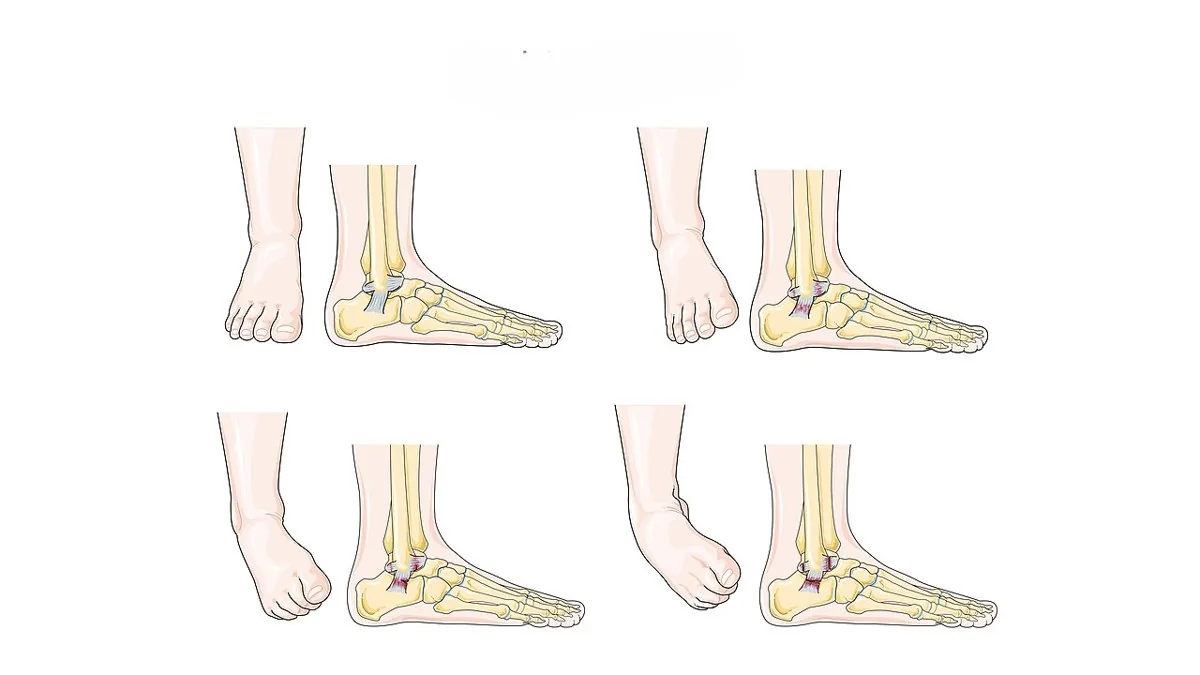
At a glance
- 1An ankle that stays weak or wobbly after one or more sprains.
- 2Physiotherapy aims to rebuild control with balance and strength training.
What is chronic ankle instability?
Chronic ankle instability is a name used when an ankle keeps feeling weak, loose or unsteady after one or more sprains. "Chronic" simply means it has been there for a while. The ankle may roll more easily than before, sometimes even on flat ground.
People describe it in different ways. You may notice that:
- the ankle feels weak or unstable when you stand or walk
- it seems ready to give way, especially on uneven ground or steps
- it has rolled or sprained again, sometimes more than once
- you worry about hurting it again during sport or a long walk
An assessment by a physiotherapist can help find what is going on in your own ankle.
Common causes
Ankle sprains often happen in a split second. Common ways a sprain starts include:
- twisting or rolling the ankle while walking, or on uneven ground or steps
- sports injuries, often during jumps, landings or quick turns
- awkward landings or missed steps
One important reason an ankle stays unsteady is a previous sprain that never fully regained strength and balance. After a sprain, the pain and swelling often settle in time. Once walking is comfortable again, it is natural to get back to work, home and sport. But the ankle may not be fully ready yet.
A sprain can leave the muscles around the ankle weaker than before. It can also slow the quick, automatic reactions that keep your foot steady. Your ankle makes tiny adjustments all day without you thinking about it, such as when your foot lands on a stone or the edge of a step. Sometimes the ligaments that hold the ankle also heal a little looser than before, so the joint has less support.
If strength and balance are not rebuilt, the ankle may not react fast enough. It may roll again, and each new sprain can leave it less steady. Over time, many people start avoiding things they enjoy, such as sport or walks on uneven paths.
How physiotherapy at Mobiphysio can help
At Mobiphysio, care is one-on-one and starts with a thorough assessment. Our team, led by Dr. T.R. Vandana, PT, checks how your ankle moves, how strong it is and how steady you are on each leg. We then plan care around you, your daily routine and what you want to get back to.
The aim is to rebuild control, so the ankle is steadier and you can start to trust it again. Depending on what we find, your plan may include:
- Balance training: exercises that start simple, such as standing on one leg with support, and slowly become harder. They aim to sharpen your ankle's quick reactions and lower the chance of another sprain.
- Strengthening: progressive exercises that build the muscles around the ankle, so they can better support the joint.
- Gait training: help with how you walk, so your ankle is not under extra strain.
- Hands-on manual therapy: techniques such as massage and joint mobilisation, which can help if the ankle is stiff or sore.
- Pain relief when needed: ultrasound or electrotherapy may be used to help ease pain.
- Bracing or taping advice: guidance on whether a brace or tape may help during sport or busy days.
- Gradual return to activity: daily tasks and sport are brought back in phases, with home exercises that aim to lower the chance of another sprain.
Your physiotherapist will explain each step in simple words. We listen, and you decide what fits your life.
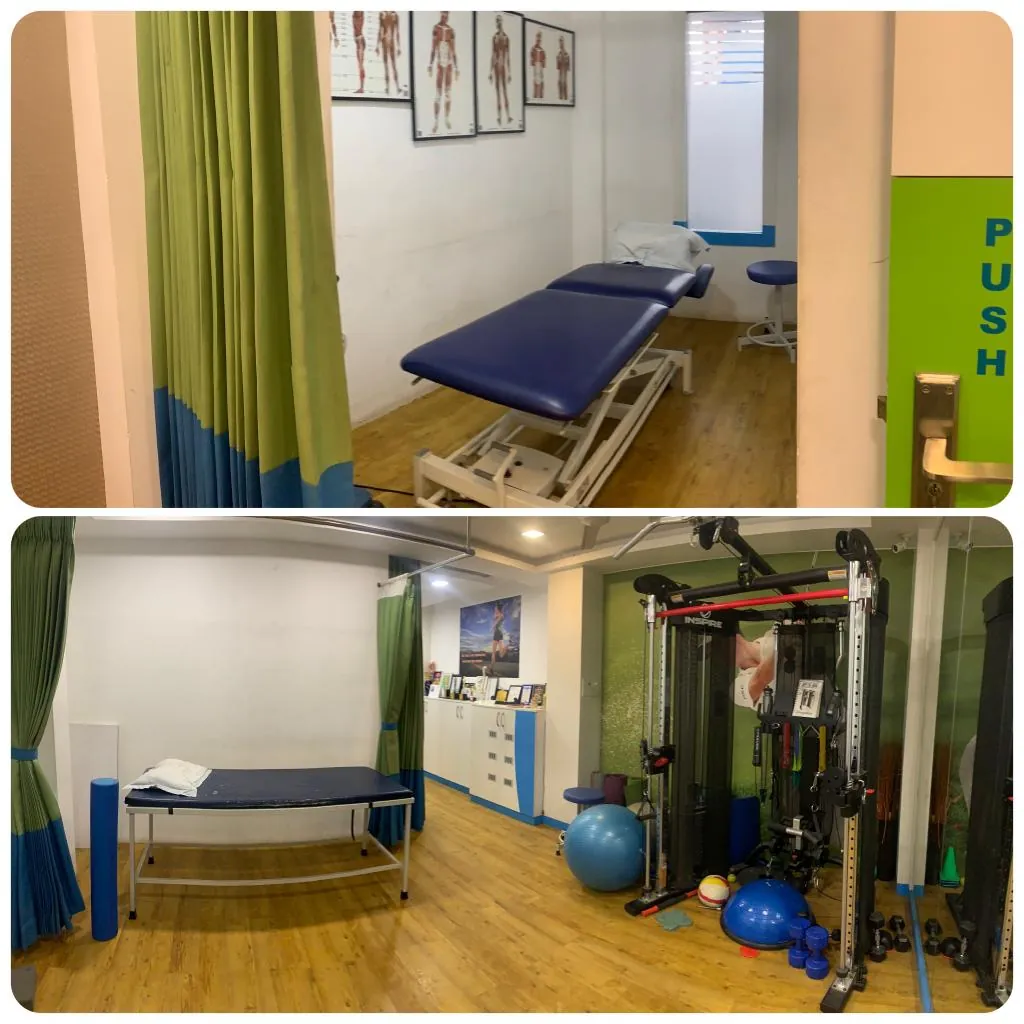
What to expect at your visits
Your first visit takes about 45 to 60 minutes, and follow-up visits take about 30 to 45 minutes. Every visit is one-on-one with a physiotherapist. At your first visit:
- we ask how each sprain happened, what the ankle stops you doing and what worries you most
- we check your ankle's movement, strength and stability, and how you balance and walk
- we explain what we find and the plan in simple words
- you learn first steps and home exercises to start right away
At follow-up visits, your physiotherapist checks your exercises. They make them more challenging when you are ready and adjust the plan with you.
You do not need a doctor's referral. Please bring any reports, scans or prescriptions you have. Our staff speak Tamil and English, and you can ask for a particular physiotherapist, or a female physiotherapist, at both branches.
Things you can try at home
These simple ideas are gentle and suitable for most people. Go slowly and keep a sturdy support within reach. If you have just rolled the ankle again, or it is swollen or very sore, ask a physiotherapist before you start. Stop and get advice if pain gets worse, or if the ankle starts to give way.
- Stand on one leg.
Rest a hand on a kitchen counter or the back of a sturdy chair. Lift one foot and balance on the other leg for a few slow breaths, then swap sides.
- Slow heel raises.
Holding your support, rise onto your toes on both feet, then lower slowly. When this is easy and comfortable, you can try it on one leg, still holding on. Go back to both feet if it hurts.
- Band foot presses.
Sit on a bed or the floor with your back supported and your leg straight out. Loop a light exercise band around the ball of your foot and hold the ends. Gently push your foot down, like pressing a pedal, then let it come back slowly. If sitting this way is uncomfortable, skip this one and ask your physiotherapist.
- Band outward turns.
Sit as before, with both legs out in front. Tie a light band into a loop and place it around both feet. Keep one foot still and slowly turn the other foot outwards against the band, keeping the movement small, then relax.
- Build up gradually.
Add a little more time or effort only when an exercise is comfortable. If pain gets worse, stop and get advice from a physiotherapist.
Common questions
Why does my ankle keep rolling after an old sprain?
There can be different reasons. One is an old sprain that never fully regained strength and balance. A physiotherapy assessment can help find what is behind it in your ankle.
Can physiotherapy help an ankle that keeps giving way?
It aims to. Balance training and strengthening can help the ankle become steadier and lower the chance of another sprain. We also guide you on returning to activity.
Should I wear an ankle brace or use tape?
It depends on your ankle and your activities. Your physiotherapist can give bracing or taping advice, alongside exercises to build strength and balance.
Can I keep up my morning walks or weekend cricket?
It depends on how your ankle is coping. Your physiotherapist can suggest what to ease off for now and help you return to walks and sport in phases.
Are the home exercises enough on their own?
They can be a gentle start for many people. An assessment helps your physiotherapist choose exercises that suit your ankle and decide when to make them harder.
Do I need a doctor's referral to visit Mobiphysio?
No, you do not need a doctor's referral. Please bring any reports, scans or prescriptions you have.
Book an assessment
 Mobiphysio physiotherapists · RS Puram and Goldwins
If your ankle keeps giving way, a physiotherapy assessment is a good first step. WhatsApp or call Mobiphysio on +91 73385 65909 to book. Dr. T.R. Vandana, PT, leads a team with 25+ years of experience and 3000+ patients treated.
Both branches are open Monday to Saturday. They are closed on Sundays and major festival days (Pongal, Diwali).
- RS Puram: No.28, Captain Palaniswamy Layout, opposite the municipal park, RS Puram, Coimbatore 641 002. Open 10 AM to 8 PM. Google Maps
- Goldwins, Avinashi Road: 11/23, Avinashi Road, opposite Sri Sai Dental Clinic, Karuparampalayam Pirivu, Coimbatore 641 014. Open 8 AM to 1 PM and 4 PM to 8 PM. Google Maps
There is ample car parking at both branches. Message us on WhatsApp or call; we will answer your questions.