
At a glance
- 1A sore, overloaded tendon that helps support the inner arch.
- 2Physiotherapy aims to strengthen the tendon and ease daily strain.
What is posterior tibial tendinopathy?
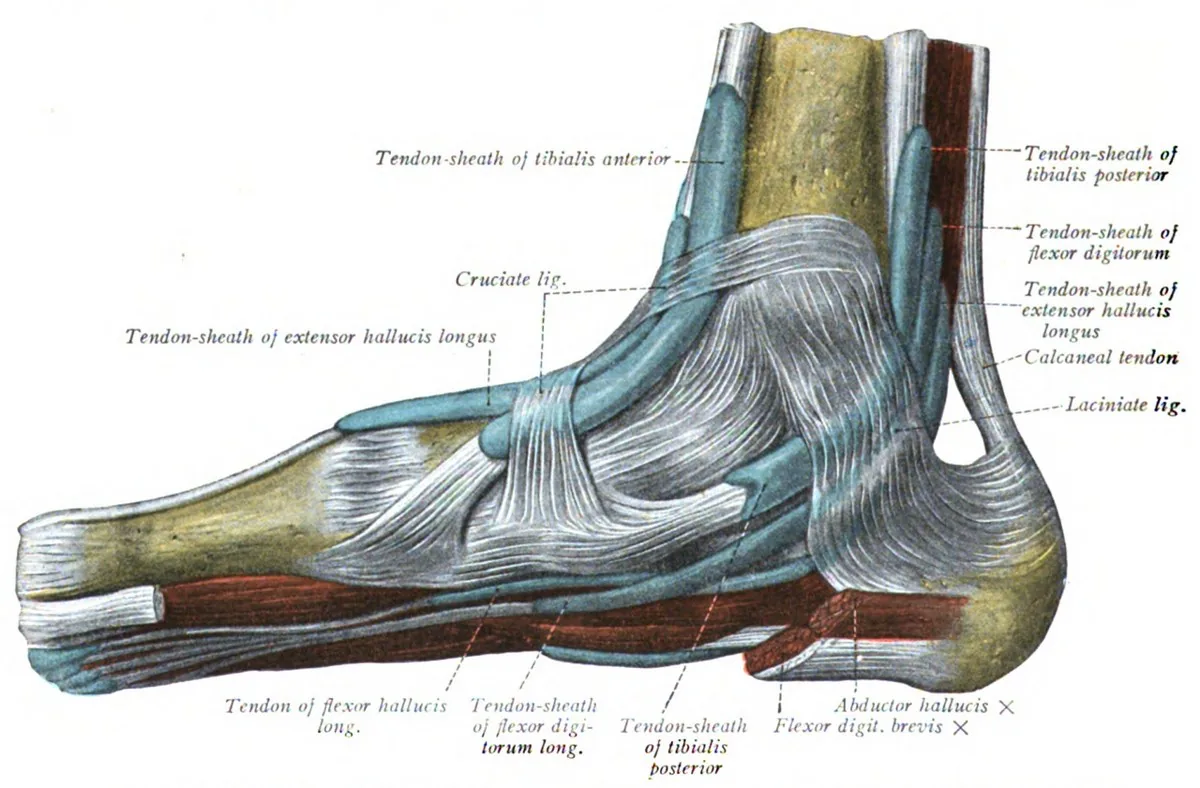
The posterior tibial tendon is a strong cord that links a muscle deep in your calf to the bones of your foot. It runs behind the bony bump on the inside of your ankle and attaches to bones of the inner arch.
This tendon works every time you take a step. It helps hold up the arch, steadies your foot as it takes your weight and helps you rise onto your toes. You rely on it when you walk, climb stairs or stand at the kitchen counter.
Tendinopathy means a tendon has become sore and less able to cope with the load placed on it. With this tendon, the soreness often builds up slowly rather than starting with one injury. It is often seen in adults in midlife, though it can happen at other ages.
People often describe pain and tiredness along the inner ankle and arch, especially after long spells of standing or walking. Some notice mild puffiness behind the inner ankle bone, or feel that the arch tires quickly. Rising onto tiptoe on one foot may feel weak or uncomfortable.
These feelings can have other causes too. A physiotherapist can check how your foot, ankle and leg move and explain what they find.
Common causes
There is usually no single cause. More often, the tendon has been asked to do more than it is ready for, over weeks or months. Things that may play a part include:
- Long hours of standing, for example at a shop counter, in a classroom or while cooking for a family function
- A sudden increase in walking, such as a new morning walk routine, travel or a long temple visit
- Footwear with little support, such as thin, worn-out slippers
- Walking barefoot on hard floors at home for much of the day
- Carrying extra body weight, which adds load with every step
- Feet that roll inwards a lot or have a lower arch
- An earlier ankle injury that changed the way you walk
- Weaker muscles in the calf, foot or hip
Some long-term health conditions may also play a part, so tell your physiotherapist about your general health. Often a few of these factors add up together. Your physiotherapist will ask about your work, home routine and footwear to see which may matter for you.
How physiotherapy at Mobiphysio can help
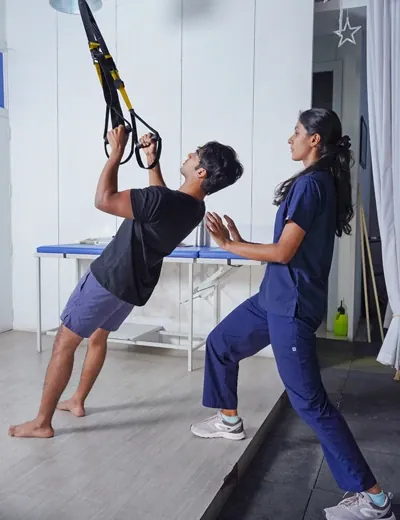
Treatment at Mobiphysio is one-on-one and starts with a thorough assessment. The aim is to ease the pain while gradually building the strength the tendon needs for your daily routine. Your plan may include:
- A gradual strengthening programme.This is usually the heart of the plan. Exercises for the tendon, calf and foot muscles start gently and build up step by step as your ankle allows.
- Footwear advice.We look at the shoes and slippers you wear most. We may suggest changes that give your arch more support.
- Adjusting your activity.Complete rest is not always needed. We help you pace standing and walking so the tendon is not overloaded, while you stay as active as is comfortable.
- Hands-on manual therapy.Techniques such as massage and joint mobilization may ease pain and stiffness. Our physiotherapists use methods including Mulligan and Stecco.
- Stretching routines.Gentle stretches aim to improve flexibility and relieve tension in the calf and ankle.
- Gait and balance training.We help you walk in a way that puts less strain on the inner ankle. Balance exercises can help you feel steadier.
- Ultrasound therapy or electrotherapy.These are available at both branches. Your physiotherapist may use them alongside exercise if they feel these suit you.
Progress differs from person to person. Your physiotherapist reviews the plan as you go and adjusts it to how your ankle responds.
What to expect at your visits
Your first visit takes 45 to 60 minutes, and follow-up visits take 30 to 45 minutes. At your first visit:
- We listen to how the pain started and what it stops you doing.
- We check how you stand, walk and rise onto your toes, and how your foot and ankle move.
- We may look at the footwear you use most, so wear or bring it if you can.
- We explain what we find in plain language and agree a plan suited to your ankle and daily routine.
- You may go home with simple exercises and advice to start with.
No doctor's referral is needed. Please bring any reports, scans or prescriptions you have. Our staff speak Tamil and English. You can ask for a particular physiotherapist or a female physiotherapist at both branches.
At follow-up visits, your physiotherapist checks how you are getting on and may adjust your exercises. If stairs are hard for you, tell us when you book.
Things you can try at home
These ideas are gentle and suit most people. Go slowly, and stop and get advice if pain gets worse.
- Gentle heel raises.
Hold a kitchen counter or wall. Slowly rise onto your toes with both feet, then lower slowly. Do only a few, within comfort, and stop and get advice if pain gets worse.
- Supportive everyday footwear.
Choose shoes or sandals with a firm sole, a back strap and some support under the arch. Wear them at home too if you can. Thin, worn-out slippers may give the tendon little help.
- Spread out standing tasks.
Break long jobs like cooking, ironing or shop work into shorter spells. Sit for parts of the task where possible. On busy days, such as festival preparations, plan breaks in advance.
- Build walking up slowly.
Keep walking if it is comfortable, but avoid sudden jumps in distance. For now, choose flat, even paths over long hill or temple climbs.
Common questions
Should I stop walking completely?
Not always. Many people can stay active with some changes, such as shorter walks on flat ground and more breaks. Your physiotherapist can help you find a level that suits your ankle.
Is it okay to walk barefoot at home?
Long hours barefoot on hard floors may give your arch less support than a supportive sandal. Many people find indoor sandals with a firm sole and some arch support more comfortable. Your physiotherapist can suggest what may suit your feet.
Is this the same as flat feet?
Not exactly. This tendon helps hold up the arch. When it is sore, the arch may tire easily or look lower. A physiotherapist can assess your foot and explain what they find.
Why does the ache get worse by evening?
The tendon works with every step, so the ache can build over a long day of standing and walking. Spreading standing tasks through the day may help.
Can I keep working if my job involves long standing?
Many people find they can keep working with some changes. Break long spells of standing into shorter ones. Sit for parts of the task where you can, and wear supportive footwear at work. If pain gets worse, stop and get advice. Your physiotherapist can help you plan your working day around your ankle.
Can I ask for a female physiotherapist?
Yes. You can ask for a female physiotherapist, or a particular physiotherapist, at both branches. Just mention it when you book.
Book an assessment
 Mobiphysio physiotherapists · RS Puram and Goldwins
If your inner ankle or arch has been troubling you, a physiotherapist can assess it and talk through a plan with you. WhatsApp or call us on +91 73385 65909 (open WhatsApp) to book an assessment.
Dr. T.R. Vandana, PT, leads a team with 25+ years of experience and 3000+ patients treated. Choose the branch that suits you:
- RS Puram: No.28, Captain Palaniswamy Layout, opposite the municipal park, RS Puram, Coimbatore 641 002. Monday to Saturday, 10 AM to 8 PM. Map
- Goldwins, Avinashi Road: 11/23, Avinashi Road, opposite Sri Sai Dental Clinic, Karuparampalayam Pirivu, Coimbatore 641 014. Monday to Saturday, 8 AM to 1 PM and 4 PM to 8 PM. Map
Both branches are closed on Sundays and major festival days such as Pongal and Diwali. Both have ample car parking. Have a question before you book? Message us on WhatsApp or call; we will answer your questions.