
At a glance
- 1Rotator cuff tendinopathy means shoulder tendons that are irritated or overloaded, which can make lifting your arm painful.
- 2Physiotherapy aims to ease pain through gradual strengthening, shoulder blade control and hands-on care.
What is rotator cuff tendinopathy?
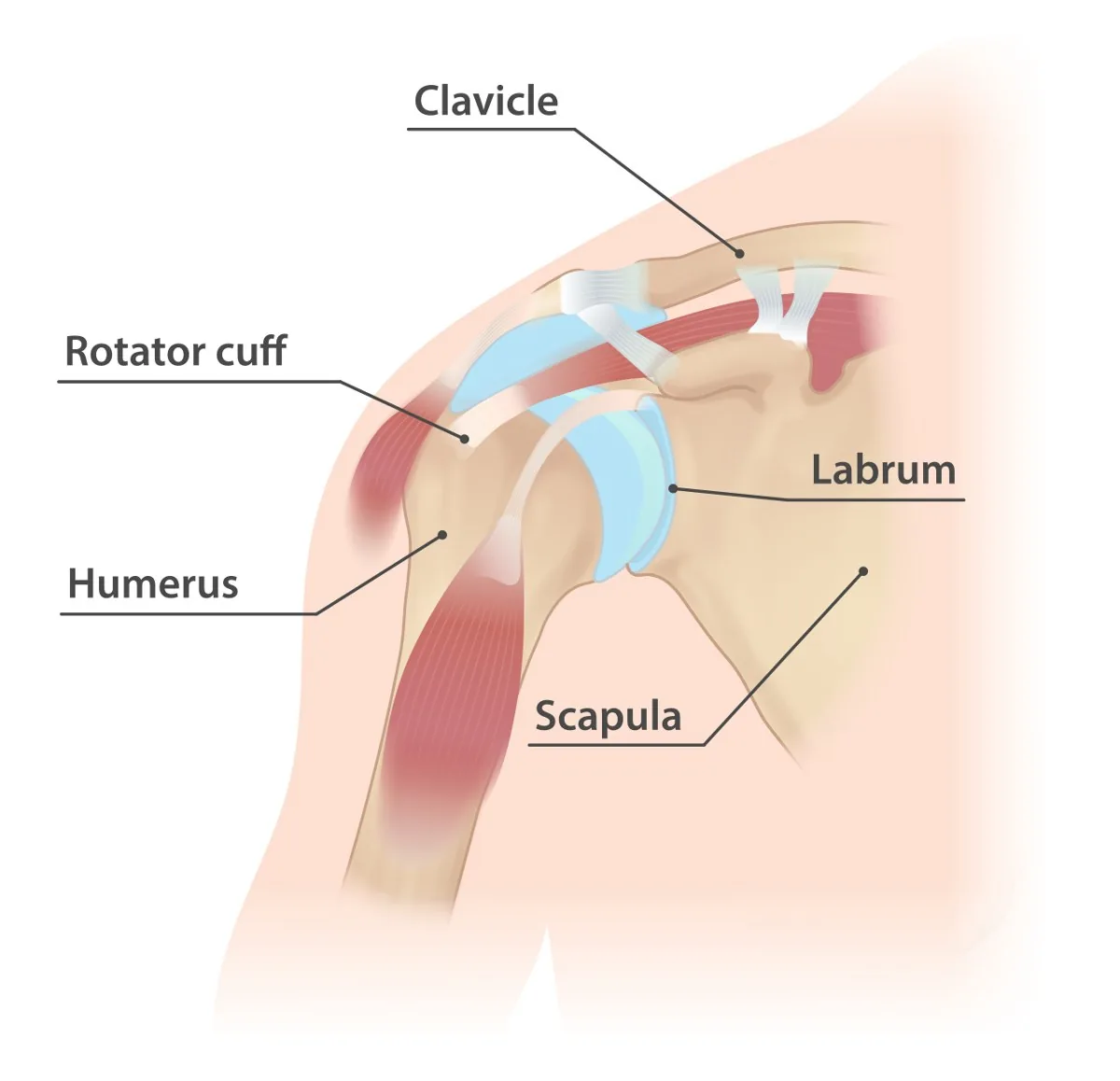
Your rotator cuff is a group of muscles and tendons that wrap around the top of your arm bone. They keep the ball of your shoulder steady in its socket as you lift, reach and throw. Your shoulder is a group of joints, and these tendons work closely with your shoulder blade and upper back.
Tendinopathy means a tendon has become irritated, sore and less able to cope with load (the amount of work you ask it to do). This often happens when the tendon is asked to do more than it is ready for, again and again. It tends to build up slowly rather than start with one big injury.
People with this problem often describe:
- Pain on the outer shoulder or upper arm when lifting the arm out to the side
- Pain when reaching overhead or behind your back, such as when dressing
- Aching when lying on that side at night
- Weakness or tiredness in the arm during overhead tasks
Other shoulder problems can cause similar pain. An assessment by a physiotherapist helps find the likely cause in your case.
Common causes
Tendons are built to handle load. Trouble often starts when the load rises faster than the tendon can adapt. Common reasons include:
- Overhead sports. Badminton smashes and serves load the shoulder again and again. So do cricket bowling and throwing.
- Overhead work. Jobs like painting, electrical fitting or stacking goods on high shelves keep the arm raised for long periods.
- A sudden jump in activity. For example, a new sport, a tournament season or a busy spell of lifting at home or work.
- Weak shoulder blade muscles. If the muscles that steady your shoulder blade tire easily, the rotator cuff may take more strain.
- Posture and a stiff upper back. Long hours hunched over a desk, phone or sewing machine may affect how your shoulder moves.
- Changes with age. Tendons naturally change as we get older and may cope less well with sudden heavy use.
Often it is a mix of these. Your physiotherapist will ask about your work, sport and daily routine to understand what may be adding load to your shoulder.
How physiotherapy at Mobiphysio can help
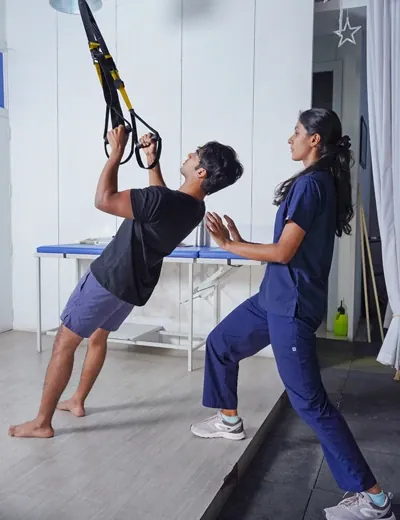
No single treatment suits every shoulder. Your treatment is one-on-one and starts with a thorough assessment. We then build a plan around your needs, work and goals. Your plan may include:
- Gradual strengthening.We aim to build your shoulder's strength step by step. Exercises start easy and progress as your shoulder copes. They move from mobility to stability to strength.
- Shoulder blade control.Your shoulder blade is the base your arm moves from. Exercises for the shoulder blade and upper back aim to help your arm lift and reach more smoothly.
- Hands-on care.Joint mobilization uses gentle glides and rotations that aim to improve movement and ease pain. Our physiotherapists use methods such as Mulligan and Stecco, along with massage where it suits you.
- Pain relief options.Depending on your pain, we may add electrotherapy or ultrasound therapy alongside your exercises.
- Load and technique advice.We help you adjust how much you lift, play or work overhead while your shoulder settles. For badminton and cricket players, this can include looking at training load and technique.
Your physiotherapist may also use the McKenzie method, depending on your assessment. We explain each option in simple words. We listen, and you decide.
Selected Google reviews
> "I came to Mobi Physio after struggling with persistent neck, shoulder, back, and heel pain. … She designed a structured recovery roadmap focusing on muscle/fascia manipulation, targeted stretching, and progressive strength training."
> — Ramya A., Google review
Individual experiences vary. Review taken from Google on 12 Nov 2026. Read more reviews on Google: RS Puram · Goldwins
What to expect at your visits
Your first visit takes 45 to 60 minutes. Follow-up visits take 30 to 45 minutes. Our staff speak Tamil and English.
At your first visit:
- We ask about your pain, your past health and what happened, including your work and sport.
- We examine your shoulder. We check range of motion, muscle strength, mobility, posture and joint stability.
- We explain the likely cause and your treatment plan in simple words.
- You learn home exercises and daily habits to support your recovery.
At follow-up visits, we check how your shoulder is responding. We then adjust your exercises and hands-on care. Bring any reports, scans or prescriptions you have to your first visit.
Things you can try at home
These ideas are gentle and suit most people. Go slowly and stay within comfort. If you have had a shoulder operation, follow your surgeon's instructions alongside physiotherapy. If your pain started after a fall or injury, get a physiotherapy assessment before trying the band exercise.
- Gentle band rotations.
If you have a light resistance band, hold it in both hands. Keep your elbows bent and tucked in at your sides. Slowly turn your forearms outwards a little, then back. Keep the movement small and comfortable.
- Reach below shoulder height.
For a while, keep most reaching and lifting below shoulder height. Move things you use every day, like kitchen items or clothes, to a lower shelf.
- Hug a pillow.
At night, lie on your other side and hug a pillow to your chest. Resting the sore arm on the pillow may make sleep more comfortable.
- Take short breaks.
Your work or sport may involve lots of overhead movement. If so, split it up with short rests. Let your arm hang and relax for a moment before carrying on.
- Keep moving gently.
Try not to hold the arm completely still. Easy everyday movement within comfort can help stop the shoulder getting stiff.
Stop and get advice if pain gets worse. The right exercises and amount differ from person to person, so your physiotherapist can guide you.
Common questions
Can I keep playing badminton or cricket?
It depends on your shoulder and how it responds to play. After your assessment, your physiotherapist can help you plan how much to play. They can also help you build back up step by step.
Should I rest my arm completely?
Complete rest is not always the answer, because the shoulder can become stiff and weaker. We aim to find an amount of movement your shoulder can manage. Then we build it up slowly.
Why does my shoulder hurt more at night?
Many people with this problem notice more ache at night. It is often worse when lying on the sore side, which presses on the shoulder. Lying on the other side and hugging a pillow may ease it. Tell your physiotherapist if night pain is disturbing your sleep.
Is this the same as frozen shoulder?
No, they are different problems, although they can seem similar at first. Frozen shoulder usually makes the whole shoulder stiff in many directions. With rotator cuff pain, the shoulder usually still moves, but lifting or reaching hurts. An assessment helps find the likely cause in your case.
Do I need a doctor's referral?
No, you do not need a doctor's referral. Bring any reports, scans or prescriptions you have.
Can I ask for a female physiotherapist?
Yes. You can ask for a female physiotherapist, or a particular physiotherapist, at both branches.
Book an assessment
 Mobiphysio physiotherapists · RS Puram and Goldwins
If lifting your arm hurts, a physiotherapy assessment can help find the likely cause and what may ease it. WhatsApp or call Mobiphysio on +91 73385 65909 to book.
Mobiphysio is a team of dedicated physiotherapists led by Dr. T.R. Vandana, PT. She and her team have 25+ years of experience and have treated 3000+ patients.
Visit us at either branch:
- RS Puram: No.28, Captain Palaniswamy Layout, opposite the municipal park, RS Puram, Coimbatore 641 002. Open Monday to Saturday, 10 AM to 8 PM. Google Maps
- Goldwins, Avinashi Road: 11/23, Avinashi Road, opposite Sri Sai Dental Clinic, Karuparampalayam Pirivu, Coimbatore 641 014. Open Monday to Saturday, 8 AM to 1 PM and 4 PM to 8 PM. Google Maps
Both branches are closed on Sundays and major festival days (Pongal, Diwali). There is ample car parking at both branches.
Have a question before you book? Message us on WhatsApp or call; we will answer your questions.