
At a glance
- 1Shoulder pain is an ache in or around the shoulder, often with stiffness. It has many possible causes.
- 2After an assessment, physiotherapy aims to ease pain and improve movement.
What is shoulder pain?
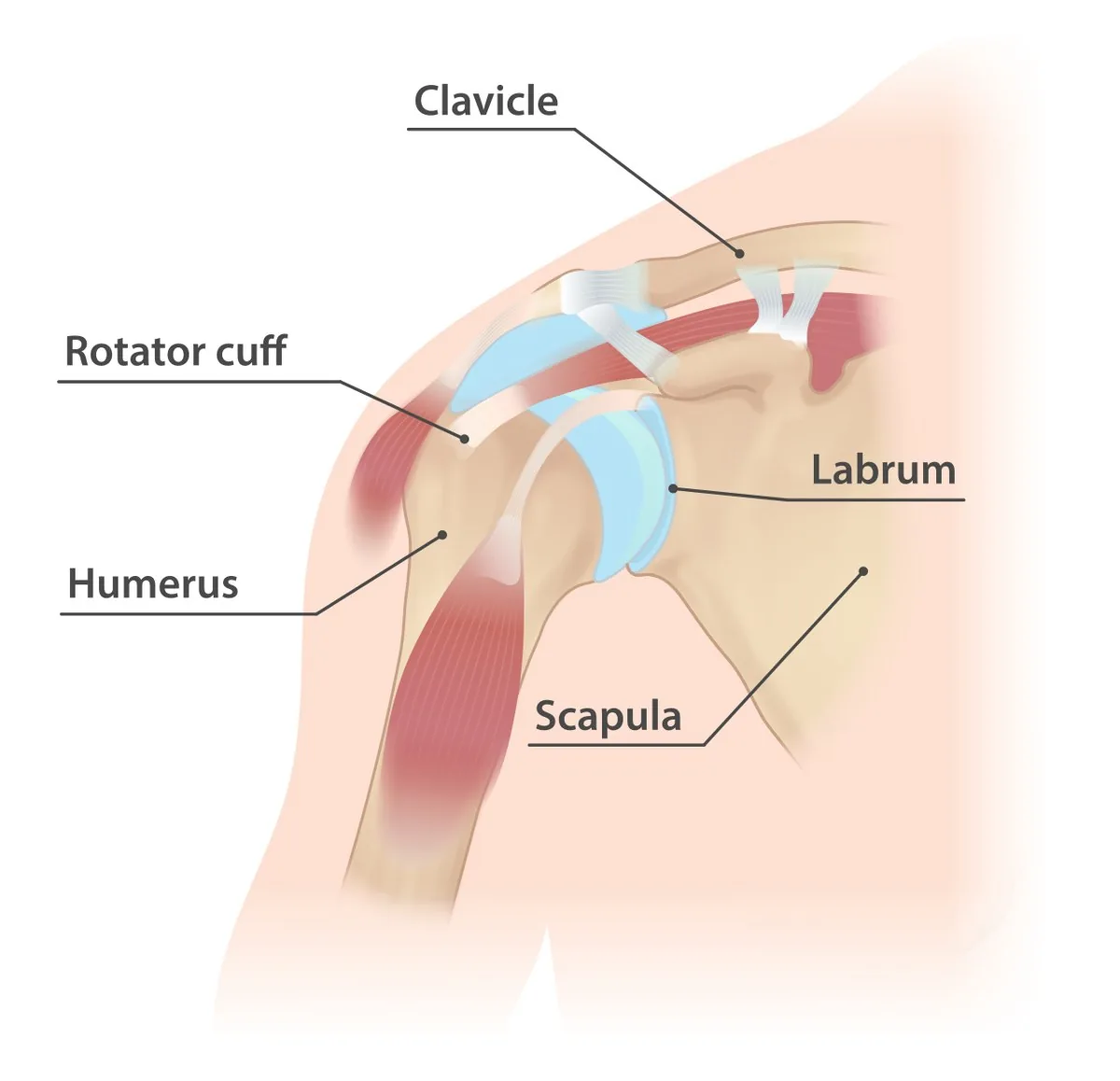
Your shoulder is not a single joint. It is a group of joints, muscles, tendons and ligaments that work together. Your shoulder blade and upper back also play a part in how your arm moves.
Shoulder pain is not the same for everyone. Some people have pain when lifting the arm or getting dressed. Others have a stiff shoulder that is hard to move, or an ache around the shoulder blade. For many, the pain gets in the way of daily work or sleep.
Because many different things can cause shoulder pain, it helps to find out what is behind yours before you start treatment.
Common causes
Shoulder pain has many possible causes. Common ones include:
- Weak muscles around the shoulder and shoulder blade
- Sprains and other soft tissue injuries
- Dislocation of the shoulder joint
- Frozen shoulder, which can leave the shoulder stiff and painful
- Injuries from falls or accidents, including bruising (contusion)
- Overuse, such as repeating the same arm movements often
- Wear-and-tear (degenerative) changes and inflammation
Some of these follow a fall, an accident or pulling something heavy. Others, such as overuse or wear-and-tear changes, build up slowly over time.
Why assessment comes first: the same kind of pain can come from quite different causes, so we do not guess. A physiotherapist examines your shoulder to understand the likely cause in your case. Only then do we plan treatment, because no single approach suits every shoulder.
How physiotherapy at Mobiphysio can help
Treatment at Mobiphysio is one-on-one and starts with a thorough assessment. We look at your medical history and the source and severity of your pain. Then we build a plan around your needs and goals.
Depending on what we find, your plan may include:
- Joint mobilization: gentle, hands-on glides and rotations of the joint. These aim to improve range of motion (how far your arm can move) and reduce pain.
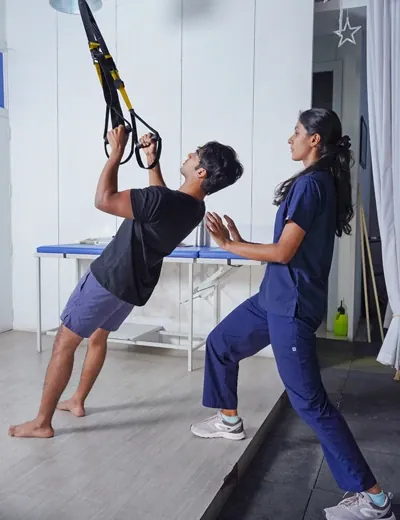
- Exercise and small stretches: gentle stretching, weight-bearing exercises (where your arm takes some of your body weight) and resistance exercises (using light weights or bands). These aim to improve posture, strength and motion.
- Electrotherapy or ultrasound, where suitable: used alongside exercise and hands-on care to help ease pain.
- Electrotherapy, ultrasound therapy and massage: these may be added, depending on your pain, to help with relief.
Hands-on manual therapy is a core part of how we work. Our physiotherapists may use treatment methods called Mulligan, McKenzie and Stecco, chosen to suit your shoulder.
Exercise, step by step: our exercise plans aim to improve mobility first, then stability, then strength. Shoulder movement also depends on your shoulder blade and upper back, so we work on those too. We also train the daily movements that matter to you, such as reaching and lifting.
Looking after your shoulder: we also aim to help protect your shoulder in future. This can include building muscle strength, managing the load you put on it, rest and recovery, and better technique in daily tasks.
What to expect at your visits
Your first visit takes 45 to 60 minutes. Follow-up visits take 30 to 45 minutes. Our staff speak Tamil and English.
At your first visit:
- We ask about your pain, your past health and what happened.
- We check how far your arm can move, your muscle strength, your posture and how steady the joint is.
- We explain the likely cause and your treatment plan in simple words.
- You learn home exercises and daily habits to support your recovery.
We listen to your concerns and goals, and you decide on your plan with us. Please bring any reports, scans or prescriptions you have.
At follow-up visits, we continue your plan and adjust your exercises as needed.
Things you can try at home
These gentle, general ideas suit most people with an aching shoulder. Stop and get advice if pain gets worse. If your pain started after a recent fall or injury, have it assessed by a physiotherapist before trying these. After your assessment, your physiotherapist will choose exercises for you. If you have had a shoulder operation, follow your surgeon's instructions alongside physiotherapy.
- Gentle pendulum swings.
Lean forward with your good hand on a sturdy table and let the sore arm hang loosely. Gently rock your body so the arm swings back and forth or in small circles. Keep the shoulder relaxed.
- Keep the arm moving.
Use your arm for light daily tasks instead of holding it still for long. Move only as far as is comfortable, and do not push into pain.
- Avoid sleeping on it.
Try not to sleep on the painful shoulder at night. Many people find lying on their back or the other side more comfortable, with a pillow supporting the arm.
- Pace heavy tasks.
Take short breaks from lifting, carrying and reaching overhead. Keep loads light for now, and rest when you need to.
Common questions
Is all shoulder pain frozen shoulder?
No. Frozen shoulder is one cause, but weak muscles, sprains, injuries and overuse can also cause pain. An assessment helps find the likely cause in your case.
Should I rest my shoulder completely until it stops hurting?
Not always. Rest has its place, but gentle movement within comfort is often part of the plan. Your physiotherapist will guide you on the right balance for your shoulder.
Can I follow shoulder exercises from online videos?
It is best to do shoulder exercises with guidance. The right exercises and amount differ from person to person. Your physiotherapist can show you what suits your shoulder.
Do I need a doctor's referral to visit Mobiphysio?
No, you do not need a doctor's referral. Please bring any reports, scans or prescriptions you have.
Can I ask for a female physiotherapist?
Yes. You can ask for a female physiotherapist, or a particular physiotherapist, at both branches. Just mention it when you book.
Book an assessment
 Mobiphysio physiotherapists · RS Puram and Goldwins
Want to understand what is behind your shoulder pain? WhatsApp us at wa.me/917338565909 or call +91 73385 65909 to book a shoulder assessment. Please book ahead of your visit.
Dr. T.R. Vandana, PT, and her team have 25+ years of experience in physiotherapy and have treated 3000+ patients. Every plan starts with listening to you and a thorough assessment.
Visit us at either branch:
- RS Puram: No.28, Captain Palaniswamy Layout, opposite the municipal park, RS Puram, Coimbatore 641 002. Monday to Saturday, 10 AM to 8 PM. Google Maps
- Goldwins, Avinashi Road: 11/23, Avinashi Road, opposite Sri Sai Dental Clinic, Karuparampalayam Pirivu, Coimbatore 641 014. Monday to Saturday, 8 AM to 1 PM and 4 PM to 8 PM. Google Maps
Both branches are closed on Sundays and major festival days such as Pongal and Diwali. There is ample car parking at both.
Selected Google reviews
> "I came to Mobi Physio after struggling with persistent neck, shoulder, back, and heel pain. … She designed a structured recovery roadmap focusing on muscle/fascia manipulation, targeted stretching, and progressive strength training."
> — Ramya A., Google review
Individual experiences vary.
Read more reviews on Google: RS Puram · Goldwins. Review quoted from Google on 12 Nov 2026.
Have a question before you book? Message us on WhatsApp or call; we will answer your questions.