
At a glance
- 1Weak hip and buttock muscles may add to hip, knee or back aches for some people.
- 2Physiotherapy aims to help with tailored strengthening and movement advice.
What is hip muscle weakness?
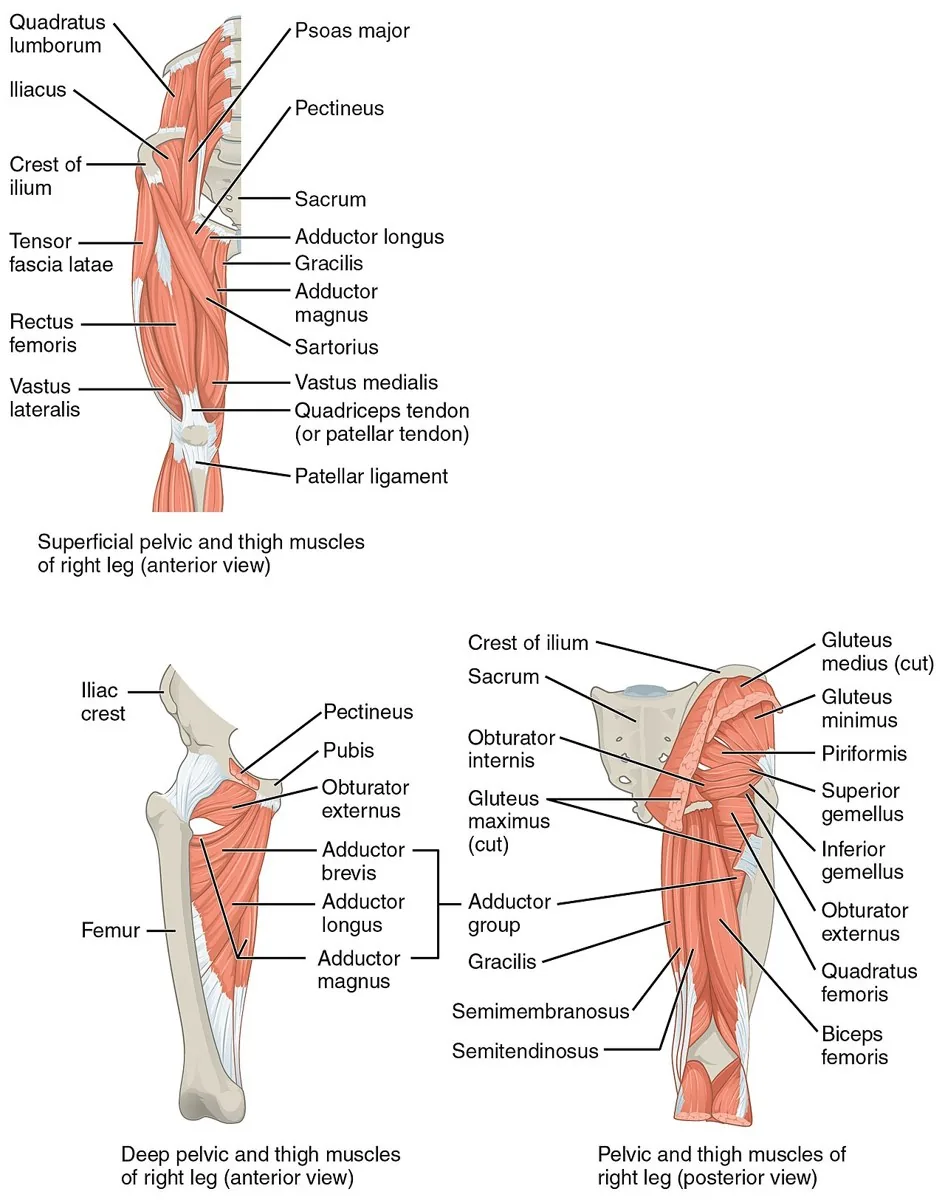
Your buttock muscles, often called the glutes, are some of the biggest muscles in your body. The large one at the back helps you stand up and climb stairs. It also steadies your hip and body each time your foot lands. Smaller muscles at the side of your hip keep your pelvis level each time you stand on one leg, which happens with every step.
These muscles work with your thigh and core muscles. Together, they help guide your knee over your foot, support your lower back and keep you steady on uneven roads and steps.
When these muscles are weak, nearby joints and muscles may take on extra load. Some people find their hips tire quickly on stairs, or a knee drifts inward when they squat. Others notice a dull ache in the lower back after long periods of sitting or standing.
These changes can have many causes. An assessment by a physiotherapist can help find out what is going on for you.
Common causes
Weak hip and buttock muscles can develop slowly, often for more than one reason:
- Sitting for long hours. Desk work, driving and long commutes mean these muscles do little work for much of the day.
- Being less active. Muscles that are not used regularly tend to lose strength.
- Pain or an old injury. When something hurts, many people move less or shift their weight to the other leg, and the muscles may weaken.
- Movement habits. Standing with your weight on one hip can leave these muscles underused. So can using your back and knees more than your hips when you lift or climb.
- Getting older. Muscles can lose strength with age, especially if they are not kept active.
- Nerve-related problems. Sometimes an irritated nerve in the lower back can weaken these muscles. An assessment can help look into this.
- After an operation. The muscles around the hip may weaken during recovery. Follow your surgeon's instructions alongside physiotherapy.
How physiotherapy at Mobiphysio can help
At Mobiphysio, treatment is one-on-one and starts with a thorough assessment. We aim to understand three things: whether your hip and buttock muscles are weak, why, and how this affects the way you move. Then we build a plan around your body, your daily routine and your goals.
Your plan may include:
- Tailored strengthening.Exercises for your hip and buttock muscles that start gently and build up over time.
- Core stability exercises.Work for your abdomen, back and pelvis muscles to support better stability and posture.
- Balance and walking training.Practice with daily tasks such as standing up and climbing stairs. We also help with how you walk, to reduce stress on the hip.
- Better movement habits.Simple changes to how you sit, stand, lift and climb stairs at home and at work.
- Hands-on manual therapy.Massage and other hands-on work aim to ease tension and stiffness so you can move more comfortably.
- Taping and electrotherapy.Taping may support muscles and joints. Electrotherapy is gentle electrical stimulation, such as TENS and EMS. It can help reduce pain and support muscle strengthening.
Our physiotherapists use methods such as McKenzie, Mulligan and Stecco when they suit you. We explain each step, listen to you and let you decide.
What to expect at your visits
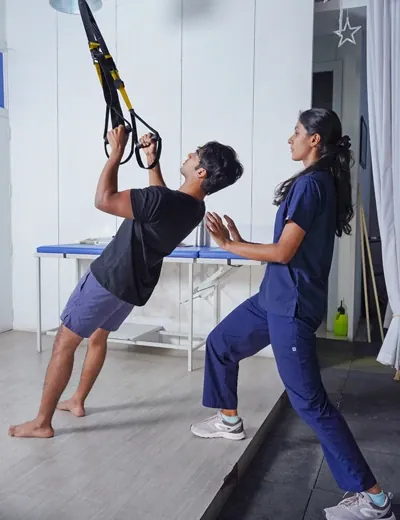
Your first visit takes 45 to 60 minutes. Follow-up visits take 30 to 45 minutes. At the first visit:
- We listen to your story and ask where and when you notice aches or weakness.
- Your physiotherapist checks how your hip moves and how strong your muscles are. They may also watch how you walk and stand.
- We explain what we find in simple words.
- You get a treatment plan and exercises that suit you.
Please bring any reports, scans or prescriptions you have. Our staff speak Tamil and English. You can ask for a particular physiotherapist at both branches.
At follow-up visits, we review how you are getting on and adjust your exercises based on how you are doing.
Things you can try at home
These gentle ideas suit most people, but they do not replace a plan made for you. If you have had an operation, follow your surgeon's instructions and check with your physiotherapist before you start. If you are pregnant or have recently had a baby, check with your physiotherapist first. Our pregnancy and after-birth care is given with your doctor's okay. Move slowly, breathe normally and stay within comfort.
- Glute bridges.
Lie on a mat or a firm bed with your knees bent and feet flat. Squeeze your buttocks and slowly lift your hips a little way. Hold for a moment, then lower gently.
- Side-lying leg lifts.
Lie on your side with your bottom knee bent. Slowly lift your top leg with your toes pointing forward. Lift only a short way, keeping your hips one above the other and your body still. Lower it with control, then switch sides. If lying on your side or lifting the leg hurts the side of your hip, skip this one and ask your physiotherapist.
- Hands-free chair stands.
Place a steady chair against a wall. Sit near the front of it with your feet flat on the floor. Stand up without using your hands, then sit down slowly. If you feel unsteady, keep your hands close to the seat so you can steady yourself, or have someone nearby. A higher chair makes this easier.
- Break up long sitting.
If you sit for long hours, stand up and walk around a little at regular times through the day. This gives your hip and buttock muscles a chance to work.
- Listen to your body.
It is normal to notice your muscles working. Stop and get advice if pain gets worse.
If an exercise is too hard, your physiotherapist can show you an easier way to start.
Common questions
Can sitting for long hours weaken my hip and buttock muscles?
It may play a part. When you sit for much of the day, these muscles do very little work. Short walking breaks and regular exercise can help keep them active.
Can weak hip muscles cause knee or back pain?
They may add to knee or back aches for some people, but pain often has more than one cause. An assessment helps your physiotherapist understand what is behind your pain.
Should I rest or keep moving if my hip aches?
Gentle movement is often a good start, while you avoid activities that make the pain worse. Your physiotherapist will then guide you on safe exercises.
How often should I do the home exercises?
This depends on your strength and comfort, so your physiotherapist will suggest what suits you. Start with a few slow repetitions. Stop and get advice if pain gets worse.
Do I need a doctor's referral to visit Mobiphysio?
No, you do not need a referral.
Can I ask for a female physiotherapist?
Yes, at both branches. Just let us know when you book.
Book an assessment
 Mobiphysio physiotherapists · RS Puram and Goldwins
If hip, knee or back aches are holding you back, a physiotherapy assessment is a good first step. WhatsApp or call us on +91 73385 65909 to book at either branch. Tell us when you book if stairs are hard for you.
- RS Puram: No.28, Captain Palaniswamy Layout, opposite the municipal park, RS Puram, Coimbatore 641 002. Monday to Saturday, 10 AM to 8 PM. Google Maps
- Goldwins, Avinashi Road: 11/23, Avinashi Road, opposite Sri Sai Dental Clinic, Karuparampalayam Pirivu, Coimbatore 641 014. Monday to Saturday, 8 AM to 1 PM and 4 PM to 8 PM. Google Maps
Both branches are closed on Sundays and on major festival days (Pongal, Diwali).
Our team is led by Dr. T.R. Vandana, PT. We have 25+ years of experience in physiotherapy and have treated 3000+ patients.
Have a question before you book? Message us on WhatsApp or call; we will answer your questions.