
At a glance
- 1Gluteal tendinopathy: irritated tendons causing pain on the outer hip.
- 2Physiotherapy aims to ease pain through gradual strengthening and position advice.
What is gluteal tendinopathy?
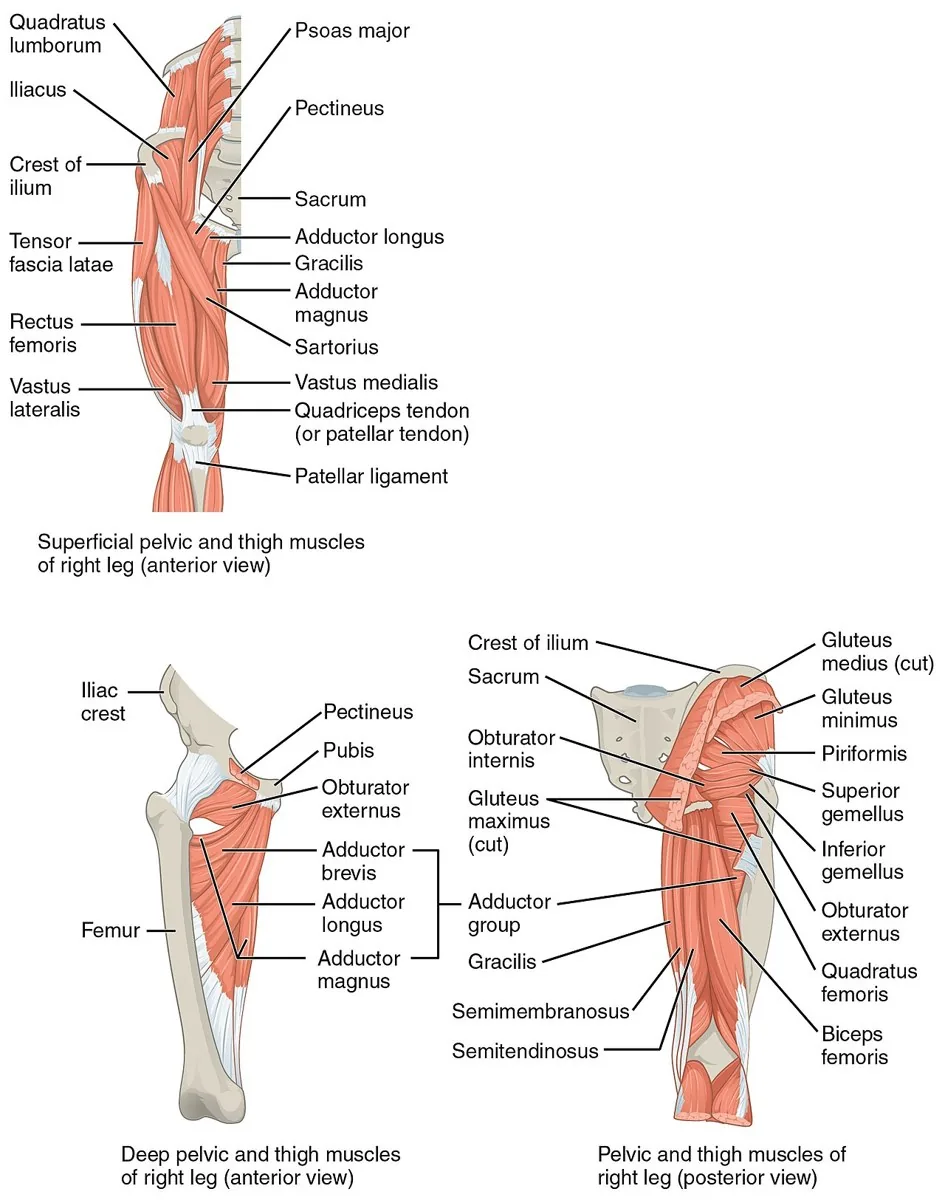
Two muscles at the side of your hip keep your pelvis level. They are called gluteus medius and gluteus minimus. They work hard when you walk, climb stairs or stand on one leg. Their tendons attach to a bony point on the outside of your upper thigh bone.
Tendons are strong cords that link muscle to bone. They can become irritated and sore when they take more load than they are used to. Being squeezed against that bony point for long periods can also irritate them. This is called gluteal tendinopathy. It is a problem with the tendons, not the hip joint itself. Some people are told they have hip bursitis. The fluid-filled sac beside these tendons can also become sore.
It often affects adults in midlife, especially women, but anyone can get it. People commonly describe:
- Pain on the outer hip, sometimes spreading down the outside of the thigh
- Pain when lying on the sore side, and sometimes on the other side too
- Pain when climbing stairs, getting up from a chair or standing on one leg
- Soreness when pressing on the outer hip
Other problems can cause pain in the same area. That is why a physiotherapist's assessment is a better guide than guessing.
Common causes
There is often no single cause. Several everyday things can add up and put extra strain on the tendons:
- A sudden increase in activity, such as longer walks, more stairs or a new exercise routine
- Sports with a lot of running, especially when you build up quickly
- Leaning or "hanging" on one hip while standing, for example when cooking or waiting in a queue
- Carrying a small child or a heavy bag on one hip
- Sitting with your legs crossed, or lying on one side for long hours
- Weak side-hip muscles or movement habits that put extra load on the tendons
- Changes in the tendons that can come with age
Several of these let the thigh drift across the body. This squeezes the tendons against the bone, so small changes to how you sit, stand and sleep can help.
How physiotherapy at Mobiphysio can help
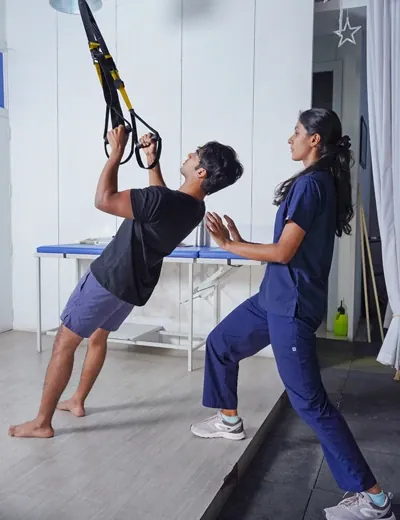
At Mobiphysio, our team is led by Dr. T.R. Vandana, PT. We start with a thorough assessment. We aim to ease your pain and settle the irritated tendons. We also slowly build the strength of the muscles around your hip. Treatment is one-on-one. We explain each step so you can decide what suits you.
Depending on your assessment, your plan may include:
- Advice on everyday positions: how you sleep, sit and stand, to reduce squeezing on the tendons.
- Gradual strengthening: gentle exercises for the side-hip muscles, built up step by step as your hip allows.
- Core stability exercises: work for your abdomen, back and pelvis muscles to support better stability and posture.
- Hands-on manual therapy: massage and soft-tissue work around the hip and thigh that aims to ease tension and pain. This may include named hands-on techniques such as Mulligan and Stecco.
- Taping: tape applied to the skin that can support muscles and may help with pain.
- Electrotherapy: gentle electrical stimulation, such as TENS or EMS, that can help reduce pain and support muscle strengthening.
- Balance and walking practice: work on standing on one leg, climbing stairs and walking patterns to reduce stress on the hip.
Strength is built up slowly over your visits. The aim is to help the tendons cope with more load. We also shape your exercises around your daily routine at home and at work.
What to expect at your visits
Your first visit takes 45 to 60 minutes. Follow-up visits take 30 to 45 minutes.
At your first visit:
- We listen to your story and ask where and when it hurts.
- Your physiotherapist checks how your hip moves and where it is weak.
- We explain the likely cause in simple words.
- You get a treatment plan and exercises that suit you.
At follow-up visits, we check how your hip is responding and adjust your exercises as you go.
Our staff speak Tamil and English. Tell us when you book if stairs are hard for you.
Things you can try at home
These ideas are gentle and suit most people. Go slowly, and stop and get advice if pain gets worse.
- Pillow between your knees
If you lie on your less sore side, put a pillow between your knees and ankles. This helps stop your top leg dropping across your body. Lying on your back is another option if you find it comfortable.
- Uncross your legs
Sit with your legs uncrossed and your knees about hip-width apart. Very low seats can add pressure, so a slightly higher chair may be more comfortable.
- Stand on both legs
Try not to lean or hang onto one hip while cooking, queuing or holding a child. Keep your weight spread across both legs. Switch sides when you carry a child or bag.
- Gentle side-hip strengthening
Lie on your back on your bed or a mat. Bend your knees and loop a belt or soft band around your thighs. Gently press your knees outwards against it for about five seconds, then relax. Repeat a few times. Keep the effort low enough that your hip pain does not increase.
- Pace your day
Spread out stairs, long walks and standing tasks rather than doing them all at once. Use the handrail on stairs and rest when you need to.
Your physiotherapist can check that you are doing these safely. They can also show you when to move on to harder exercises.
Common questions
Why can outer hip pain feel worse at night?
If gluteal tendinopathy is the cause, lying on the sore side presses the irritated tendons against the bone. Lying on the other side can also hurt if your top leg drops across your body. A pillow between your knees may help. Your physiotherapist can suggest other comfortable positions.
Should I stop walking or exercising completely?
Stopping everything is not usually needed. Many people find it helps to ease back on whatever flares up the pain. Keep up gentle movement at the same time. Your physiotherapist can guide you on safe exercise and how to build it back up.
Is gluteal tendinopathy the same as hip arthritis?
No. Gluteal tendinopathy affects the tendons on the outside of the hip. Hip arthritis affects the joint itself. Some people have more than one problem, so an assessment helps work out what is behind your pain.
Does sitting with my legs crossed make it worse?
It can. Crossing one knee over the other pulls your thigh across your body. This squeezes the tendons on the outer hip. Try sitting with your knees apart and your legs uncrossed.
Do I need a doctor's referral?
No referral is needed. Bring any reports, scans or prescriptions you have to your first visit.
Can I ask for a female physiotherapist?
Yes. You can ask for a female physiotherapist, or a particular physiotherapist, at both branches. Just mention it when you book.
Book an assessment
 Mobiphysio physiotherapists · RS Puram and Goldwins
Is outer hip pain making sleep, stairs or standing hard? A physiotherapy assessment can help find the likely cause. WhatsApp or call Mobiphysio on +91 73385 65909 to book. We have 25+ years of experience in physiotherapy and have treated 3000+ patients.
- RS Puram: No.28, Captain Palaniswamy Layout, opposite the municipal park, RS Puram, Coimbatore 641 002. Monday to Saturday, 10 AM to 8 PM. Google Maps
- Goldwins, Avinashi Road: 11/23, Avinashi Road, opposite Sri Sai Dental Clinic, Karuparampalayam Pirivu, Coimbatore 641 014. Monday to Saturday, 8 AM to 1 PM and 4 PM to 8 PM. Google Maps
Both branches are closed on Sundays and major festival days such as Pongal and Diwali. There is ample car parking at both.
Have a question before you book? Message us on WhatsApp or call; we will answer your questions.