
At a glance
- 1Pelvic pain in pregnancy, felt at the front, in the buttocks or in the groin.
- 2Doctor's okay first. Then gentle hands-on care and exercises may help.
What is pelvic girdle pain in pregnancy?
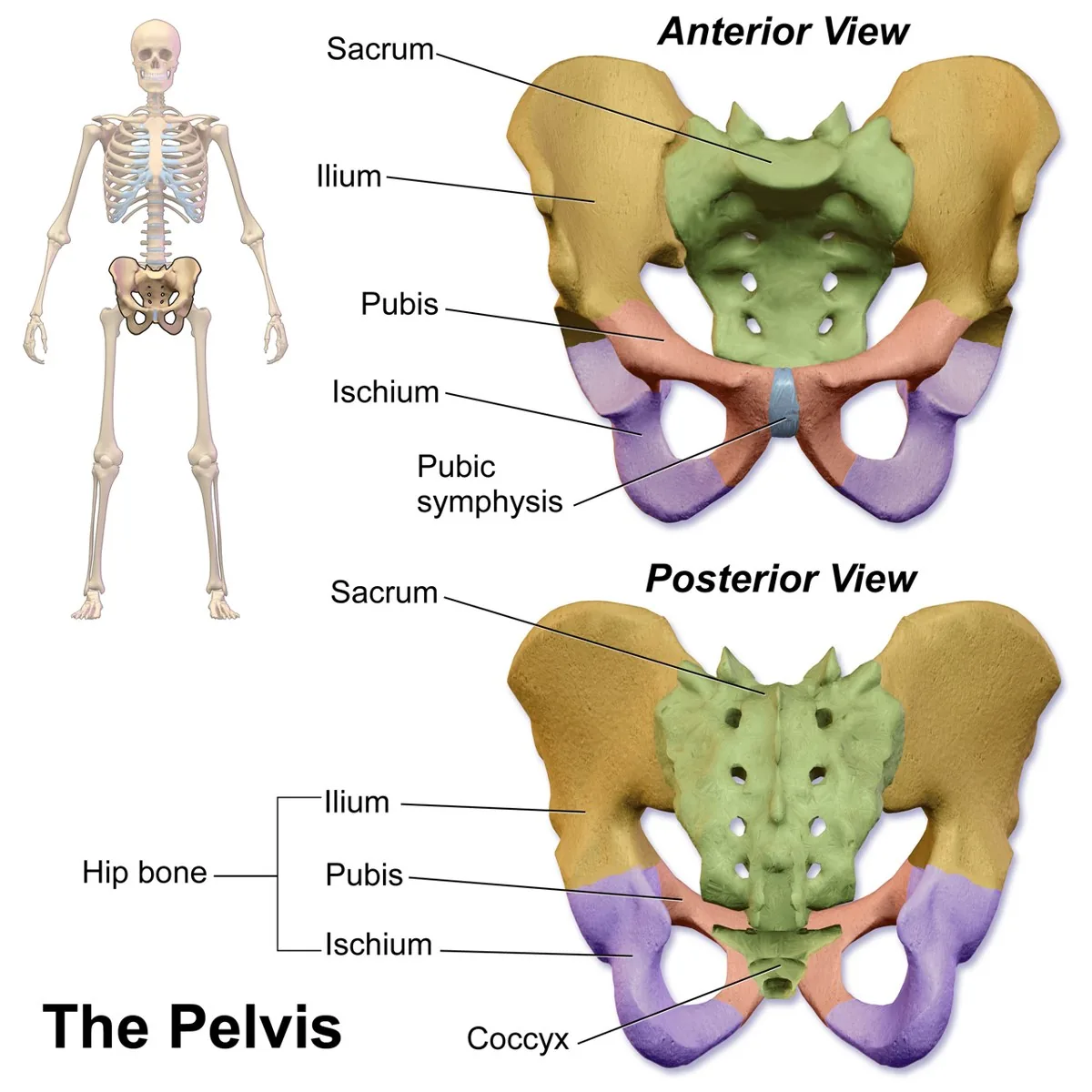
Your pelvis is a ring of bones. At the front, the two pubic bones meet at a joint called the pubic symphysis. At the back, two joints (the sacroiliac joints) link the pelvis to the base of your spine. During pregnancy, these joints and the muscles around them carry more load. Pain in and around these joints during pregnancy is called pelvic girdle pain.
Pain at the front, around the pubic symphysis, is sometimes called symphysis pubis dysfunction, or SPD. The pain may be felt at the front of the pelvis, deep in the buttocks, in the groin or along the inner thighs. It can be on one side or both.
It is often worse when you turn over in bed, climb stairs, stand on one leg, or get in and out of a car. Getting dressed, walking for a long time, or getting up from the floor can also hurt.
Pain in pregnancy can have different sources. A careful assessment by a physiotherapist can help you understand your pain. This guide gives general information only.
Common causes
There is usually no single cause. It is often a mix of pregnancy changes, daily habits and your own history.
- A growing bump. As your baby grows, your posture and balance change, and your back and pelvis carry more weight.
- Softer ligaments. Pregnancy hormones soften the ligaments around your pelvis as your body prepares for birth. This is a normal change. For some women, it may add to the strain on the pelvic joints.
- Muscle imbalance. Tight or weak buttock, thigh, tummy or pelvic floor muscles may give the pelvis less support.
- Uneven movement. If one side of the pelvis moves a little differently from the other, this may add to joint irritation.
- Daily strain. Standing for long hours, carrying a toddler on one hip, swinging a leg over a two-wheeler, or getting down to the floor and back up can add load.
- Your history. Back or pelvic pain before pregnancy, pelvic pain in an earlier pregnancy, or a past fall or injury to the pelvis may make it more likely.
Your physiotherapist can help you spot what adds strain in your own day.
How physiotherapy at Mobiphysio can help
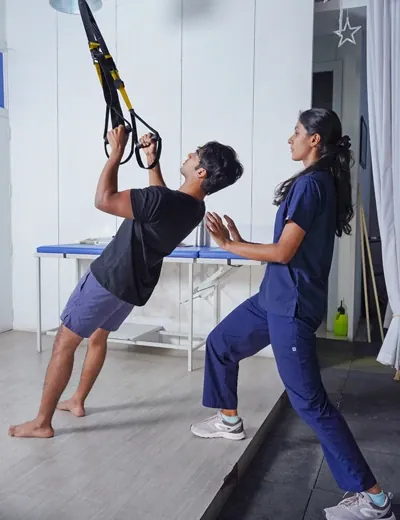
Once your doctor has given their okay for physiotherapy, we begin with a thorough assessment. Treatment is kept gentle and adjusted to your stage of pregnancy and how you feel on the day.
Your plan may include:
- Gentle hands-on care.Your physiotherapist may use careful hands-on techniques to ease tight muscles and help the pelvic joints move more comfortably. We check that you are comfortable throughout.
- Pelvic and hip muscle work.You learn gentle exercises for the muscles that support your pelvis. These include your buttock, hip, inner thigh, deep tummy and pelvic floor muscles. Exercises are matched to your body and your symptoms.
- Practical movement tips.We look at how you sit, stand, walk and move through your day. Then we show you easier ways to do everyday tasks, such as turning in bed or using stairs.
- Planning your day.We help you plan activity and rest at home and at work. The aim is to take some strain off your pelvis.
We aim to ease your pain and help you move with more confidence as your pregnancy goes on. Results vary from person to person. We explain your options clearly, and you decide what feels right for you.
What to expect at your visits
Your first visit takes 45 to 60 minutes. Follow-up visits take 30 to 45 minutes. Treatment is one-on-one, and women's health sessions take place in a private room.
At your first visit:
- We listen to your symptoms and how they affect your day, at home and at work.
- We ask about your pregnancy and check that your doctor has given their okay.
- Your physiotherapist gently looks at your posture, your breathing, how you move and how the muscles around your hips and pelvis work.
- We explain what may be causing your pain in plain words.
- You leave with a clear plan, including simple exercises and movement tips to start.
Our staff speak Tamil and English.
As your pregnancy goes on, we review your plan and adjust it as your body changes. Your physiotherapist will talk with you about how often to come.
Things you can try at home
These ideas are gentle and general, and should suit most women. If your doctor has asked you to rest or limit activity, follow that advice. Move slowly and stay within comfort. Stop and get advice if pain gets worse.
- Knees together in bed.
To turn over or get in and out of bed, bend your knees, keep them together and move your body as one. Lying on your side with a pillow between your knees may feel more comfortable.
- Getting into a car.
Sit on the seat first. Then bring both legs in together with your knees close. Do the same in reverse to get out.
- Sit to dress.
Sit on a chair or the edge of the bed to put on underwear, salwar, leggings or footwear. This saves you from standing on one leg.
- Take stairs slowly.
Hold the rail and bring both feet onto each step before taking the next one. If one side is more sore, many women find it easier to step up with the less sore leg first and step down with the more sore leg first.
- Keep weight even.
When standing, share your weight across both feet. Avoid standing on one leg where you can. Sit down for short breaks if you have to stand for a long time.
Common questions
Is physiotherapy safe during pregnancy?
At Mobiphysio, care during pregnancy starts with your doctor's okay. After that, treatment is kept gentle and adjusted to your stage of pregnancy and how you feel.
Should I stop walking and staying active?
Many women find gentle movement within comfort helps them feel better. Your physiotherapist can suggest which activities suit you now and which to change for a while. Stop and get advice if pain gets worse.
Is it okay to sit on the floor with this pain?
Some women find that sitting cross-legged, squatting or getting up from the floor feels uncomfortable. A firm chair may feel easier for now. If you need to, your physiotherapist can show you a gentler way to get down and up.
Can I continue physiotherapy after my baby is born?
Yes. Mobiphysio also offers after-birth care, with your doctor's okay. Your physiotherapist will check how you are moving and plan your next steps with you.
Do I need a doctor's referral?
No referral is needed to book. For pregnancy care, we do need your doctor's okay before treatment starts. Please bring any note or reports from your doctor, and any scans or prescriptions you have.
Can I ask for a female physiotherapist?
Yes, you can ask for a female physiotherapist at both branches.
Book an assessment
 Mobiphysio physiotherapists · RS Puram and Goldwins
If pelvic pain is making daily life hard, we would be glad to help. WhatsApp or call us on +91 73385 65909 to book an assessment.
- RS Puram: No.28, Captain Palaniswamy Layout, opposite the municipal park, RS Puram, Coimbatore 641 002. Open Monday to Saturday, 10 AM to 8 PM. Google Maps
- Goldwins, Avinashi Road: 11/23, Avinashi Road, opposite Sri Sai Dental Clinic, Karuparampalayam Pirivu, Coimbatore 641 014. Open Monday to Saturday, 8 AM to 1 PM and 4 PM to 8 PM. Google Maps
Both branches are closed on Sundays and on major festival days, including Pongal and Diwali. There is ample car parking at both branches. Tell us when you book if stairs are hard for you.
Mobiphysio is led by Dr. T.R. Vandana, PT. Our team has 25+ years of experience in physiotherapy and has treated 3000+ patients.
Message us on WhatsApp or call; we will answer your questions.