
At a glance
- 1Achilles tendinopathy: gradual overuse pain in the tendon behind the ankle.
- 2Physiotherapy aims to ease pain with tendon exercises and training changes.
What is Achilles tendinopathy?
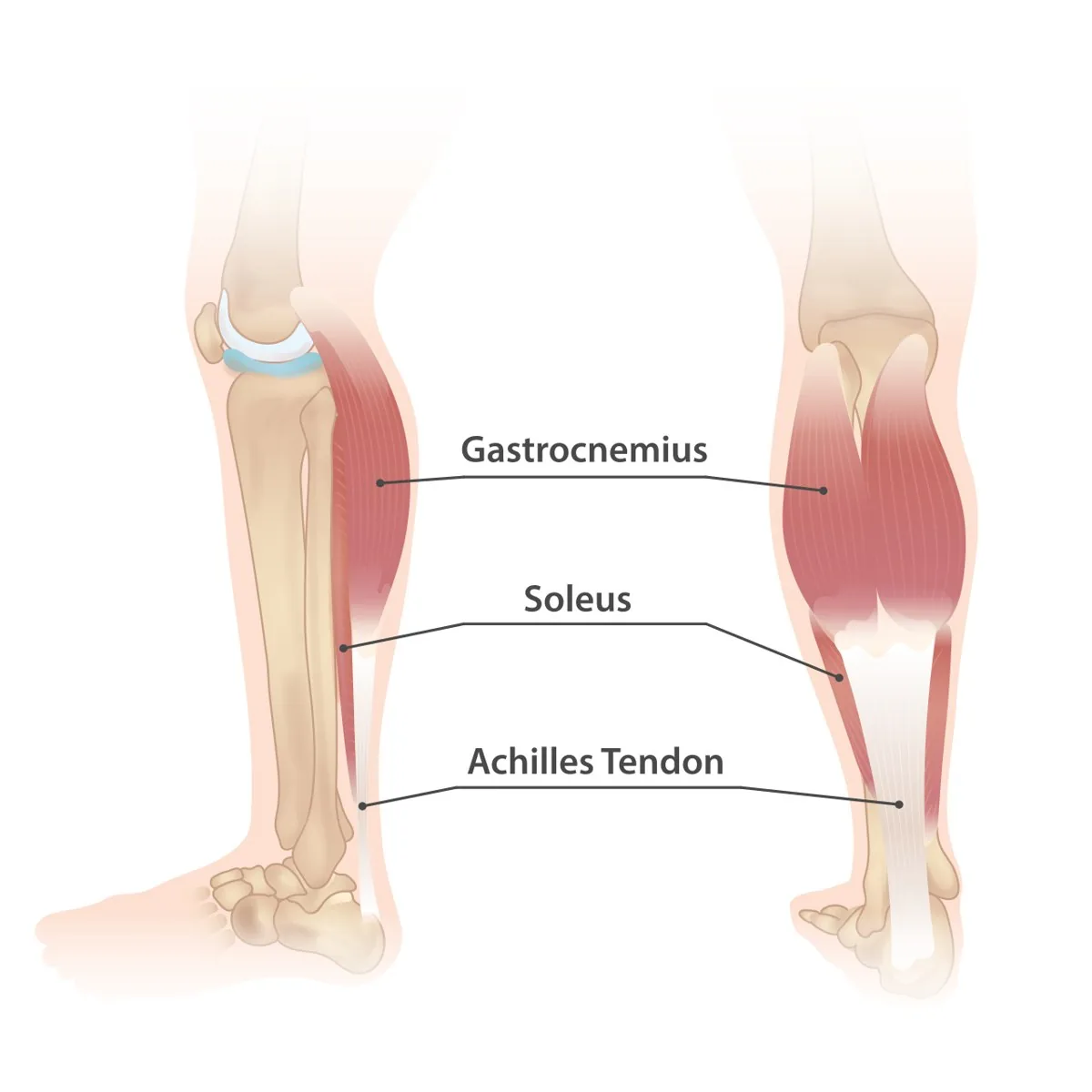
The Achilles tendon is the strong, thick cord at the back of your ankle. It joins your calf muscles to your heel bone. Each time you walk, climb stairs, run or jump, it takes load and helps push you forward.
Tendinopathy means the tendon has become painful and less able to cope with load. It usually builds up gradually rather than after one sudden injury. Many people notice pain and stiffness first thing in the morning, or at the start of a walk or run.
Some people find the pain eases a little once they warm up. It may then return later in the day or the next morning. The tendon may be tender to touch or look slightly thicker than on the other side. Pain can be in the middle of the tendon or lower down, close to the heel.
Other problems can cause pain in a similar area. A physiotherapist can assess your ankle and explain what may be going on.
Common causes
Achilles tendinopathy is usually an overuse problem. It often develops when the tendon is asked to do more than it is ready for, again and again, without enough time to adjust. Things that can add strain include:
- A sudden increase in walking, running or sport, such as training for an event
- Adding hills, stairs, jumping or faster running too quickly
- Going back to activity after a break at the same level as before
- Calf muscles that are weak or tire quickly
- Worn-out or unsupportive footwear, or a sudden change of shoes
- Long hours of standing or walking at work or at home
- Not enough rest days between harder sessions
Often there is no single cause. Your physiotherapist will look at your activity, your footwear and the way you move. This helps them understand what may be adding strain to your tendon.
How physiotherapy at Mobiphysio can help
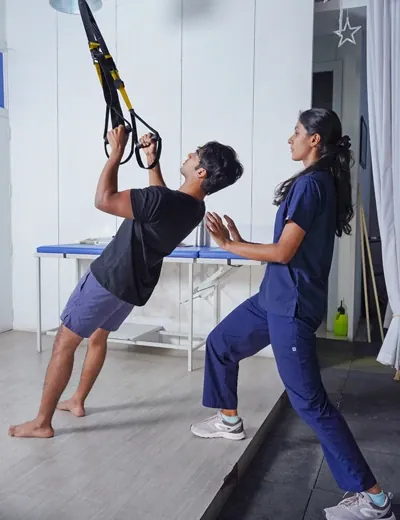
Treatment at Mobiphysio is one-on-one and starts with a thorough assessment. We aim to settle your pain, build up your tendon's ability to take load, and help you get back to the activities you enjoy. For tendon pain, exercise and changes to training are usually the main focus. Other treatments are used alongside them where they may help.
Your plan may include:
- A structured tendon-loading programme.Your physiotherapist may start with simple exercises, such as slow heel raises, at a level your tendon can manage. As your tendon copes, the exercises are made harder step by step by adding load, speed or variety. The aim is to help your tendon and calf grow stronger and better able to handle walking, running and daily life.
- Changes to training and daily load.Rather than full rest, we help you find an amount of walking, running or sport your tendon can handle. This may mean changing distance, pace, hills or how often you train. We then work with you towards a gradual return to your usual routine, as your tendon allows.
- Hands-on manual therapy.Techniques such as massage and joint mobilisation may help ease pain and improve flexibility. Our physiotherapists may use approaches such as Mulligan or Stecco where suitable.
- Gentle stretching.Stretches may be added if they suit your tendon. Your physiotherapist will show you which ones to do and which to avoid for now.
- Gait and balance training.We can help you walk and run in a way that keeps extra strain off your ankle. Balance exercises aim to improve stability and may help lower the risk of future injuries.
- Ultrasound therapy and electrotherapy.Both are available at our two branches. Your physiotherapist will explain whether they may be useful as part of your plan.
What to expect at your visits
Your first visit takes 45-60 minutes, and follow-up visits take 30-45 minutes. Here is what usually happens:
- We listen to how the pain started, what makes it better or worse, and what it stops you doing.
- We ask about your walking, running, sport, work and footwear.
- Your physiotherapist checks your ankle and calf, and watches simple movements such as walking and heel raises.
- We explain what we find in plain words. Our staff speak Tamil and English.
- You get a treatment plan suited to your ankle, your activity goals and your daily routine. We talk through the options, and you decide.
- At follow-up visits, we check how your tendon has responded and adjust your exercises and activity.
- Please bring any reports, scans or prescriptions you have.
- If you have had surgery on your ankle or tendon, follow your surgeon's instructions alongside physiotherapy.
Things you can try at home
These are general ideas, not a personal treatment plan.
- Slow heel raises.
Stand on a flat floor and hold a wall or counter. Rise slowly onto your toes on both legs, then lower slowly. Do a few within comfort. Stop and get advice if pain gets worse.
- Adjust walking and running.
Cut back your distance, pace, hills or stairs to an amount that is comfortable. Many people find it helps to keep moving gently rather than stop completely.
- Wear supportive footwear.
Choose comfortable, supportive shoes for walks and long days of standing. Save thin, flat chappals for short trips. Try not to switch suddenly to a very different style of shoe.
- Warm up gently.
Start each walk or run at an easy pace for the first few minutes, especially early in the morning.
- Notice the next morning.
Check how your tendon feels on the morning after activity. If it is stiffer or more painful than usual, ease back a little next time.
If pain gets worse at any point, stop and get advice from a physiotherapist.
Common questions
Should I stop walking or running completely?
Not always. Many people find it helps to cut back to an amount their tendon can manage, rather than stopping all activity. Your physiotherapist can help you find the right level.
Why is the back of my ankle so stiff in the morning?
Morning stiffness is common with tendon pain, but it can have other causes too. It often eases once you start moving. A physiotherapist can assess your ankle and explain what may be causing it.
Is it okay to walk barefoot at home?
Many people in Coimbatore walk barefoot indoors by habit. Some find soft, cushioned indoor slippers more comfortable on hard floors while the tendon is sore. Your physiotherapist can advise what suits you.
Will exercise make my tendon worse?
Exercise is usually a key part of care, but the amount matters. Your physiotherapist starts at a level that suits you and builds up step by step. If pain gets worse, stop and get advice.
Do I need a doctor's referral to visit Mobiphysio?
No, you do not need a doctor's referral. You can book directly by WhatsApp or phone call on +91 73385 65909.
Can I ask for a female physiotherapist?
Yes. You can ask for a particular physiotherapist, or a female physiotherapist, at both branches. Please mention it when you book.
Book an assessment
 Mobiphysio physiotherapists · RS Puram and Goldwins
If pain at the back of your ankle is slowing you down, an assessment is a good first step. WhatsApp or call Mobiphysio on +91 73385 65909 to book your visit.
- RS Puram: No.28, Captain Palaniswamy Layout, opposite the municipal park, RS Puram, Coimbatore 641 002. Monday to Saturday, 10 AM to 8 PM. (Map)
- Goldwins, Avinashi Road: 11/23, Avinashi Road, opposite Sri Sai Dental Clinic, Karuparampalayam Pirivu, Coimbatore 641 014. Monday to Saturday, 8 AM to 1 PM and 4 PM to 8 PM. (Map)
Both branches are closed on Sundays and major festival days (Pongal, Diwali). There is ample car parking at both branches.
Dr. T.R. Vandana, PT, leads a team with 25+ years of experience in physiotherapy and 3000+ patients treated. Message us on WhatsApp or call; we will answer your questions.