
At a glance
- 1Hip osteoarthritis, often called wear and tear, is a slow change in the cartilage and bone of the hip joint.
- 2Physiotherapy uses exercise, hands-on care and pacing to help you stay active.
What is hip osteoarthritis?
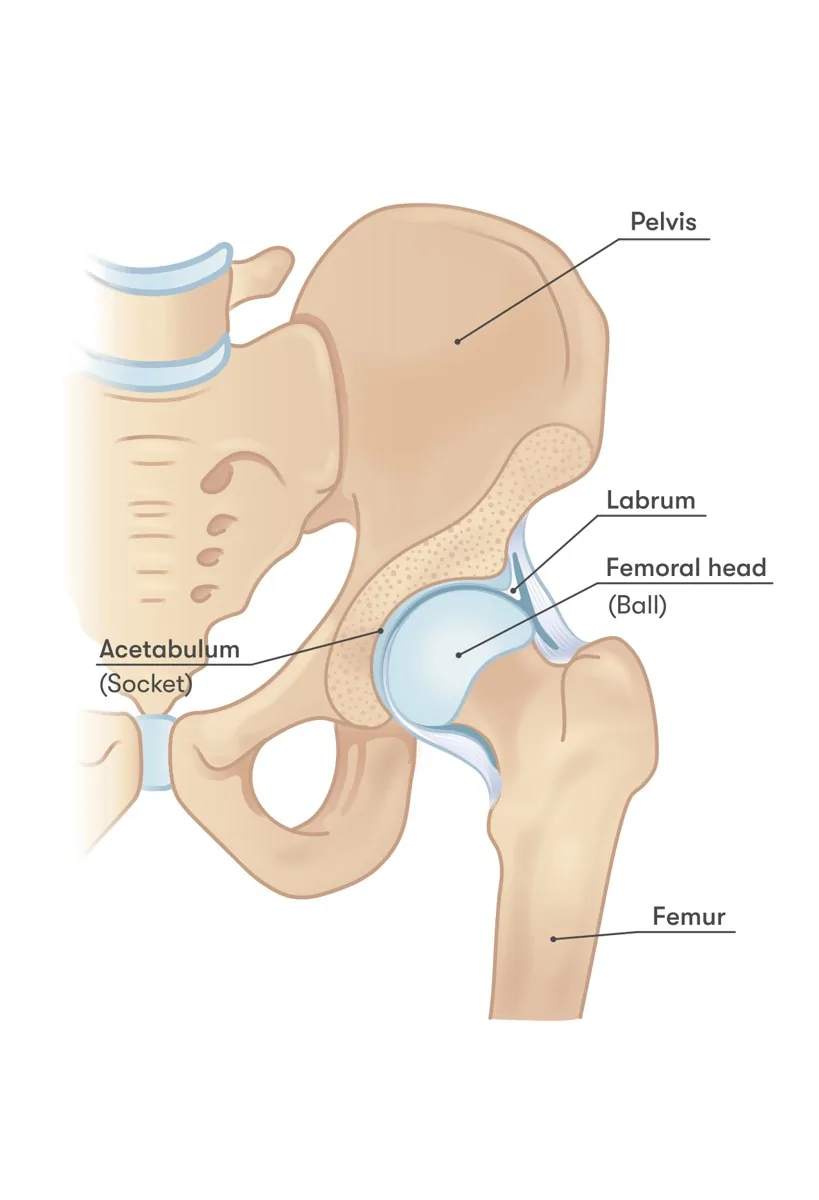
Your hip is a ball-and-socket joint. The rounded top of your thigh bone (the ball) sits in a cup in your pelvis (the socket). Smooth cartilage covers both surfaces so they can glide easily.
In osteoarthritis, this cartilage slowly becomes thinner and rougher. The bone underneath can change too, and small bony edges may form. Over time the hip can become stiff and sore. Despite the name "wear and tear", the joint is not simply wearing out. Gentle, regular movement is usually good for the hip.
The ache is often felt in the groin or front of the thigh, and sometimes in the buttock, side of the hip or towards the knee. Common daily struggles include:
- Putting on socks, shoes or sandals
- Getting up from a low chair, sofa or car seat
- Walking longer distances, such as round the market or temple
- Sitting cross-legged on the floor or squatting
- Stiffness after sitting or first thing in the morning
Other hip problems can cause similar pain, so an assessment by a physiotherapist can help you understand what is going on.
Common causes
There is usually no single cause, but a mix of things such as:
- Age: osteoarthritis becomes more common as we get older.
- Past injury: an earlier hip injury can affect the joint later.
- Weak muscles: weak hip and thigh muscles give the joint less support.
- Body weight: extra weight means more load through the hips with every step.
- Hip shape and family history: some hip shapes wear more easily, and osteoarthritis can run in families.
- Heavy, repeated loading: years of hard physical work or high-impact sport can put extra pressure on the hips.
How physiotherapy at Mobiphysio can help
Physiotherapy cannot reverse the changes inside the joint. But it can help many people move more easily, build strength and keep doing the things that matter to them. At Mobiphysio, we start with a thorough assessment, then build a plan around your goals.
Your plan may include:
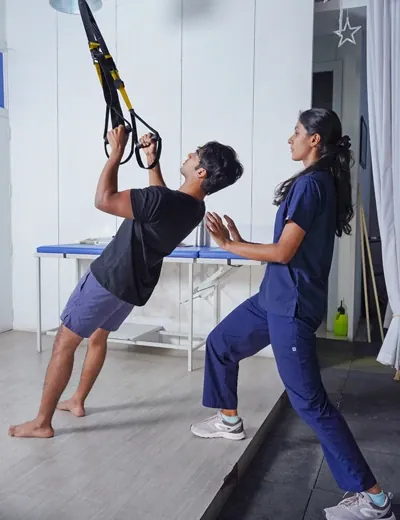
- ExerciseStrengthening the muscles around your hip, thigh and core can help support the joint. Gentle stretches aim to ease stiffness, and balance exercises can help you stay steady.
- Hands-on careMassage, joint mobilisation (gentle, controlled movement of the joint by your physiotherapist) and myofascial release (steady, gentle pressure on tight tissues) may ease tension and stiffness.
- Pacing and daily tasksWe help you spread activity through the day so you keep moving without overdoing it. We also practise real tasks, such as rising from a chair, and look at how you walk.
- Other supportDepending on your assessment, taping or TENS (a small device that gives a mild tingling) may help ease pain. EMS (mild electrical pulses that help muscles work) may support strengthening.
We aim to help you stay active and independent at a pace that suits you.
What to expect at your visits
Your treatment is one-on-one. Your first visit takes 45 to 60 minutes, and follow-up visits 30 to 45 minutes.
At your first visit:
- We ask where and when it hurts, and which daily tasks are hard.
- Your physiotherapist checks how your hip moves, how you walk and where you are weak.
- We explain the likely cause in simple words.
- You get a treatment plan and exercises that suit you.
At follow-up visits, we check your progress and adjust your care. Our staff speak Tamil and English.
Things you can try at home
These gentle, general ideas suit most people. Move slowly and stay within a comfortable range. If you have had a hip operation, follow your surgeon's instructions alongside physiotherapy.
- Gentle hip stretches
- Knee to chest: Lie on your back on a bed with one knee bent and that foot flat. Slowly bring the other knee towards your chest, only as far as is comfortable. Hold for a few slow breaths, then lower it gently. Repeat on the other side. Stop if you feel a sharp pinch in the groin.
- Knee fall-out: Lie on your back with both knees bent and feet flat on the bed. Let one knee fall slowly out to the side, only as far as is comfortable, then bring it back. Repeat on the other side.
- Choose a higher chair
A firm chair with arms, where your hips sit a little higher than your knees, can make getting up easier. A firm, non-slip cushion can raise a low seat.
- Sit-to-stand practice
Sit near the front of a firm chair with arms, placed against a wall. Keep your feet flat on the floor. Slowly stand up, then sit back down with control. Start with a few repeats. Push through the armrests if you need to.
- Pace your walking
Instead of one long walk, try shorter walks spread through the day. Add a little more time slowly, as your hip allows.
- Make footwear easier
Sit down to put on socks and shoes. Choose footwear that is easy to put on but holds your foot well, such as sandals with a back strap. A long-handled shoehorn can save deep bending.
Stop and get advice if pain gets worse. Your physiotherapist can adjust these ideas to suit you.
Common questions
Is walking good or bad for hip osteoarthritis?
For many people, regular gentle walking helps keep the hip moving and the muscles working. Shorter walks spread through the day are often easier than one long walk. Your physiotherapist can help you find a pace that suits you.
Should I rest when my hip hurts?
Easing off activities that clearly make the pain worse can help it settle. Complete rest can leave the hip stiffer, so gentle movement still matters. We will guide you on what is safe for you.
Can I still sit on the floor or use an Indian-style toilet?
Many people can, with some changes. Cross-legged sitting and deep squatting are often the hardest movements with a stiff hip. Your physiotherapist can see how you move and suggest options. These might include a commode chair over the toilet or a low stool instead of the floor.
Does hip osteoarthritis always get worse?
Not always. It is different for everyone, and many people have good and bad phases. Staying active and keeping the muscles around the hip strong may help you stay independent. Your assessment helps us plan what suits you.
Do I need a doctor's referral?
No, you do not need a doctor's referral to visit Mobiphysio. Please bring any reports, scans or prescriptions you have.
Can I ask for a female physiotherapist?
Yes. You can ask for a female physiotherapist, or a particular physiotherapist, at both branches. Just mention it when you WhatsApp or call to book.
Book an assessment
 Mobiphysio physiotherapists · RS Puram and Goldwins
Is hip stiffness getting in the way of your day? WhatsApp or call us on +91 73385 65909 to book an assessment.
Mobiphysio has two branches in Coimbatore:
- RS Puram: No.28, Captain Palaniswamy Layout, opposite the municipal park, RS Puram, Coimbatore 641 002. Google Maps
- Goldwins, Avinashi Road: 11/23, Avinashi Road, opposite Sri Sai Dental Clinic, Karuparampalayam Pirivu, Coimbatore 641 014. Google Maps
Opening hours: RS Puram, Monday to Saturday, 10 AM to 8 PM. Goldwins, Monday to Saturday, 8 AM to 1 PM and 4 PM to 8 PM. Both are closed on Sundays and major festival days such as Pongal and Diwali.
Tell us when you book if stairs are hard for you.
Our team has 25+ years of experience in physiotherapy and has treated 3000+ patients. Have a question before you book? Message us on WhatsApp or call; we will answer your questions.