
At a glance
- 1After injury, a stiff elbow may not fully bend or straighten, and the forearm may not turn fully.
- 2Hands-on mobilisation and a step-by-step exercise plan aim to rebuild movement.
What is elbow stiffness after an injury?
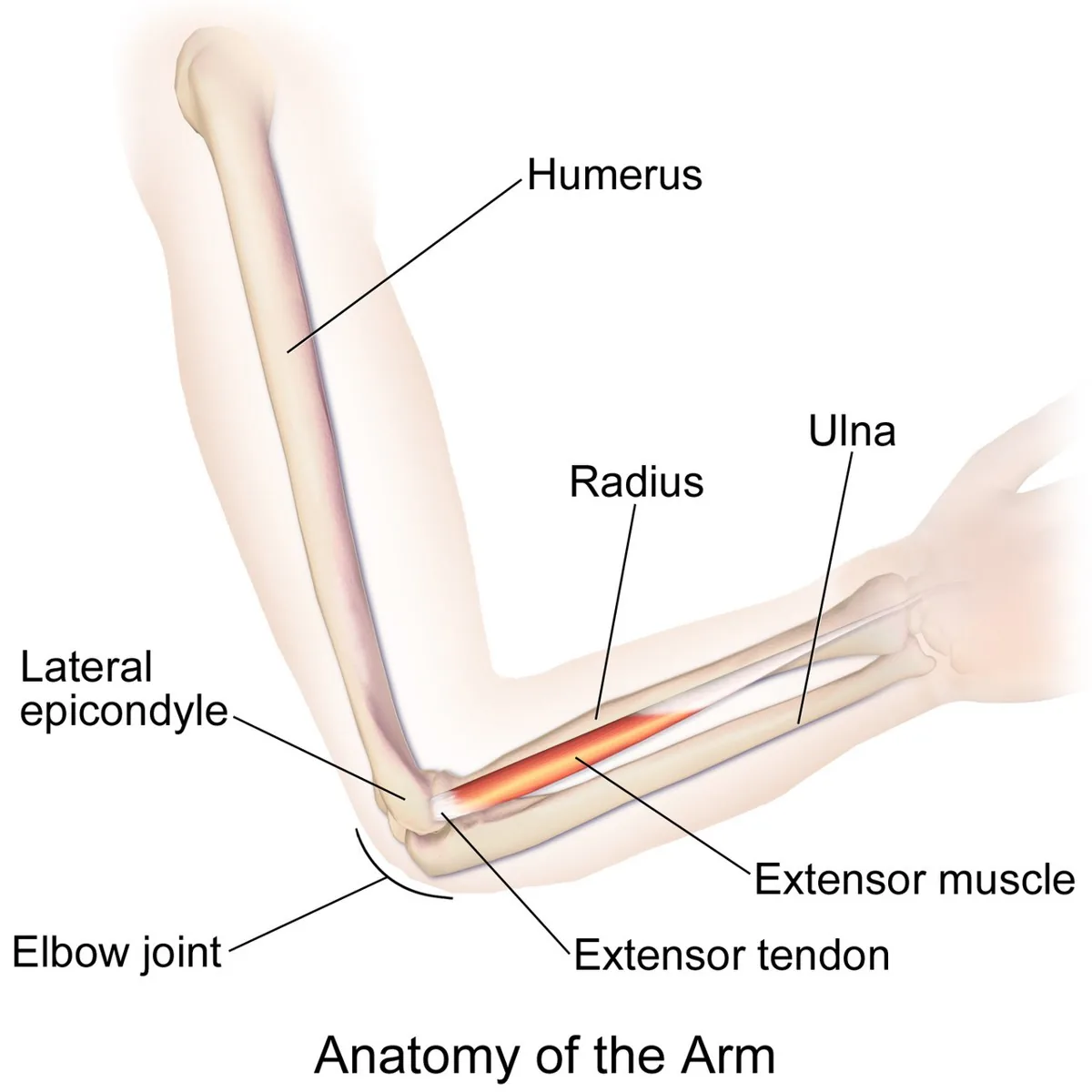
Your elbow bends to bring your hand to your mouth and straightens so you can reach. Working with the wrist, it turns your forearm so your palm faces up or down. After an injury, one or more of these movements can become limited.
Your arm may stay slightly bent, or your hand may not reach your shoulder. Eating with your hand, turning your palm up or gripping a two-wheeler handle may feel harder than before. Stiffness and weakness often go together.
Common causes
An injury, and the time spent protecting it, can both leave the elbow stiff. Common reasons include:
- Time in a sling or plaster. Keeping the elbow still helps it heal, but the joint lining, ligaments and muscles can tighten when they are not moved.
- Healing tissue. The new tissue the body lays down during repair can be tight and less stretchy at first.
- Swelling. Swelling around the joint can make bending and straightening feel blocked.
- Protecting the arm. After pain, many people hold the arm close and bent without realising it, and the muscles get used to this position.
- Loss of strength. Muscles weaken when they are used less, which makes everyday tasks tiring.
- The injury itself. Falls, road accidents, broken bones near the elbow, ligament sprains and operations can all be followed by stiffness. Existing joint problems such as arthritis may add to it. Sometimes a change in the bone after a break can limit movement; your physiotherapist checks for this during the assessment.
More than one of these is often involved. An assessment helps your physiotherapist understand what is holding your elbow back.
How physiotherapy at Mobiphysio can help
Treatment at Mobiphysio is one-on-one and starts with a thorough assessment. Your plan aims to bring back bending and straightening, forearm turning, and the strength to use your arm with confidence.
Hands-on mobilisation. Your physiotherapist uses gentle, controlled techniques that aim to improve how the elbow joint moves. Some, such as those in the Mulligan approach, combine the physiotherapist's hands with your own movement. Massage may be added to ease tight soft tissue. Stecco Fascial Manipulation, a hands-on method for the connective tissue around muscles, may also be used.
Hands-on treatment should be firm but manageable. You can ask us to slow down or stop at any time.
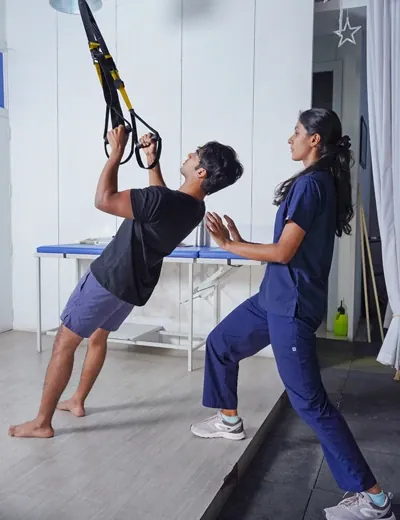
A step-by-step exercise plan. Early exercises focus on gentle bending, straightening and turning the palm up and down. As your elbow allows, you add strengthening work such as wrist turns, wrist curls and towel twists, then grip, lifting and carrying. Your physiotherapist checks your progress at each visit and adjusts the plan. The aim is gradual progress, without forcing the joint.
Other options where suitable. Depending on your assessment, your plan may also include dry needling, electrotherapy or ultrasound therapy. These are used alongside movement and exercise, not instead of them. We explain any option first, and you decide.
What to expect at your visits
No doctor's referral is needed.
- Your story. We ask how and when the injury happened, how long your arm was in a sling or plaster, and which daily tasks are hard now.
- Your reports. Bring any reports, scans or prescriptions you have. Your physiotherapist may use X-ray or scan findings to help plan your care.
- A careful examination. Your physiotherapist checks how far your elbow bends and straightens, and how well your forearm turns. They also look at your shoulder, wrist, grip and strength.
- Your plan. You get a personalised plan and simple exercises to begin, explained in Tamil or English.
Your first visit takes 45 to 60 minutes. Follow-up visits take 30 to 45 minutes. A loose or short-sleeved top makes it easier to examine and treat your elbow.
Things you can try at home
These general ideas suit many people once an injury has healed. If you are not sure your elbow is ready for movement, ask your physiotherapist before you start. If you have had an operation, follow your surgeon's instructions alongside physiotherapy.
- Move little and often.
Gently bend and straighten your elbow, and turn your palm up and down, a few times at several points through the day. Short, regular practice is often easier on a stiff elbow than one long session.
- Use it every day.
Let the arm help with light tasks such as eating, combing your hair or carrying a light bag. Leave heavy lifting until your physiotherapist says it is suitable.
- Warm up first.
A warm towel or warm shower over the elbow for a few minutes before exercising may help it move more easily. Keep it comfortably warm, never hot, to protect your skin. Skip the warmth and ask your physiotherapist in any of these cases:
- your elbow is swollen or feels hot
- the skin feels numb
- there is a wound that has not fully healed
- Ease, do not force.
Move into a gentle stretch, hold it briefly while breathing slowly, then relax. Avoid bouncing, jerking or pushing into pain. Do not let anyone force or pull your elbow straight, and avoid hard rubbing at home.
- Listen to your elbow.
A mild stretching sensation is common during exercise. Stop and get advice if pain gets worse, or if your elbow is stiffer afterwards.
Common questions
Why is my elbow still stiff after the plaster came off?
While your arm rests in a plaster or sling, the tissues around the joint can tighten and the muscles lose strength. New healing tissue can also be less stretchy at first. Physiotherapy aims to gently bring back movement and strength, step by step.
Should I force my elbow straight to loosen it?
No. Forcing a stiff elbow can leave it sore and irritated. Gentle, regular movement within a comfortable stretch is usually a better approach, guided by your physiotherapist.
Is some discomfort during exercises normal?
A mild stretching sensation during exercise is common. Stop and get advice if pain gets worse. Your physiotherapist can then adjust your plan.
Can physiotherapy help me turn my palm up again?
Your physiotherapist checks how well your forearm turns palm up and palm down. Where needed, the plan may include hands-on techniques and exercises such as wrist turns and towel twists.
Do I need a doctor's referral to visit Mobiphysio?
No doctor's referral is needed. Please bring any reports, scans or prescriptions you have.
Can I ask for a female physiotherapist?
Yes. You can ask for a female physiotherapist, or a particular physiotherapist, at both our RS Puram and Goldwins branches. Just mention it when you WhatsApp or call to book.
Book an assessment
 Mobiphysio physiotherapists · RS Puram and Goldwins
If your elbow is still stiff or weak after an injury, an assessment with a physiotherapist is a good first step. Call us on +91 73385 65909, or WhatsApp us on the same number at https://wa.me/917338565909, to book. Have questions before you book? Message us on WhatsApp or call; we will answer your questions.
Our two branches:
- RS Puram: No.28, Captain Palaniswamy Layout, opposite the municipal park, RS Puram, Coimbatore 641 002. Open Monday to Saturday, 10 AM to 8 PM.
- Goldwins, Avinashi Road: 11/23, Avinashi Road, opposite Sri Sai Dental Clinic, Karuparampalayam Pirivu, Coimbatore 641 014. Open Monday to Saturday, 8 AM to 1 PM and 4 PM to 8 PM.
Both branches are closed on Sundays and major festival days, including Pongal and Diwali. Both have ample car parking.
Mobiphysio brings 25+ years of experience in physiotherapy and has treated 3000+ patients.