
At a glance
- 1Jumper's knee is pain in the tendon just below the kneecap, usually after it has been overloaded.
- 2Physiotherapy can help through graded exercise and training changes.
What is jumper's knee?
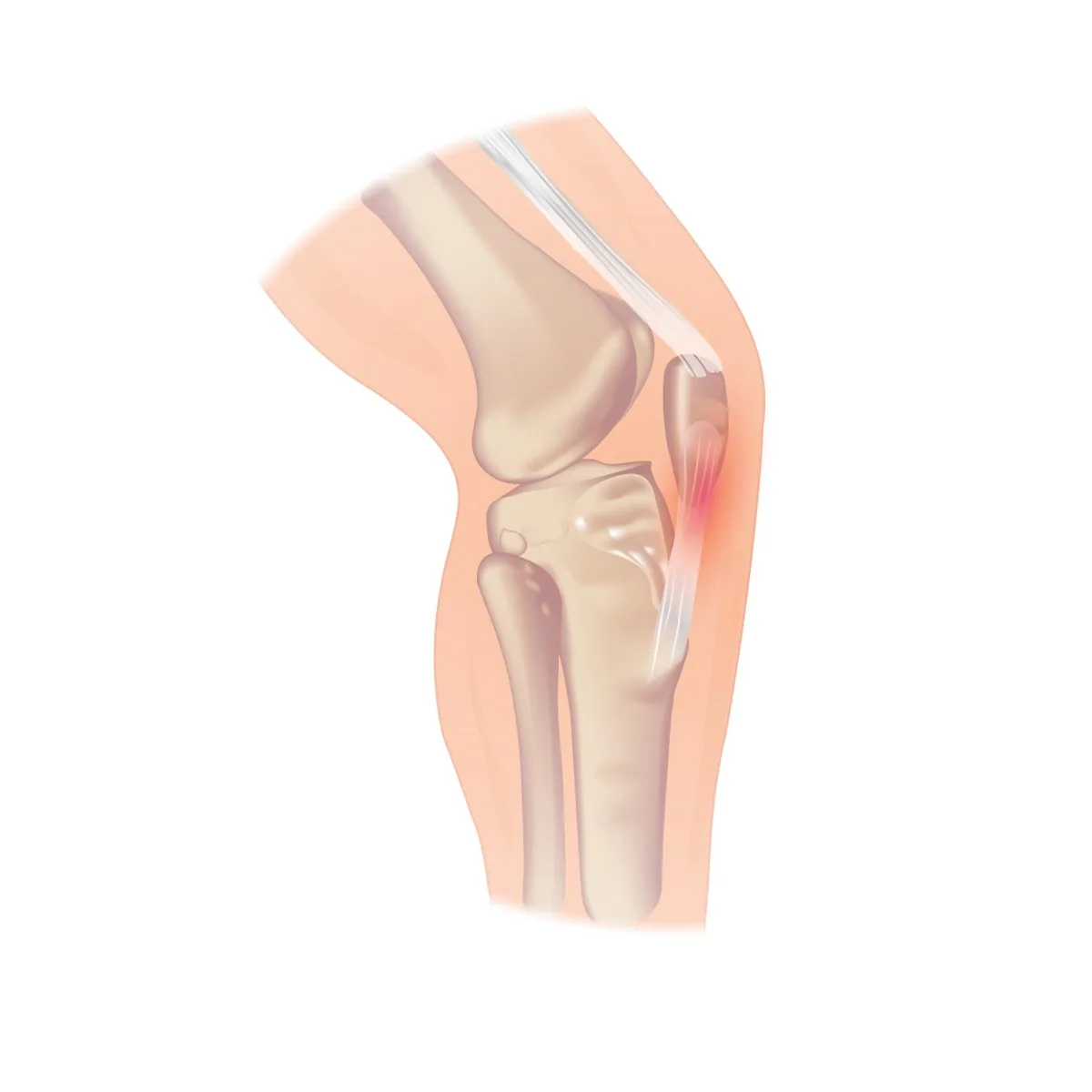
Your patellar tendon is a strong band that joins the bottom of your kneecap to your shin bone. It works with your thigh muscles every time you jump, land, squat or climb stairs. Jumper's knee, also called patellar tendinopathy, is the name for pain in this tendon after it has been loaded more than it can handle for a while.
Many people describe it as a sore spot just below the kneecap. The pain is often worse when jumping, landing, going down stairs or getting up from a low seat. Some people notice it most after a game or as stiffness the next morning. It may ease once they warm up.
Pain below the kneecap can have other causes too. That is why your physiotherapist checks your knee carefully before suggesting a plan.
Common causes
Tendons cope best with load that changes gradually. Trouble tends to start when the load on the patellar tendon rises faster than the tendon can adapt. Things that may add to this load include:
- A sudden rise in training, such as extra matches, a tournament or joining a new team
- Lots of jumping and landing, as in basketball, volleyball, badminton and kabaddi
- Playing often on hard courts, or switching suddenly between surfaces
- Going back to full sport too quickly after a break or an injury
- Weakness or tiredness in the thigh, hip or calf muscles
- How you land, for example landing stiffly
Often it is a mix of these rather than one single cause. Your physiotherapist will look at your sport, your weekly schedule and how you move. This helps show what may be adding load for you.
How physiotherapy at Mobiphysio can help
At Mobiphysio, treatment is one-on-one and starts with a thorough assessment. We listen to what matters to you. That might be your next tournament, or climbing stairs with less pain. You decide on the plan with us.
Graded loading, not complete rest. Complete rest may calm the pain for a while. But it does little to make the tendon stronger, and pain may come back when you return to play. Tendons tend to cope better when load is built up step by step. That is why physiotherapists usually prefer carefully graded loading to stopping all activity.
Exercise in stages. Exercise is usually the core of your plan. It may start with gentle holds that many people find comfortable, such as wall sits. As your knee settles, exercises can move on to slow strengthening and then faster movements. Later come jumping and landing drills for your sport.
Training changes. We look at how much you jump, train and play each week. Small changes for a while can help. Examples are fewer jumping drills or more rest days between matches. The aim is to keep the load at a level your tendon can manage while you stay active. We may also work on how you land and take off.
Strength beyond the knee. Building strength in your thighs, hips and calves aims to improve stability. It may also help share the load when you land.
Hands-on care and other support. Your physiotherapist may use hands-on manual therapy, massage or stretching. Our physiotherapists use methods such as Mulligan and Stecco where suitable. Electrotherapy and ultrasound therapy are available at both branches if your physiotherapist thinks they could help.
What to expect at your visits
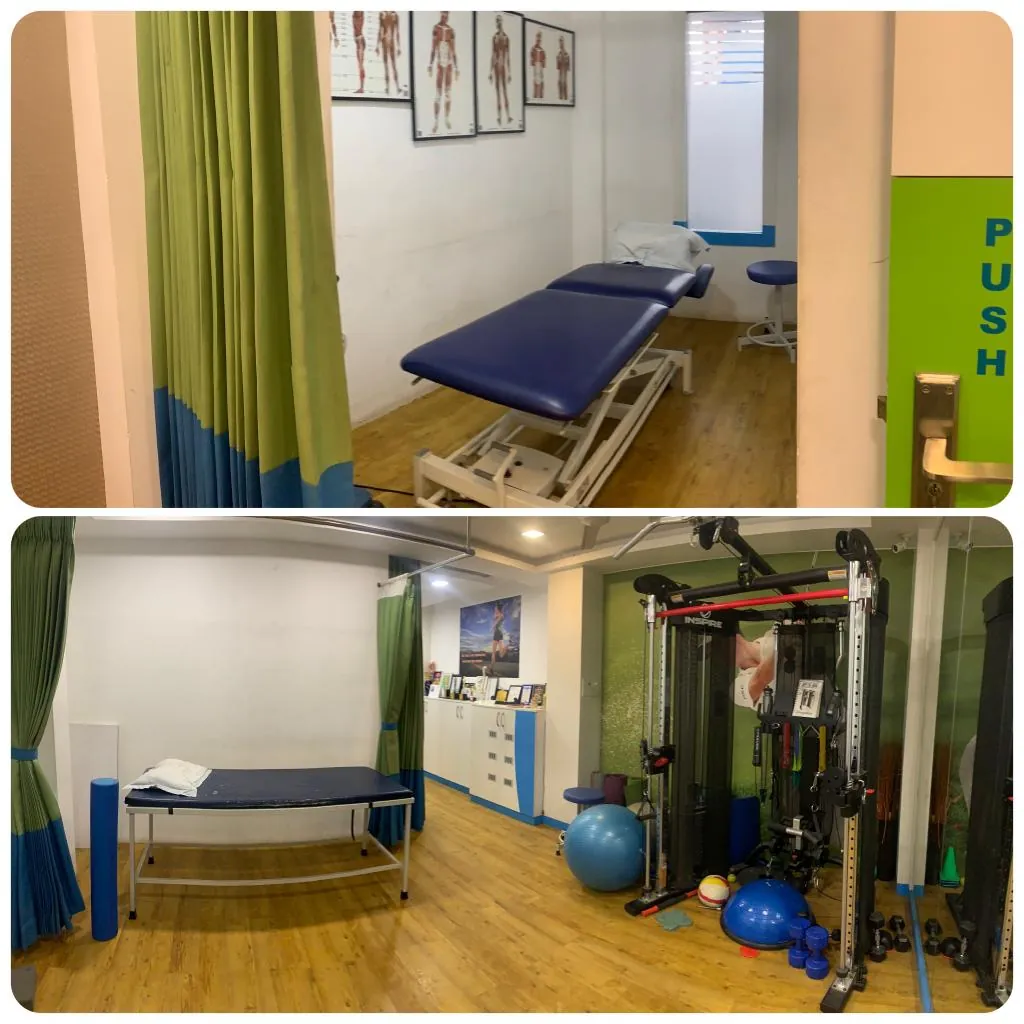
Your first visit takes 45-60 minutes. Follow-up visits take 30-45 minutes. Here is what usually happens:
- We ask about your pain, your sport, your training and what makes it worse.
- Your physiotherapist examines your knee. They watch how you squat and step, and how you hop or land if that is comfortable.
- We explain what may be causing the pain and suggest a plan.
- You learn a few simple exercises to start with and how to adjust your training for now.
At follow-up visits, we check how your knee is responding. We move your exercises and training plan forward step by step. If something flares your knee, we adjust the plan.
You can ask for a particular physiotherapist, or a female physiotherapist, at both branches. Our staff speak Tamil and English.
Things you can try at home
These ideas are gentle and general. Stop and get advice if pain gets worse.
- Comfortable wall-sit holds.
Stand with your back against a wall and slide down into a shallow bend, not a deep squat. Hold only while it stays comfortable. Then rest and repeat a few times.
- Cut back on jumping.
For a while, reduce jumping drills, smashes, spikes and repeated take-offs in your sport. You can often keep up other training that does not bother your knee, such as upper-body or core work.
- Warm up first.
Start each session with a few minutes of easy movement before you jump.
- Check the next morning.
Notice how your knee responds the morning after training, for example when you go down stairs. If it is clearly worse than usual, ease back and get advice from your physiotherapist.
- Plan a gradual return.
Add jumping and match play back in small steps rather than all at once. A physiotherapist can help you build a return plan that fits your sport and match schedule.
Common questions
Should I stop playing completely?
Not always. Physiotherapists often prefer cutting back on jumping for a while, along with graded exercise, to stopping everything. Your physiotherapist can help you decide how much play is sensible after assessing your knee.
Is it okay to play through the pain?
Pushing through pain that keeps building can keep the tendon irritated. How much discomfort is okay depends on your knee. Agree on limits with your physiotherapist after an assessment. Stop and get advice if pain gets worse.
Why does it hurt more on stairs or the morning after a match?
Going down stairs and getting up from a low seat put extra load on the tendon below the kneecap. Many people also notice stiffness the morning after a lot of jumping. Tracking this can help you and your physiotherapist adjust your training.
Do I need a doctor's referral?
No, you do not need a doctor's referral. Bring any reports, scans or prescriptions you have to your first visit.
Book an assessment
 Mobiphysio physiotherapists · RS Puram and Goldwins
Is pain below your kneecap holding back your game or your daily routine? Our physiotherapists can assess your knee and help you plan the next steps. WhatsApp or call us on +91 73385 65909 to book an appointment. Tell us when you book if stairs are hard for you.
Dr. T.R. Vandana, PT, and her team have 25+ years of experience in physiotherapy and have treated 3000+ patients.
Visit us at either branch:
- RS Puram: No.28, Captain Palaniswamy Layout, opposite the municipal park, RS Puram, Coimbatore 641 002 (Monday to Saturday, 10 AM to 8 PM)
- Goldwins, Avinashi Road: 11/23, Avinashi Road, opposite Sri Sai Dental Clinic, Karuparampalayam Pirivu, Coimbatore 641 014 (Monday to Saturday, 8 AM to 1 PM and 4 PM to 8 PM)
Both branches are closed on Sundays and major festival days such as Pongal and Diwali. Both have ample car parking.
Message us on WhatsApp or call; we will answer your questions.