
At a glance
- 1Peroneal tendinopathy: overloaded tendons causing pain behind and below the outer ankle bone.
- 2Physiotherapy aims to help with hands-on care, strengthening and balance work.
What is peroneal tendinopathy?
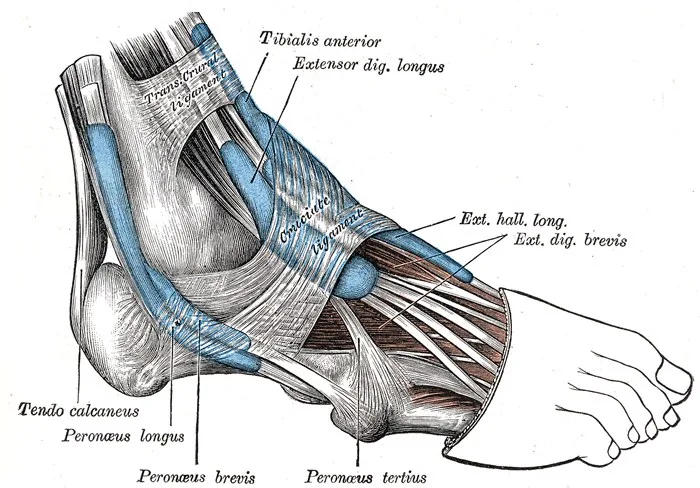
The peroneal tendons are two strong cords that run down the outside of your lower leg. They pass behind and below the bony bump on your outer ankle, then attach to your foot. Their muscles help turn your foot outwards and keep your ankle steady, especially on uneven ground.
Tendinopathy means a tendon has become sore and less able to cope with the load placed on it. It usually builds up slowly rather than starting with one clear injury. Many people have pain behind or below the outer ankle bone during or after walking or running. Some also notice stiffness first thing in the morning, mild swelling, or a less steady ankle.
Pain in this area can have other causes too. That is why it is worth having a physiotherapist assess your ankle rather than guessing.
Common causes
Tendons usually grow stronger when activity increases step by step. Trouble can start when the load rises faster than the tendon can adapt. Common reasons include:
- A sudden jump in activity, such as running further, faster or more often, or starting long walks after a quiet spell.
- Uneven or sloping ground, such as rough paths, hill treks, sand or the sloping edges of roads, which make the outer ankle work harder.
- An old ankle sprain that has left the ankle weaker or less steady.
- Weak muscles or poor balance in the ankle, calf or hip.
- Foot shape and footwear, such as a high arch, or shoes that are worn out or do not suit your activity.
An old sprain deserves a special mention. A twisted ankle can stretch the ligaments on the outer side and affect your balance. If the ankle never fully regained its strength and steadiness, the peroneal tendons may take on extra work to protect it, day after day.
Often it is a mix of these reasons. Your physiotherapist will look at what may be adding load to your ankle in your own routine.
How physiotherapy at Mobiphysio can help
Physiotherapy aims to ease pain, settle the tendon and build back its ability to handle your walking, running or sport. Your plan is built around your ankle and your daily routine. It may include:
- Load advice.We help you adjust how far, how fast and how often you walk, run or train. The aim is to keep you active where you can, without pushing the tendon too hard.
- Strengthening.Exercises for the muscles that turn your foot outwards, and for your calf and hip, start gently and build up step by step. The aim is to help the tendon cope with more load over time.
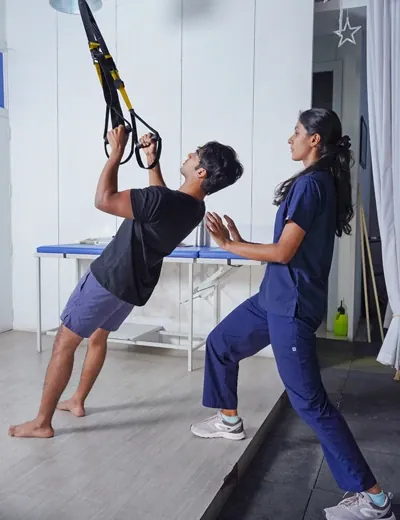
- Balance training.Exercises to improve balance and stability can help lower the risk of future injuries. This is especially useful if you have had ankle sprains before.
- Hands-on manual therapy.Techniques such as massage and joint mobilisation may help ease pain and stiffness. Our physiotherapists use methods including Mulligan and Stecco.
- Gait training.We look at how you walk. Then we help you move so your ankle is not under extra strain.
- Other options.Ultrasound therapy and electrotherapy are available at both branches. Your physiotherapist may use them alongside exercise if they think these suit you.
What to expect at your visits
Treatment is one-on-one, and it starts with a thorough assessment. Your first visit takes 45 to 60 minutes, and follow-up visits take 30 to 45 minutes.
At your first visit, we listen to how the pain started and what it stops you doing. We ask about past sprains, your activity and the ground you usually walk or run on. Your physiotherapist then checks how your ankle moves, how strong and steady it is, and how you walk.
You learn what to avoid for now and how to ease your pain. You also get a treatment plan suited to your ankle and daily routine. We explain your options clearly; we listen, and you decide.
Please bring any reports, scans or prescriptions you have. Our staff speak Tamil and English. You can ask for a particular physiotherapist, or a female physiotherapist, at both branches.
Things you can try at home
These ideas are gentle and general, and suit most people. Move slowly, and stop and get advice if pain gets worse.
- Band foot turns.
Sit comfortably with your legs out in front of you. Loop a light exercise band around both feet. Keep the other foot still. Slowly turn the sore foot outwards against the band, then back. Keep the movement small and comfortable.
- Simple balance practice.
Stand on one leg near a wall or sturdy chair you can hold, and try to stay steady for a short time. Practise on both sides. Ask your physiotherapist before you make it harder.
- Walk on even ground.
For a while, choose flat, even surfaces for walking. Avoid rough paths, steep slopes and the sloping edges of roads until your ankle settles. If you run, ask your physiotherapist how much is right for now.
- Ease off rather than push on.
If walking or running brings on pain, cut back on distance, speed or hills. Stop and get advice if pain gets worse. Your physiotherapist can help you plan when and how to build back up.
- Listen to your ankle.
Notice how your ankle responds during activity and the next morning. If pain gets worse, stop and get advice from a physiotherapist.
Common questions
Can an old ankle sprain lead to pain on the outer ankle?
It can play a part. After a sprain, the ankle may stay weaker or less steady, so the tendons on the outer side may have to work harder. Your physiotherapist can check your ankle's strength and balance.
Should I stop walking or running completely?
It depends on your ankle. Many people find it helps to cut back on distance, speed or rough ground for a while. Stop and get advice if pain gets worse. Your physiotherapist can help you plan how much to do.
Why does my ankle hurt more on uneven ground?
On rough or sloping surfaces, the muscles and tendons on the outer ankle work hard to keep you steady. If a tendon is already sore, this extra work can bring on pain. Choosing even surfaces for a while may help.
Why do I need strengthening exercises if the tendon is sore?
A sore tendon often needs gentle, gradual load to become better able to cope with daily activity. Your exercises start easy and build up step by step. Stop and get advice if pain gets worse.
Do I need a doctor's referral to visit Mobiphysio?
No, you do not need a doctor's referral. Please bring any reports, scans or prescriptions you already have.
Book an assessment
 Mobiphysio physiotherapists · RS Puram and Goldwins
If pain behind or below your outer ankle bone is getting in the way of walks, runs or sport, an assessment is a good first step. Dr. T.R. Vandana, PT, leads a team with 25+ years of experience and 3000+ patients treated.
WhatsApp or call +91 73385 65909 to book at either branch:
- RS Puram: No.28, Captain Palaniswamy Layout, opposite the municipal park, RS Puram, Coimbatore 641 002 (Google Maps)
- Goldwins, Avinashi Road: 11/23, Avinashi Road, opposite Sri Sai Dental Clinic, Karuparampalayam Pirivu, Coimbatore 641 014 (Google Maps)
RS Puram is open Monday to Saturday, 10 AM to 8 PM. Goldwins is open Monday to Saturday, 8 AM to 1 PM and 4 PM to 8 PM. Both branches are closed on Sundays and on major festival days such as Pongal and Diwali. Ample car parking is available at both.
Have a question before you book? Message us on WhatsApp or call; we will answer your questions.