
At a glance
- 1Prepatellar bursitis is an irritated, swollen fluid sac over the kneecap, often from kneeling.
- 2Physiotherapy aims to ease pressure, calm swelling and build strength.
What is prepatellar bursitis?
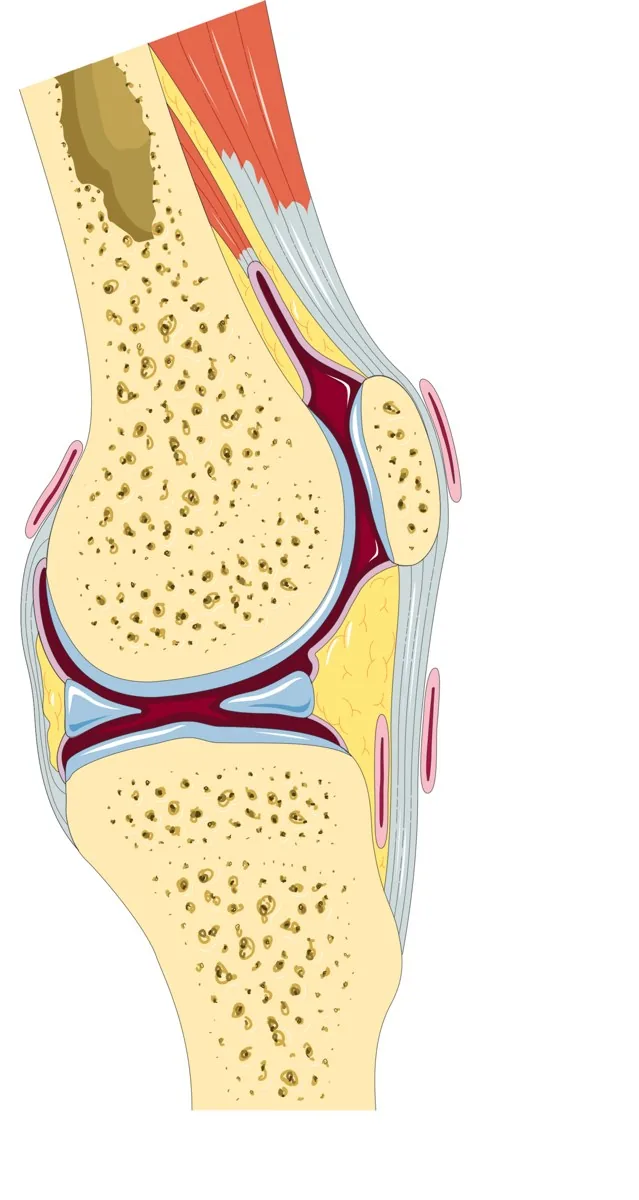
A bursa is a small, thin sac that holds a little fluid. Your body has many of these sacs (bursae) in places where skin, tendons or muscles slide over bone. They act like a cushion to reduce rubbing. One of them, the prepatellar bursa, sits just under the skin in front of your kneecap (patella).
When this bursa is pressed again and again, it can become irritated and fill with extra fluid. This is called prepatellar bursitis. The swelling sits on the front of the kneecap, not deep inside the knee joint.
People with prepatellar bursitis often describe:
- A soft, squishy swelling over the front of the kneecap
- Tenderness when they press on it or kneel down
- Tightness when they bend the knee fully
- Discomfort that is worse after a long spell of kneeling
Knee swelling can have other causes too. A physiotherapist can assess your knee and explain what is likely going on.
Common causes
The most common trigger is steady pressure or rubbing on the front of the knee. It often comes from everyday tasks such as:
- Floor cleaning: scrubbing, mopping or wiping floors while kneeling.
- Prayers: kneeling for long spells at home or at a place of worship, especially on hard floors.
- Gardening: weeding, planting or tending pots at ground level.
- Trade work: tiling, flooring, plumbing, electrical work, carpentry or vehicle repair.
- Sport: games where the knees often hit the ground, such as kabaddi or volleyball.
- A knock to the knee: for example, bumping the kneecap against something hard.
These habits can all add to the strain:
- kneeling on a hard surface
- kneeling for a long time without breaks
- leaning your weight forward onto your kneecaps
Swelling here is not always caused by kneeling. It can sometimes be linked to other conditions, such as gout. That is one more reason to have it assessed.
How physiotherapy at Mobiphysio can help
At Mobiphysio, treatment is one-on-one and starts with a thorough assessment. No single plan suits everyone. Depending on what we find, your physiotherapist may suggest some of the following.
- Easing pressure on the kneecap.We look at how, where and how long you kneel during your day. Together we work out simple changes so the bursa has a chance to settle. These may include padding, other positions or splitting long tasks into shorter spells.
- Managing swelling.We can advise whether heat or cold may suit your knee at home. Your physiotherapist may also use gentle hands-on techniques, or suggest a support or compression garment, if these suit your knee.
- Gentle exercise.Guided exercises can help improve how far and how easily your knee moves. They can also build strength and flexibility, and may ease pain. Gentle, slow stretching can help keep the knee bending comfortably.
- Strengthening.Building the muscles around your knee and hip aims to improve strength and stability. This can help you get up and down from the floor with more control.
- Other treatment options.Electrotherapy and ultrasound therapy are available at both branches. Your physiotherapist will explain if either may help in your case.
- Kneeling habits for the long run.You learn safer ways to kneel and move for floor tasks, prayers or work. You also learn how to build back up to kneeling gradually.
We explain the options clearly, and you decide what fits your routine. Everyone responds differently, so we review your plan and adjust it as you go.
What to expect at your visits
Your first visit takes 45 to 60 minutes. Follow-up visits take 30 to 45 minutes.
At your first visit:
- We ask about your knee, your daily routine, how often you kneel and what makes the swelling worse.
- Your physiotherapist examines your knee and how you move. We talk through how you kneel. We may also look at how you get up from the floor if it is comfortable.
- We explain what may be behind your symptoms and suggest a plan.
- You may begin gentle treatment, with simple exercises and advice for home.
At follow-up visits, we check how your knee is responding and adjust your exercises and advice.
A few practical points:
- Our staff speak Tamil and English.
- Tell us when you book if stairs are hard for you.
Things you can try at home
These simple ideas are gentle and suit most people.
- Use a cushioned pad.
Kneel on a thick kneeling pad, folded mat or soft cushion instead of a bare, hard floor. For trade work, padded knee guards may help spread the pressure.
- Take kneeling breaks.
Keep kneeling spells short and get up to move every few minutes. For some floor tasks, sitting on a low stool may be an option.
- Wrapped cold pack.
Wrap a cold pack or some ice in a thin cloth. Rest it on the swelling for about 10 to 15 minutes.
- Never put ice straight onto bare skin.
- Lift it off if your skin feels numb or very painful.
- Skip the cold pack if you have poor feeling in your skin or problems with circulation, and ask us first.
- Ease direct pressure.
Try not to lean on, rub or squeeze the swollen area. Give it a rest from pressure wherever you can.
- Keep it moving gently.
While sitting, slowly bend and straighten your knee a few times through the day. Stay within comfort and do not push into pain.
Go at your own pace. Stop and get advice if pain gets worse.
Common questions
Can I still kneel for prayers?
Many people find kneeling more comfortable with a soft prayer mat or folded cloth and shorter spells. Your physiotherapist can suggest positions that put less pressure on the front of the knee.
Should I use hot or cold on the swelling?
For a swollen kneecap, a cold pack wrapped in a thin cloth is the gentler home option. Please avoid heat on the swelling unless your physiotherapist suggests it. Stop and get advice if pain gets worse.
Should I rest my knee completely?
The aim is to ease pressure on the kneecap, not to stop all movement. Gentle movement and guided exercise are often part of care.
Will the swelling come back if I keep kneeling?
It may return if the bursa keeps getting pressed. Padding, breaks and better kneeling habits aim to lower the strain. Still, no one can promise it will never come back.
Do I need a doctor's referral to visit Mobiphysio?
No, you do not need a doctor's referral. Please bring any reports, scans or prescriptions you have.
Can I ask for a female physiotherapist?
Yes. You can ask for a particular physiotherapist, or a female physiotherapist, at both of our branches.
Book an assessment
 Mobiphysio physiotherapists · RS Puram and Goldwins
Has kneeling left your kneecap swollen or sore? A physiotherapy assessment can help you understand it and plan your next steps. WhatsApp (chat with us) or call us on +91 73385 65909 to book.
Visit us at either branch:
- RS Puram: No.28, Captain Palaniswamy Layout, opposite the municipal park, RS Puram, Coimbatore 641 002 (Google Maps). Open Monday to Saturday, 10 AM to 8 PM.
- Goldwins, Avinashi Road: 11/23, Avinashi Road, opposite Sri Sai Dental Clinic, Karuparampalayam Pirivu, Coimbatore 641 014 (Google Maps). Open Monday to Saturday, 8 AM to 1 PM and 4 PM to 8 PM.
Both branches are closed on Sundays and on major festival days, such as Pongal and Diwali. Both have ample car parking. Dr. T.R. Vandana, PT, and her team have 25+ years of experience and have treated 3000+ patients.
Have a question before you book? Message us on WhatsApp or call; we will answer your questions.