
At a glance
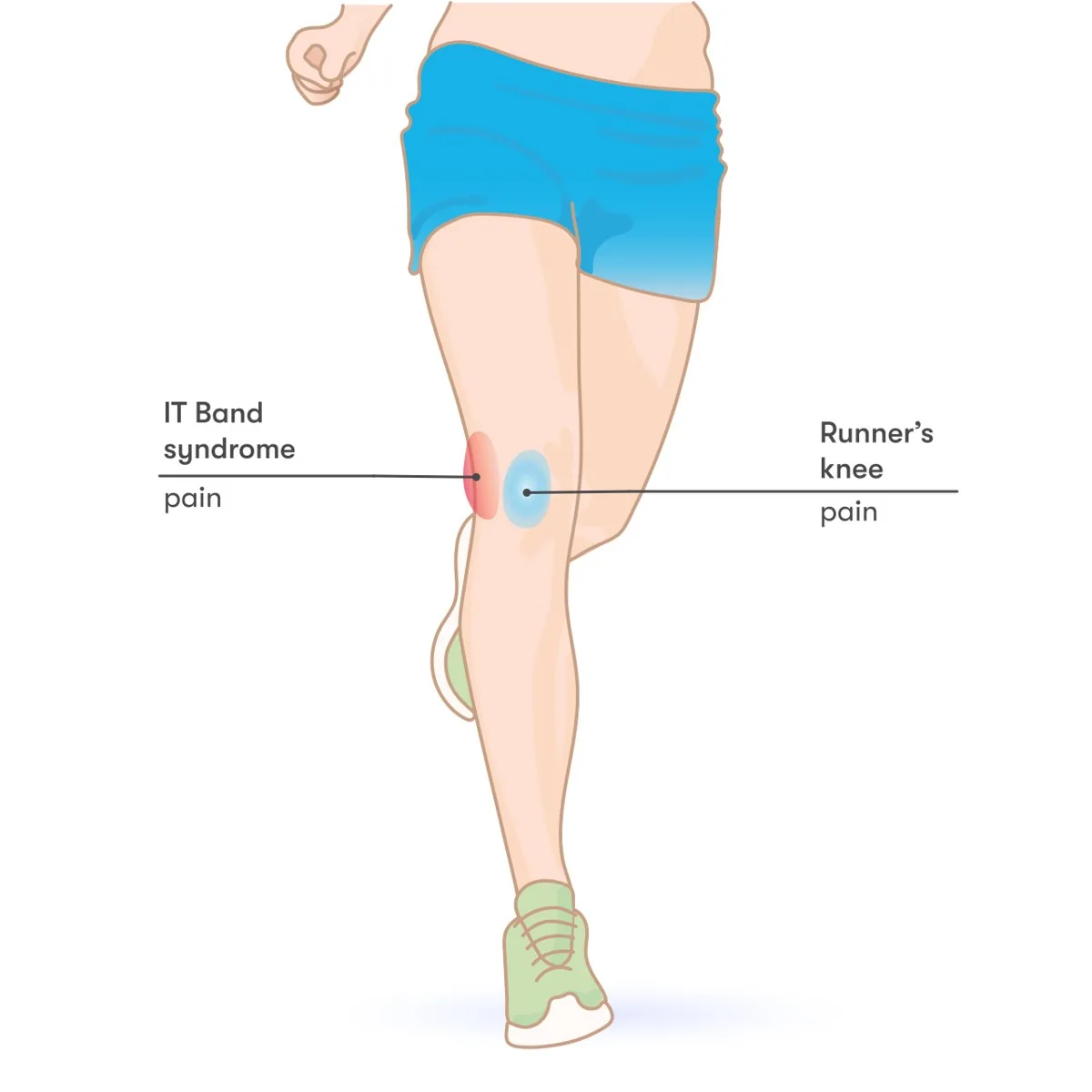
- 1IT band syndrome is one common cause of outer knee pain in runners and cyclists. Other problems can feel similar.
- 2Physiotherapy aims to help through load changes, strengthening and hands-on care.
What is IT band syndrome?
The iliotibial band, or IT band, is a thick strip of tough tissue. It runs down the outer side of your thigh, from the hip to just below the knee. Muscles around the hip connect into it, and it helps steady your leg as your foot lands.
IT band syndrome is the name for irritation where this band passes the outer side of the knee. It is often linked to repeated bending and straightening of the knee, as in running, cycling and long walks.
People often describe:
- a sharp or burning pain on the outer side of the knee
- pain that starts at a similar point in each run
- pain that is worse running downhill or going down stairs
- pain that settles with rest but returns when you run again
Other knee problems can cause similar pain, so these points alone cannot tell you what is going on. A physiotherapist can assess your knee, hip and movement. They can then help work out what is likely behind your pain.
Common causes
Outer knee pain like this usually builds up over time rather than coming from one injury. Often it is a mix of how much you do and how well your body handles that load.
Changes in training. The outer knee may become irritated when your training load or routine changes faster than your body can adapt. Things that may play a part include:
- adding distance or extra runs too quickly
- more hills, especially long downhill stretches
- always running on the same side of a sloped road, or one direction on a track
- a sudden switch to a different type of shoe, or shoes that are very worn
- for cyclists, a change in saddle height or bike set-up
Hip strength and control. The muscles on the side of your hip help keep your thigh and knee in line as your foot lands. If they tire or are not yet strong enough for your training, the knee may drift inward with each step. This may place more strain on the tissues along the outer thigh and knee.
Other factors. Running style and stiffness around the hip can also play a part. A good assessment looks at the whole picture, not just one cause.
How physiotherapy at Mobiphysio can help
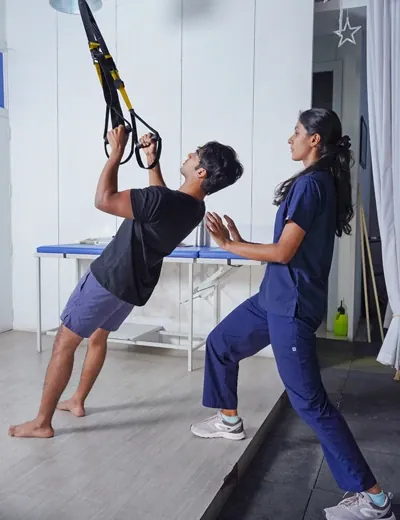
Treatment at Mobiphysio is one-on-one and starts with a thorough assessment. We look at your knee, your hip and the way you move, and we ask about your training. Then we build a plan around what we find and what you want to get back to. We listen, and you decide.
Load management. We aim to settle the pain without keeping you away from activity more than needed. This may mean cutting back distance or hills for a while, changing your weekly plan, or swapping some runs for other exercise. If and as things settle, we plan a gradual return to running together.
Strengthening. Guided exercises aim to build strength in the side of the hip, the thigh and the trunk (your tummy and back muscles). Your physiotherapist starts at a level that suits you and progresses it step by step. The aim is for your leg to cope better with your usual training.
Hands-on care. Hands-on manual therapy and massage may ease tightness and pain around the hip, thigh and knee. Depending on your assessment, your physiotherapist may use methods such as Mulligan or Stecco techniques. Our founder, Dr. T.R. Vandana, PT, has trained in Stecco Fascial Manipulation levels 1-4 in Padua, Italy.
Other support. Electrotherapy and ultrasound therapy are available at both branches. Your physiotherapist may suggest them alongside exercise if they suit you. We also talk through your running or cycling routine, shoes and surfaces, so you know what to adjust.
What to expect at your visits
Your first visit takes about 45 to 60 minutes. Follow-up visits take about 30 to 45 minutes. You do not need a doctor's referral. Please bring any reports, scans or prescriptions you have.
At your first visit:
- We ask about your pain, your training and what makes it better or worse.
- Your physiotherapist examines your knee, your hip and how you move.
- We explain what may be causing the pain and suggest a plan.
- You learn a few simple exercises to start with at home.
At follow-up visits, your physiotherapist checks how your knee has responded and adjusts the plan. Exercises are progressed when your knee is ready, and any return to running is planned step by step. The number of visits differs from person to person, and we will talk this through with you.
Things you can try at home
These ideas are general and suit most people, but they do not replace an assessment. Start gently, and stop and get advice if pain gets worse.
- Cut back your distance.
For a while, run shorter, easier routes. Try to finish before the point where pain usually starts. Keep active with other exercise that does not bring on the pain.
- Strengthen your side hips.
Try slow side-lying leg lifts or clamshells on both sides, a few at a time. Aim for smooth control rather than speed, and keep the effort comfortable.
- Vary your running surfaces.
Mix up where you run, keeping to flat, even ground for now, such as a level path or track. Where it is safe, change direction or side of the road now and then, so you are not always on the same slope. Leave out long, steep downhill runs for the time being.
- Build back gradually.
Once your knee has settled, add distance a little at a time rather than all at once. Keep a simple note of each run and how your knee responds.
If your pain gets worse with any of these, stop and get advice from a physiotherapist.
Common questions
Should I stop running completely?
Not always. Many people can keep some running by choosing shorter, easier routes that do not bring on the pain. A physiotherapist can help you find a level that suits your knee.
Does foam rolling the IT band help?
Some people find gentle rolling of the thigh and hip muscles comfortable, but pressing hard on a sore spot is not needed. Rolling alone may not change the strain on your knee, so strength and training changes matter too. If you are not sure whether rolling suits you, ask your physiotherapist. Stop if it makes your pain worse.
Can cycling or long walks cause this pain too?
Yes, they can. Activities with lots of repeated knee bending, such as cycling and long walks, may irritate the outer knee, especially after a sudden increase. For cyclists, bike set-up can also play a part.
Will new running shoes fix it?
Shoes are only one part of the picture. Very worn shoes, or a sudden switch to a new type, may play a part for some people. Training load and hip strength often matter as well.
Can I ask for a female physiotherapist?
Yes. You can ask for a particular physiotherapist, or a female physiotherapist, at both branches. Just mention it when you WhatsApp or call to book.
Book an assessment
 Mobiphysio physiotherapists · RS Puram and Goldwins
If outer knee pain is getting in the way of your running, cycling or walking, we would be glad to help. Dr. T.R. Vandana, PT, and her team have 25+ years of experience and have treated 3000+ patients. Every person is different, so care always starts with an assessment.
WhatsApp or call +91 73385 65909 to book at either branch:
- RS Puram: No.28, Captain Palaniswamy Layout, opposite the municipal park, RS Puram, Coimbatore 641 002 (Map)
- Goldwins, Avinashi Road: 11/23, Avinashi Road, opposite Sri Sai Dental Clinic, Karuparampalayam Pirivu, Coimbatore 641 014 (Map)
Our staff speak Tamil and English, and there is ample car parking at both branches. Message us on WhatsApp or call; we will answer your questions.