
At a glance
- 1Physiotherapy starts by working out the likely cause, so your plan fits your hip.
- 2Treatment then aims to ease pain, improve movement and strengthen the muscles around your hip.
What is hip pain?
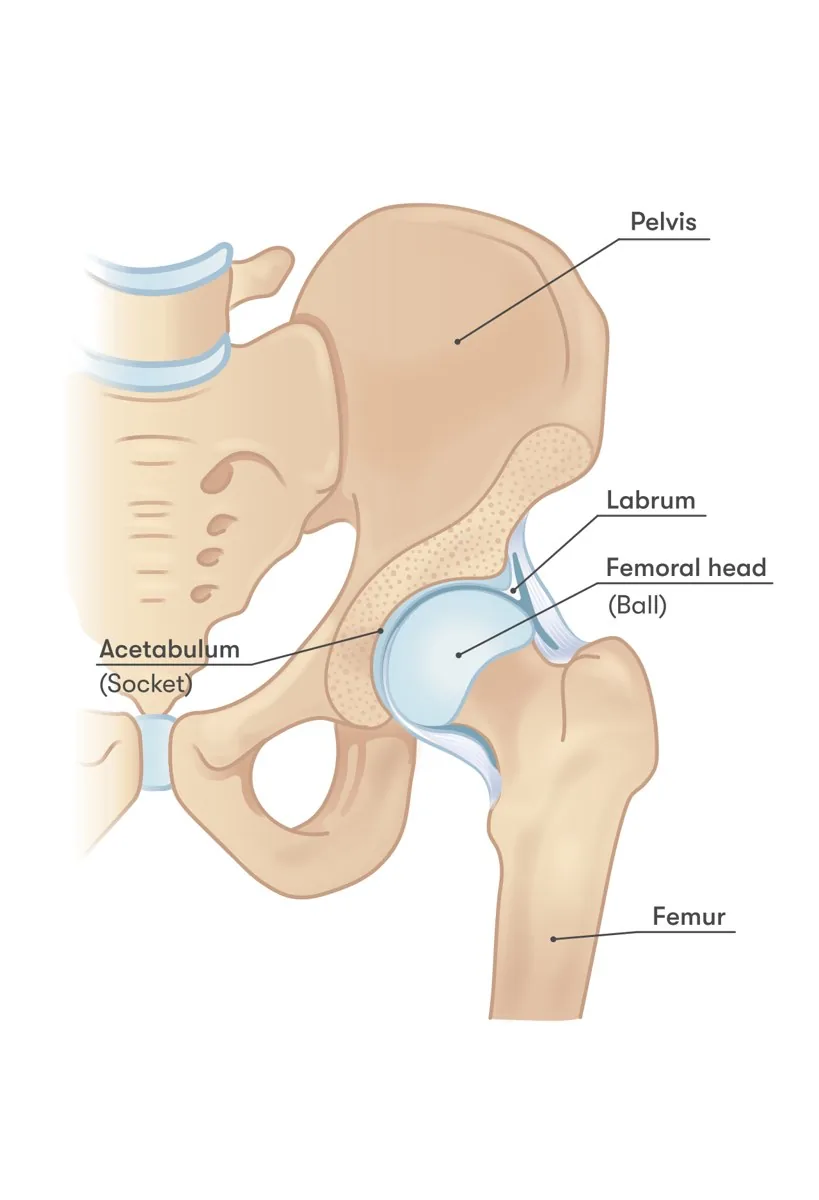
Your hip is one of the biggest joints in your body. It is a ball-and-socket joint that lets your leg move in many directions and helps with balance. Because it carries a lot of load every day, it can get sore or wear down over time.
Hip pain can affect more than how you move. Some people find it disturbs their sleep, their work or the sport they enjoy. You may also notice stiffness, weak hip or leg muscles, or pain that keeps coming back after rest.
Hip pain can affect adults of all ages. It is common in active people, older adults and people who sit for long hours on hard surfaces.
Common causes
Hip pain can have many causes, and more than one can play a part. Common causes include:
- Wear and tear (osteoarthritis): the joint can slowly wear down over the years, leaving it stiff and sore. This is more common in older people.
- Rheumatoid arthritis: this can leave the joint inflamed, stiff and sore.
- Sports and muscle strain: pressure on the hips during sport, fast sideways movements, repeated activity or a sudden movement can strain the muscles and tendons.
- Tendinitis: the tendons around the hip become sore from overuse.
- Bursitis: small fluid-filled sacs around the hip, called bursae, get inflamed and hurt when you move.
- Labral tears: the labrum is cartilage that helps steady the hip, and a tear can cause pain and limited movement.
- Injury to the hip area: an injury can leave the hip sore and stiff.
- Weak muscles or poor movement habits: weak hip and core muscles, or habits like sitting for long hours, can put more strain on the joint.
Why assessment comes first. Many of these problems seem alike. Pain in the same spot can come from the joint, the muscles, the tendons or the way you move. That is why your physiotherapist first works out the likely cause, so your treatment fits your hip and your daily life.
How physiotherapy at Mobiphysio can help
Physiotherapy is a non-surgical option that looks for the cause of your pain. At Mobiphysio, our team is led by Dr. T.R. Vandana, PT. We aim to reduce your pain, improve how your hip moves and strengthen the muscles that support it.
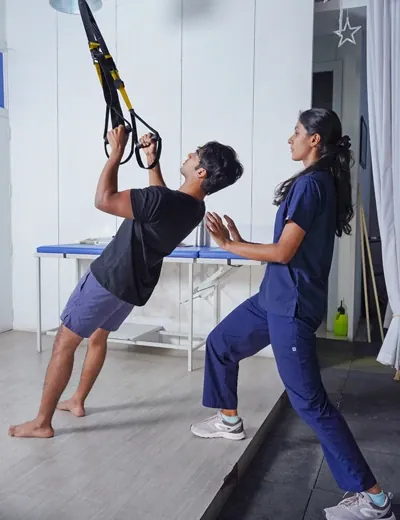
Your treatment is one-on-one, and your plan depends on what your assessment shows. It may include:
- Movement advice: we help protect the sore area and guide you away from activities that make it worse.
- Hands-on manual therapy: massage, joint mobilisation (gentle, controlled movement of the joint) and myofascial release (steady pressure on tight soft tissue) aim to ease tension, stiffness and pain.
- Exercises: strengthening, stretching and balance work, plus core stability exercises for the muscles of your abdomen, back and pelvis.
- Taping: tape on the skin can support muscles and joints, and may help with pain and swelling.
- Electrotherapy: electrical stimulation such as TENS and EMS uses small pads that pass a gentle current. It can help reduce pain and support muscle strengthening.
- Walking and daily tasks: gait training (help with how you walk), and practice with everyday tasks such as stairs, sitting down and getting in and out of a car.
Our physiotherapists use methods such as McKenzie, Mulligan and Stecco, chosen to suit you. We listen, explain what we are doing and why, and you decide on your plan with us.
What to expect at your visits
Your first visit takes 45 to 60 minutes, and follow-up visits take 30 to 45 minutes. At your first visit:
- We listen to your story and ask where and when it hurts.
- Your physiotherapist checks how your hip moves and where it is weak.
- We explain the likely cause in simple words.
- You get a treatment plan and exercises that suit you.
Please bring any reports, scans or prescriptions you have. Our staff speak Tamil and English, so you can explain your pain in either language. At follow-up visits, we check how your hip is doing and adjust your treatment and exercises with you.
Things you can try at home
These gentle ideas suit most people. Move slowly, breathe normally and stay within a comfortable range. Stop and get advice if pain gets worse.
If you have had a hip operation, follow your surgeon's instructions alongside your physiotherapy, and check with your physiotherapist before trying these. If you are pregnant or have recently had a baby, check with your doctor before starting these exercises.
- Gentle hip mobility.
Lie on your back on your bed or a firm mat, with your knees bent and your soles flat. Slowly let one knee fall out to the side and bring it back, then switch sides. Go only as far as is comfortable. If getting down to the floor is hard, use your bed.
- Glute bridges.
Lie on your back in the same position. Squeeze your buttock muscles and lift your hips a little off the bed or mat. Hold for a breath, lower slowly and repeat a few times.
- Short, regular walks.
Take a few short walks on flat, even ground through the day instead of one long walk. Wear comfortable, supportive shoes.
- Break up long sitting.
If you sit for long hours, get up and move around every so often. On hard seats, a cushion may be more comfortable.
- Pace your activities.
Ease off activities that make your hip pain worse, but keep up gentle movement through the day.
If you are unsure about any exercise, ask your physiotherapist to show you.
Common questions
Should I rest or keep moving with hip pain?
At first, avoiding activities that make the pain worse can help it settle. Keep up gentle movement, such as short walks. Your physiotherapist will then guide you on safe exercises.
Can physiotherapy help if my hip pain is from wear and tear?
It can help many people. Treatment aims to reduce pain, improve movement and strengthen the muscles around the hip. Your physiotherapist will first check what is causing your pain.
Is it okay to sit on the floor or squat with a sore hip?
Floor sitting and deep squats bend the hip a lot, and many people with hip pain find them harder. Using a chair for now is fine if that is easier. If you have had a hip operation, follow your surgeon's instructions on bending and sitting. Your physiotherapist can check your hip and advise what suits you.
Why does getting in and out of a car or onto a two-wheeler hurt?
Both ask your hip to bend, lift and turn, which can be harder when it is stiff or sore. Your physiotherapist can check how your hip moves and practise easier ways to do it with you.
Do I need a doctor's referral?
No, you do not need a referral. You can WhatsApp or call us to book.
Can I ask for a female physiotherapist?
Yes. At both branches you can ask for a female physiotherapist or a particular physiotherapist. You can mention this when you WhatsApp or call to book.
Book an assessment
 Mobiphysio physiotherapists · RS Puram and Goldwins
If hip pain is making daily life harder, we are here to help. WhatsApp or call us on +91 73385 65909 to book your hip assessment.
Mobiphysio has two branches in Coimbatore:
- RS Puram: No.28, Captain Palaniswamy Layout, opposite the municipal park, RS Puram, Coimbatore 641 002. Open Monday to Saturday, 10 AM to 8 PM.
- Goldwins, Avinashi Road: 11/23, Avinashi Road, opposite Sri Sai Dental Clinic, Karuparampalayam Pirivu, Coimbatore 641 014. Open Monday to Saturday, 8 AM to 1 PM and 4 PM to 8 PM.
Both branches are closed on Sundays and major festival days (Pongal, Diwali). There is ample car parking at both branches. Tell us when you book if stairs are hard for you.
Our team brings 25+ years of experience in physiotherapy and has treated 3000+ patients. Have a question first? Message us on WhatsApp or call; we will answer your questions.