
At a glance
- 1An MCL sprain is an injury to the inner knee ligament.
- 2Physiotherapy aims to ease pain, protect the ligament and rebuild strength.
What is an MCL sprain?
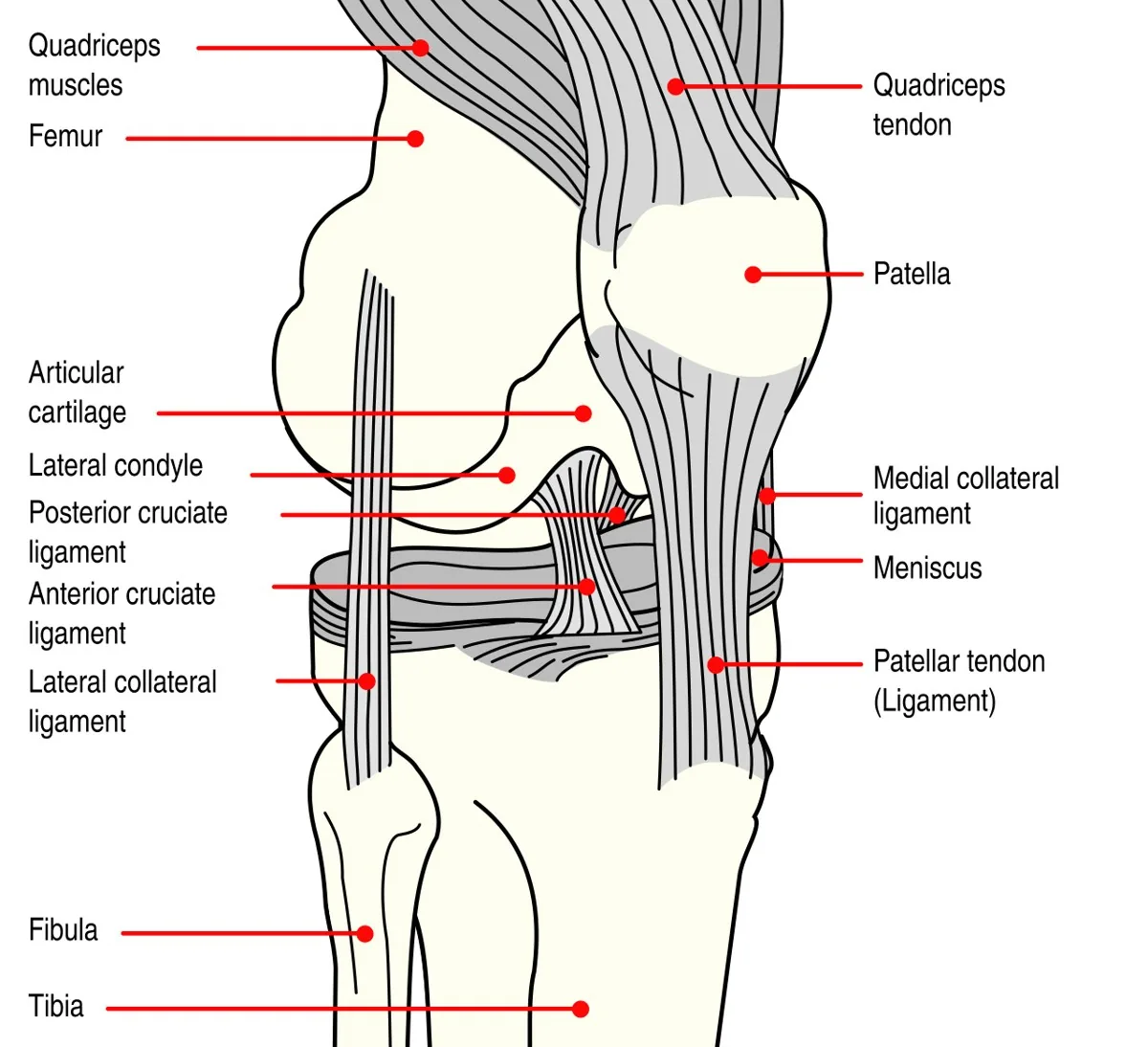
Ligaments are strong bands of tissue that join one bone to another and help hold a joint steady. The medial collateral ligament, or MCL, runs down the inner side of your knee. It joins your thigh bone to your shin bone.
The MCL's main job is to stop your knee from bending inwards too far. It helps keep the knee steady when you turn, change direction or take a knock to the outer side of your leg.
A sprain means the ligament has been stretched too far. This can range from a mild overstretch to a partial or complete tear. People often notice pain and tenderness along the inner knee. They may also have some swelling and stiffness, or feel that the knee is not quite steady.
These feelings can also come from other knee problems, such as a meniscus injury (the meniscus is a cushioning pad of cartilage inside the knee). That is why a careful assessment by a physiotherapist matters before you start any plan.
Common causes
The MCL is usually hurt when the knee is pushed inwards or twisted while the foot stays fixed on the ground. This often happens in contact and turning sports. Common examples include:
- A tackle or knock to the outer side of the knee in football or kabaddi
- Twisting on a planted foot while turning or changing direction
- An awkward landing from a jump or dive, for example while fielding in cricket
- A slip or fall in which the knee bends inwards
Some things may make a sprain more likely:
- Tired muscles
- Uneven or slippery ground
- Returning to play before an earlier knee injury has settled
A twist or tackle can also affect other parts of the knee at the same time. This is another reason your physiotherapist will check the whole knee.
How physiotherapy at Mobiphysio can help
A ligament needs time to heal. While it heals, the knee needs the right balance of protection and movement. Your physiotherapist plans care around your injury, your sport or work, and your goals. Treatment is one-on-one and always starts with an assessment. We listen and explain the options, and you decide.
Care for an MCL sprain usually has three aims.
Settle pain and swelling. Early on, the focus is on calming the knee. This may include cold therapy, which we currently use for recent sports injuries. We also give advice on rest, ice, compression and elevation (R.I.C.E.). Your physiotherapist may also use electrotherapy (gentle electrical currents) or ultrasound therapy (sound waves) if they suit your knee.
Protect the ligament as it heals. A healing ligament is sensitive to sudden sideways stress. Your physiotherapist will guide you on walking, standing and bending. They will also tell you which movements to avoid for now. The aim is to keep your knee moving comfortably without overloading the ligament.
Rebuild strength and steadiness. As pain settles, guided exercises aim to build up the thigh, hip and calf muscles that support the knee. Exercises for balance and control aim to help your knee feel steady again when you turn, land or change direction. If you play sport, tell us which one so your exercises can build towards it.
Hands-on manual therapy is central to how we work. Our physiotherapists use methods such as Mulligan and Stecco (both hands-on techniques) where they suit you. They may also use massage and gentle stretching to help your knee move more easily.
Together, these steps aim to help you return to daily life and sport with more confidence. Exercises also aim to lower the risk of re-injury, though no one can promise it will never happen.
What to expect at your visits
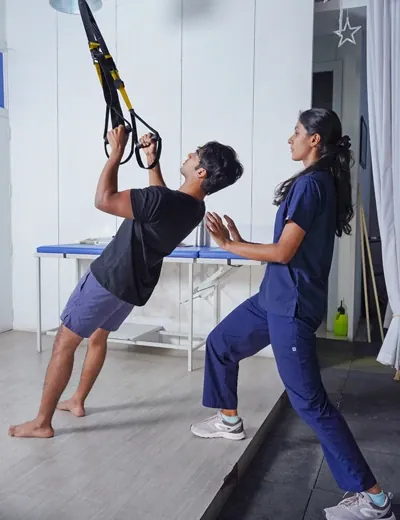
Your first visit takes 45 to 60 minutes. Follow-up visits take 30 to 45 minutes. Here is what usually happens at the first visit:
- We listen to how the injury happened and how it affects your daily routine, work and sport.
- Your physiotherapist examines your knee. This includes how it bends and straightens and how you walk and move.
- We explain what may be behind your pain and suggest a plan, step by step.
- You may begin gentle treatment and leave with simple exercises and advice for home.
At follow-up visits, we check how your knee is responding and adjust your plan. Exercises are built up gradually, as your knee allows.
You do not need a doctor's referral. Please bring any reports, scans or prescriptions you have. You can ask for a particular physiotherapist, or a female physiotherapist, at both branches. Our staff speak Tamil and English.
Things you can try at home
These ideas are gentle and general, and they do not replace an assessment. Stop and get advice if pain gets worse.
- Wrapped cold pack.
Early on, rest a cold pack wrapped in a thin cloth on the sore area for about 10 to 15 minutes at a time. Never put ice straight onto your skin. Skip this and ask your physiotherapist if any of these apply to you:
- The skin there has reduced feeling.
- Your circulation is poor.
- Cold does not suit you.
- Rest and raise.
Give your knee a break from sport and long walks for now. When you sit, rest your leg on a pillow under your calf and heel, with your knee comfortably straight. This may help swelling settle.
- Gentle bend and straighten.
Sit or lie down. Slowly bend and straighten your knee only as far as feels comfortable. Move smoothly, without bouncing or forcing it.
- Thigh muscle tightening.
Sit with your leg straight. Tighten the muscle at the front of your thigh, so the back of your knee presses gently down. Hold for a few seconds, relax, and repeat a few times.
- Listen to your knee.
Stop and get advice if pain gets worse, or if an exercise makes your knee feel less steady. Your physiotherapist can show you how to build up safely.
Common questions
Can physiotherapy help an MCL sprain?
It can help. Physiotherapy aims to settle pain, protect the ligament while it heals and rebuild strength and steadiness. Results differ from person to person.
Should I keep playing football or kabaddi on a sore knee?
It is best not to push through pain. Playing on an injured ligament may strain it further. Your physiotherapist can guide you on building back up to sport step by step.
Is a cold pack or heat better for my knee?
Early on, many people find a cold pack wrapped in a cloth soothing. As the knee settles, your physiotherapist can advise whether cold or heat suits it better.
How is the MCL different from the ACL?
The MCL runs along the inner side of the knee and stops the knee bending inwards too far. The ACL sits deep inside the knee. It helps control forward and twisting movement of the shin bone. A physiotherapist can assess your knee and explain what may be involved.
Do I need a doctor's referral to visit Mobiphysio?
No, you do not need a doctor's referral. Please bring any reports, scans or prescriptions you have.
Book an assessment
 Mobiphysio physiotherapists · RS Puram and Goldwins
If you have hurt the inner side of your knee, an assessment with a physiotherapist is a sensible first step. Dr. T.R. Vandana, PT, and her team have 25+ years of experience in physiotherapy and have treated 3000+ patients.
WhatsApp or call +91 73385 65909 to book at either branch:
- RS Puram: No.28, Captain Palaniswamy Layout, opposite the municipal park, RS Puram, Coimbatore 641 002. Monday to Saturday, 10 AM to 8 PM. Map
- Goldwins, Avinashi Road: 11/23, Avinashi Road, opposite Sri Sai Dental Clinic, Karuparampalayam Pirivu, Coimbatore 641 014. Monday to Saturday, 8 AM to 1 PM and 4 PM to 8 PM. Map
Both branches are closed on Sundays and major festival days (Pongal and Diwali). Both have ample car parking. Tell us when you book if stairs are hard for you. Message us on WhatsApp or call; we will answer your questions.