
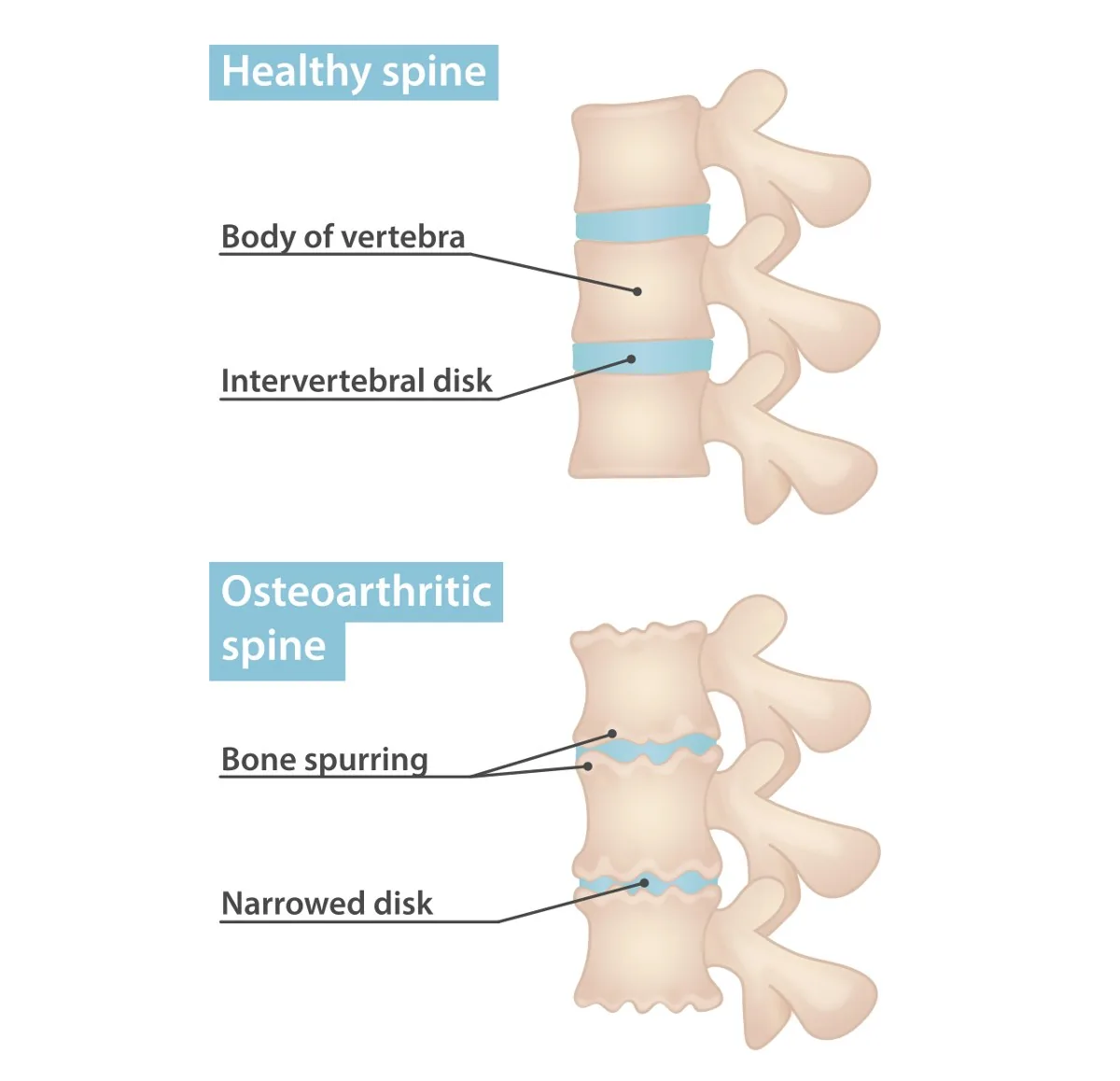
At a glance
- 1Cervical spondylosis is a name for common age-related neck changes.
- 2Physiotherapy can help through exercise, hands-on care and better posture habits.
What is cervical spondylosis?
Cervical spondylosis is the medical name for wear and tear in the neck. Over the years, the discs that cushion the neck bones and the small joints between them slowly change. Reports often describe this with words such as "degenerative changes".
These changes are common as we get older, a bit like grey hair. Many middle-aged and older adults have them. The words in a report can sound worrying, so it helps to understand what they mean.
A scan shows how your neck looks. It does not show how well it moves or how much it hurts. Some people have many changes on an X-ray and little pain. Others have more pain with fewer changes. This is why a physiotherapist looks closely at how your neck moves and what you find hard, not just at the report.
Some people with these changes notice neck stiffness, an ache that spreads to the shoulders, or trouble turning the head. Others notice very little. An assessment by a physiotherapist can help you understand what is going on in your own neck.
Common causes
The main reason for these changes is age. Your neck carries the weight of your head and moves all day, every day, for many years.
Some other factors can also add strain and make the neck more sore or stiff:
- Poor posture, such as sitting slumped with the head pushed forward
- Long hours looking down at a phone, laptop or computer
- Sitting for long periods with little movement
- Stress and muscle tension
- An uncomfortable sleeping position
- A past head or neck injury
Everyone is different. A physiotherapist can help work out which of these may play a part for you.
How physiotherapy at Mobiphysio can help
Physiotherapy does not aim to change what your X-ray shows. It aims to ease pain, improve how freely your neck moves and make daily tasks more comfortable. Results vary from person to person.
Treatment at Mobiphysio is one-on-one and starts with a thorough assessment. Care is led by Dr. T.R. Vandana, PT, and her team. We explain what we find, you tell us what matters to you, and we plan together. We listen, you decide.
Your plan may include:
- Guided exercise.Exercises and stretches aim to improve neck movement and flexibility. This may include strengthening the deep neck flexors, which are the small muscles at the front of the neck. This can help support better posture.
- Core and back exercises.Your physiotherapist may add exercises such as bridges and cat stretches if they suit you. These help keep the rest of your body moving well.
- Hands-on care.Manual therapy may help ease stiffness and muscle tightness so that moving is easier.
- Posture and daily habits.We give advice on how you sit, work, use your phone and sleep. We also show you simple ways to manage your neck yourself.
- Comfort and pain relief options.Electrotherapy and ultrasound therapy are available at both branches, and your physiotherapist may use them if they suit you.
Our physiotherapists use methods such as McKenzie, Mulligan and Stecco, chosen to suit each person. These are well-known physiotherapy approaches that use hands-on techniques and movement.
Selected Google reviews
> "I came to Mobi Physio after struggling with persistent neck, shoulder, back, and heel pain. It all began with neck pain, which was later diagnosed as cervical spondylosis, disc degeneration, and a bulge. … For the first time in years, I feel confident in managing my body."
>
> — Ramya A., Google review
Individual experiences vary. This excerpt was taken from Google on 12 Nov 2026. You can read more reviews on Google for RS Puram and Goldwins.
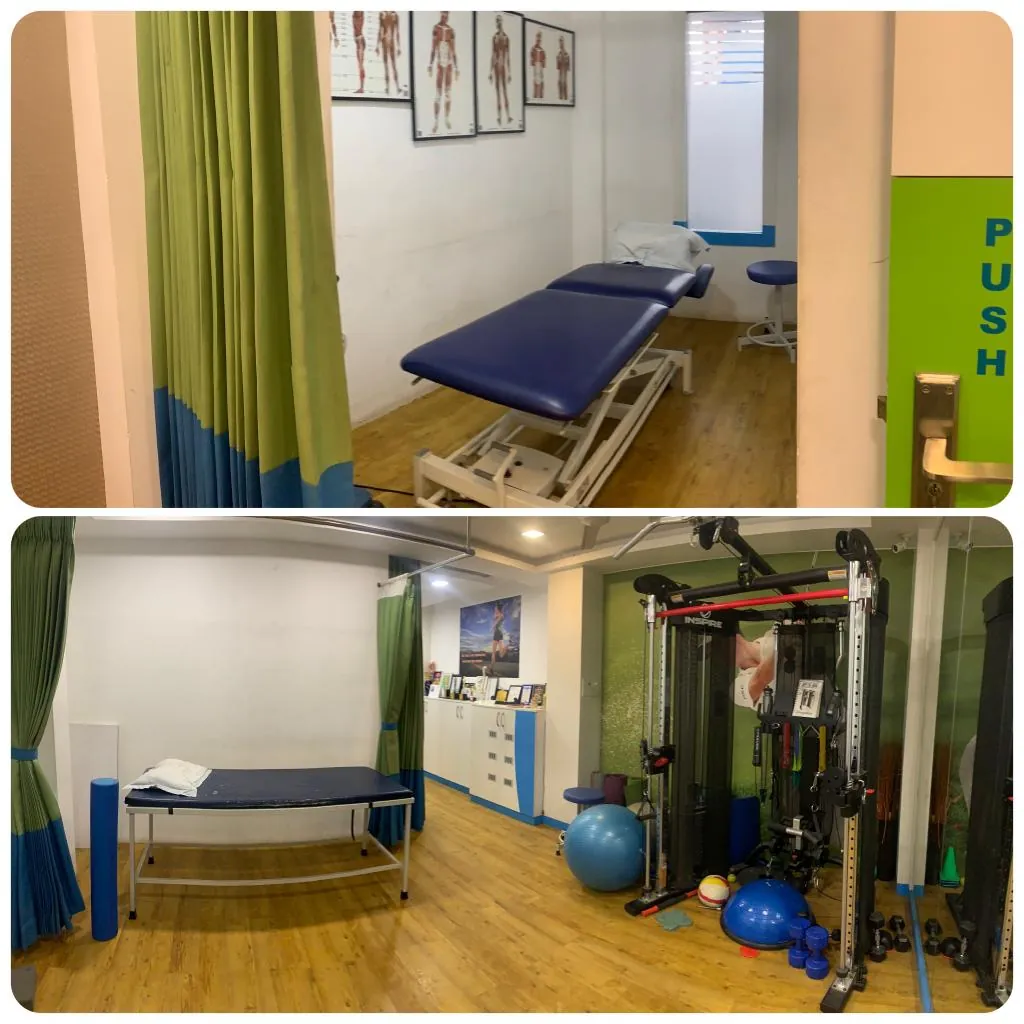
What to expect at your visits
Your first visit takes 45 to 60 minutes. Follow-up visits take 30 to 45 minutes. You do not need a referral to book.
At your first visit:
- We listen to your story: where it hurts, what makes it worse and how it affects your day.
- We look at how your neck and head move, and at your posture.
- We explain in plain words what may be causing your pain, and we plan your treatment with you.
- You may start with relief methods or simple exercises you can continue at home.
Please bring any reports, scans or prescriptions you have, including your neck X-ray or scan report.
Our staff speak Tamil and English. You can ask for a particular physiotherapist, or a female physiotherapist, at both branches. Tell us when you book if stairs are hard for you. There is ample car parking at both branches.
Things you can try at home
These ideas are gentle and general. They are a starting point, not a replacement for advice planned for you. Move slowly and stay within a comfortable range. Stop and get advice if pain gets worse.
- Gentle neck movements.
Once or twice a day, slowly turn your head to each side. Tilt each ear towards the shoulder on the same side. Then nod gently, keeping the movement small and without tipping your head far back. Move only as far as is comfortable, and never force the movement.
- Shoulder blade squeezes.
Sit or stand tall and gently draw your shoulder blades back and down. Hold for a few seconds, then relax. Repeat a few times through the day, especially when you have been sitting for a while.
- Screens at eye level.
Raise your computer or laptop screen on a stand or a few books so the top is about level with your eyes. Hold your phone a little higher too, rather than bending your neck down to it. If you wear bifocal or varifocal glasses, a screen slightly lower may be easier on your neck. Your physiotherapist can help you find the right height.
- Regular movement breaks.
You may sit for long spells at work, at home or in front of the TV. If so, get up every so often and walk around. Short, frequent breaks may help ease neck stiffness.
Your physiotherapist can show you exercises chosen for your own neck and check that you are doing them correctly.
Common questions
My X-ray says cervical spondylosis. Should I be worried?
The words in a report can sound worrying, but these changes are common as people get older. A scan does not always match how much pain you have. A physiotherapy assessment can help you understand what it means for your daily life.
Will physiotherapy make the changes on my X-ray go away?
Physiotherapy does not aim to change your X-ray. It aims to ease pain, help your neck move more freely and make daily tasks more comfortable. Results vary from person to person.
Is it okay to move and exercise my neck?
Gentle, guided movement is a key part of physiotherapy for neck wear and tear. Your physiotherapist will assess you first and then choose exercises that suit your neck. Stop and get advice if pain gets worse.
Do I need to stop using my phone or computer?
Not necessarily. Long hours looking down can make the neck ache. Try raising your screen to about eye level and taking regular breaks. Your physiotherapist can advise you on your work and home set-up.
Do I need a referral, and what should I bring?
No, you do not need a referral. Please bring any reports, scans or prescriptions you have.
Can I ask for a female physiotherapist?
Yes. You can ask for a particular physiotherapist, or a female physiotherapist, at both branches. Just let us know when you book.
Book an assessment
 Mobiphysio physiotherapists · RS Puram and Goldwins
Your neck may have been stiff or sore, or a scan report may have left you worried. A physiotherapy assessment can help you understand what is going on and what may help. WhatsApp or call us on +91 73385 65909 to book.
Mobiphysio has 25+ years of experience in physiotherapy and has treated 3000+ patients.
Our two branches:
- RS Puram: No.28, Captain Palaniswamy Layout, opposite the municipal park, RS Puram, Coimbatore 641 002. Open Monday to Saturday, 10 AM to 8 PM. View on Google Maps
- Goldwins, Avinashi Road: 11/23, Avinashi Road, opposite Sri Sai Dental Clinic, Karuparampalayam Pirivu, Coimbatore 641 014. Open Monday to Saturday, 8 AM to 1 PM and 4 PM to 8 PM. View on Google Maps
Both branches are closed on Sundays and major festival days (Pongal, Diwali). Message us on WhatsApp or call; we will answer your questions.