
At a glance
- 1Tennis elbow is pain on the outer elbow, often from repeated gripping.
- 2Physiotherapy can combine tendon exercises, hands-on care and changes to daily tasks.
What is tennis elbow?
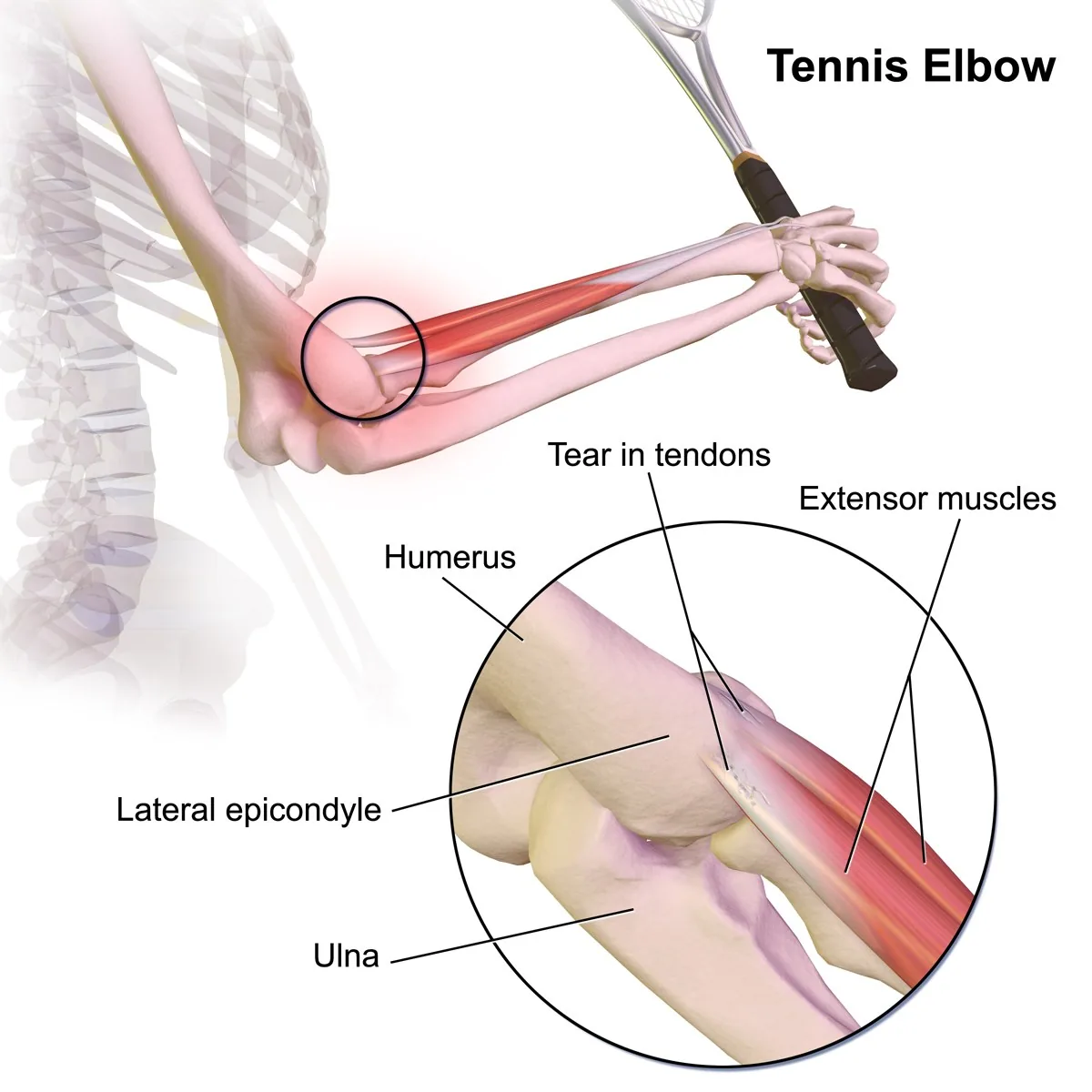
Tennis elbow is pain and tenderness on the bony point on the outer side of the elbow. The forearm muscles that lift your wrist and straighten your fingers attach here through a shared tendon. When this tendon is overloaded again and again, it can become sore and less able to cope with gripping and lifting.
Physiotherapists may call it lateral elbow tendinopathy, meaning a tendon problem on the outer elbow. An older name is lateral epicondylitis.
The pain may spread down the forearm. Many people notice it when they grip a cup, turn a key, wring out clothes, lift a bag or straighten the arm. Some also notice their grip feels weaker.
Despite the name, you do not need to play tennis to get it. Anyone whose work or home life involves a lot of gripping and wrist movement can develop it. Pain around the elbow can also come from other problems, such as a sprain or arthritis. An assessment by a physiotherapist helps work out what is going on.
Common causes
Tennis elbow often builds up slowly from repeated use rather than from one injury. It may start when the forearm does more gripping or wrist work than it is used to. Common triggers include:
- Repeated gripping at work, such as using tools, operating machines, tailoring, carpentry, painting or plumbing
- Computer and mouse use, especially with a tight grip and the wrist bent back
- Cooking, including chopping vegetables, stirring, grinding and lifting heavy vessels like pressure cookers
- Gardening, such as digging, pruning, pulling weeds and carrying water cans
- Racket sports, including badminton and tennis, particularly after playing more than usual or with a changed grip
- Carrying heavy bags with the arm straight and the palm facing down
Long spells of gripping or wrist work without a break may add to the load. The pain often begins after a sudden change, like a new job, a busy season of festival cooking or a new hobby.
How physiotherapy at Mobiphysio can help
At Mobiphysio, care for elbow pain is led by Dr. T.R. Vandana, PT. Treatment is one-on-one and starts with a thorough assessment. Your plan is built around your elbow, your work and the tasks you need to get back to. We listen, and you decide on the plan with us.
Tendon-loading exercises. A sore tendon often needs the right amount of work, not complete rest. Depending on your assessment, your plan may include exercises such as wrist curls, wrist turns and towel twists. Your physiotherapist chooses the ones that suit you, starts gently and builds them up step by step. The aim is to help the tendon cope with gripping and lifting again.
Hands-on care. Manual therapy aims to improve how the elbow moves. Massage can help release tight soft tissue around the forearm. Our physiotherapists use methods such as Mulligan, McKenzie and Stecco, choosing what suits your elbow.
Changes to daily tasks. Small changes may ease the strain on the tendon. We look at how you grip a mouse, a knife, a tool or a racket, and how you lift and carry. We may suggest ways to spread the load, change your hand position or set up your desk more comfortably.
Other options where suitable. Depending on your assessment, your plan may include dry needling, electrotherapy or ultrasound therapy. Your physiotherapist will explain why an option is suggested, and you can always ask questions.
Every elbow is different. We review how you are doing at each visit and adjust your plan.
What to expect at your visits
You do not need a doctor's referral. Please bring any reports, scans or prescriptions you already have.
Your first visit takes about 45 to 60 minutes. We listen to your story: when the pain started, what makes it worse and what you need your arm for. Your physiotherapist then examines your elbow, arm and movement. You leave with a personalised plan and simple exercises to begin.
Follow-up visits take about 30 to 45 minutes. We check how your elbow is doing, continue your treatment and adjust your exercises as needed.
A few more things that may help you plan:
- Staff speak Tamil and English.
- You can ask for a particular physiotherapist, or a female physiotherapist, at both branches.
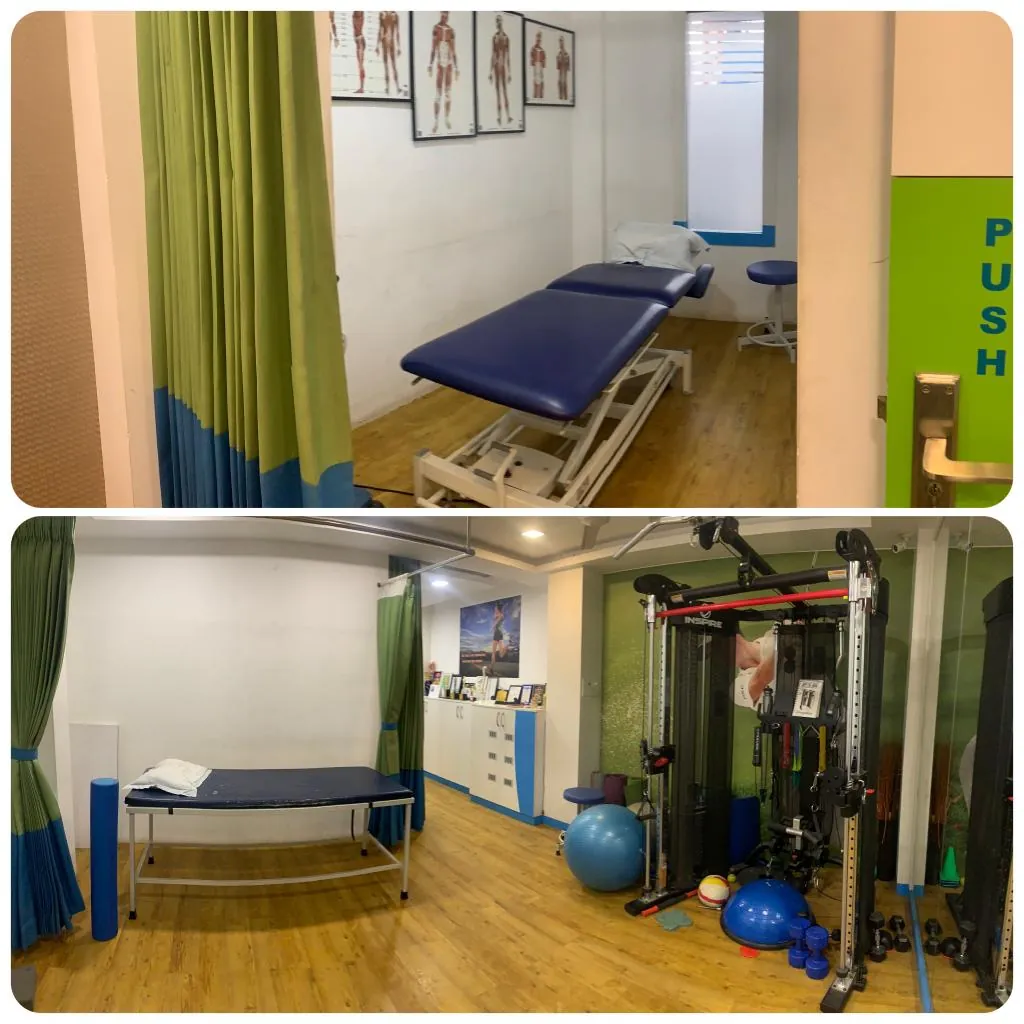
- Goldwins is on the ground floor. RS Puram has a ramp for easy access. It has no lift, and the clinic uses the ground and first floors.
- Both branches have ample car parking.
Things you can try at home
These ideas are gentle and general, and they suit most adults. Go slowly, and stop and get advice if pain gets worse. A Mobiphysio physiotherapist can check that they suit you.
- Gentle forearm stretch.
Hold your arm out in front with the palm facing down. Use your other hand to gently bend the wrist down until you feel a mild stretch on top of the forearm. Keep your elbow slightly bent if a straight arm feels uncomfortable. Hold for a few slow breaths and repeat a few times a day. It should feel like a gentle pull, not pain. If the stretch brings on your elbow pain, ease off or skip it.
- Lift with palms up.
When you lift a vessel or a box, scoop it with your palms facing up and keep it close to your body. For bags and water cans, hold them close, or share the load between both hands.
- Spread heavy jobs.
Try not to do all the chopping, grinding, washing or gardening in one go. Break heavy tasks into smaller parts through the day, with lighter jobs in between.
- Loosen your grip.
Hold your mouse, pen, knife or tools with a relaxed grip. Keep your wrist straight rather than bent back while typing. Take short breaks so your forearm can rest.
Common questions
Can I get tennis elbow if I have never played tennis?
Yes, you can. Any work or hobby with a lot of gripping and wrist movement can overload the tendon. Examples include typing, cooking, gardening and using tools. The name comes from racket sports, but they are only one cause.
Should I stop using my arm completely?
Complete rest is not usually needed. Many people find it helps to ease off the tasks that bring on the pain while keeping the arm gently active. Your physiotherapist can help you find the right balance.
Can I keep playing badminton or tennis?
You may need to play less often or less hard for a while. Your physiotherapist can look at your grip and technique and help you plan a gradual return.
Can I keep working on a computer?
Many people carry on with a few small changes. Hold the mouse lightly, keep your wrist straight and take short breaks. Your physiotherapist can suggest changes to your desk set-up.
Do I need a doctor's referral?
No, you do not need a referral to visit Mobiphysio. Please bring any reports, scans or prescriptions you have.
Can I ask for a female physiotherapist?
Yes. You can ask for a particular physiotherapist, or a female physiotherapist, at both our branches.
Book an assessment
 Mobiphysio physiotherapists · RS Puram and Goldwins
Is outer elbow pain getting in the way of work, cooking or sport? We are happy to help. WhatsApp or call us on +91 73385 65909 to book an assessment at the branch that suits you:
- RS Puram: No.28, Captain Palaniswamy Layout, opposite the municipal park, RS Puram, Coimbatore 641 002. Open Monday to Saturday, 10 AM to 8 PM.
- Goldwins, Avinashi Road: 11/23, Avinashi Road, opposite Sri Sai Dental Clinic, Karuparampalayam Pirivu, Coimbatore 641 014. Open Monday to Saturday, 8 AM to 1 PM and 4 PM to 8 PM.
Both branches are closed on Sundays and major festival days such as Pongal and Diwali. Mobiphysio brings 25+ years of experience in physiotherapy and has treated 3000+ patients. Treatment is one-on-one. Have a question before you book? Message us on WhatsApp or call; we will answer your questions.