
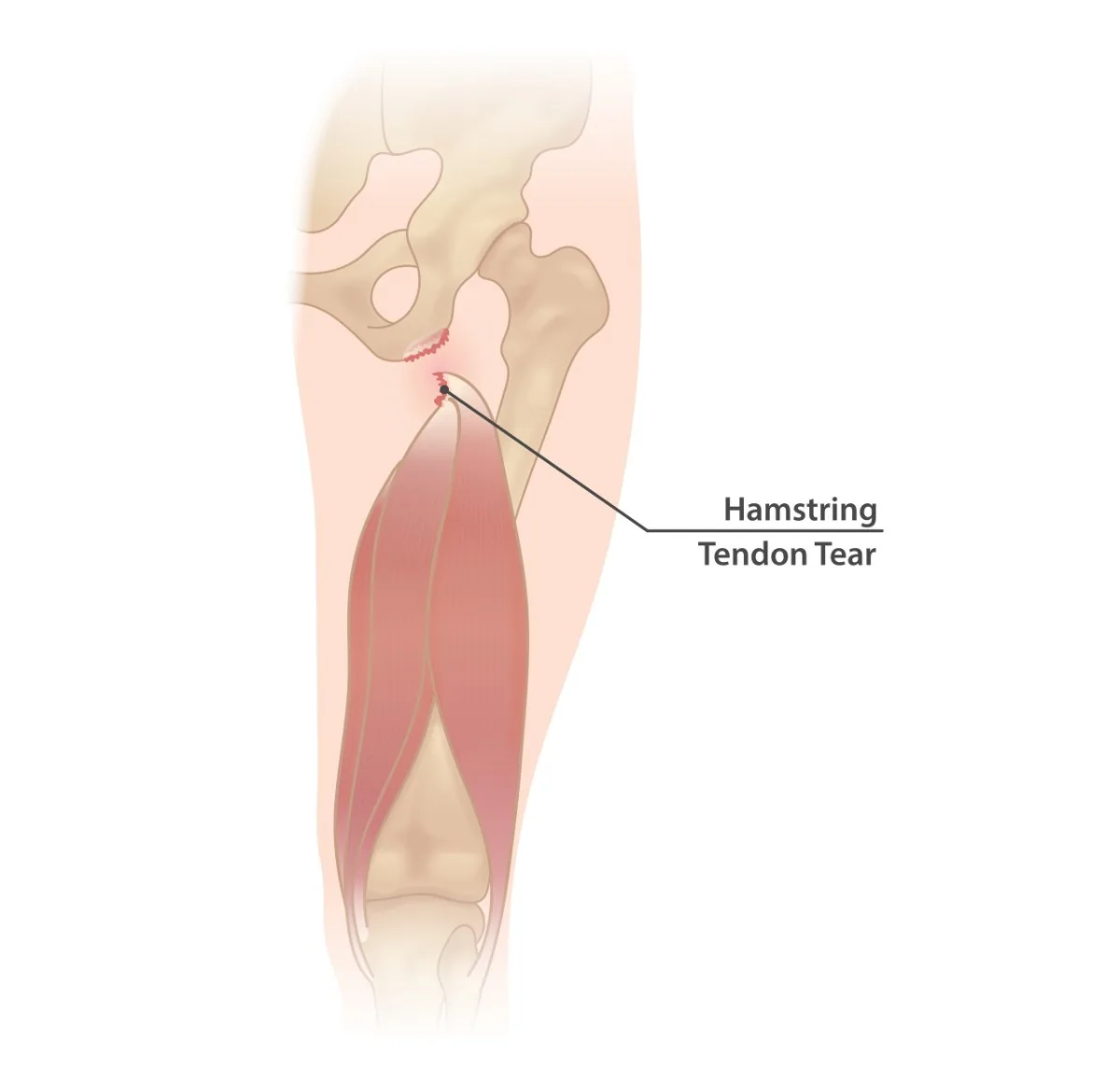
At a glance
- 1Hamstring strain: a pulled muscle at the back of the thigh.
- 2Staged physiotherapy aims to rebuild strength and guide your return to running.
What is a hamstring strain?
Your hamstrings are a group of muscles at the back of the thigh. They work hard when you sprint, kick, jump or bend forward. A strain is often called a pull. It happens when one of these muscles is overloaded or stretched too far and is injured.
Strains range from a mild injury to a larger, more severe tear. Many people notice a sudden pull or sharp pain at the back of the thigh, often while sprinting or stretching. Afterwards there may be tightness, tension or swelling. It can also be hard to run or stretch comfortably.
Many people worry about getting back to sport, or about pulling the same muscle again. Pain at the back of the thigh can have more than one cause, so it helps to have it checked. A physiotherapist can assess what is going on, how severe it may be and what may have contributed.
Common causes
Hamstring strains often happen after a sudden movement or overexertion. Other things can play a part too. Your physiotherapist will look at what may apply to you.
- Sudden movements: sprinting flat out, kicking a football, running a quick single or reaching into a sudden, deep stretch.
- Overexertion: doing more than your muscles are ready for. One example is a hard session after a long break. Another is pushing on when your legs are tired late in a match.
- A previous hamstring strain: having pulled it before can raise the chance of another, which is why a careful return matters.
- Muscle tension: tightness or tension in the muscles at the back of the thigh may play a part.
- How your muscles and joints work together: including how your body moves as a whole.
- Other contributing factors: things we find at your assessment, which can differ from person to person.
Knowing what may have contributed helps us plan your care. It is also a key part of aiming to lower the chance of another strain.
How physiotherapy at Mobiphysio can help
At Mobiphysio, treatment is one-on-one and starts with a thorough assessment. We check how severe the injury is, what may have contributed to it and how your body is moving overall. Then we build a staged plan around you, from early pain relief to a phased return to activity.
Easing pain and swelling. In the first few days, R.I.C.E (rest from hard activity, ice, compression and elevation) can help manage pain and swelling. For a recent sports injury, your physiotherapist may check whether cryotherapy suits you. Cryotherapy uses controlled cold. At present we use it only for recent (acute) sports injuries.
Gentle movement. We start with gentle movement exercises, so the leg keeps moving without being pushed too far. When it suits your stage of healing, your physiotherapist may also use hands-on manual therapy, such as massage and other gentle work on the muscle. This aims to improve circulation and reduce muscle tension.
Strengthening. As your hamstring heals, your exercises progress to targeted strengthening. Your physiotherapist moves you on based on how your leg responds, not on a fixed timetable.
Balance and body awareness. Proprioception is your body's sense of where it is and how it is moving. Exercises to improve balance and body awareness can help reduce the risk of re-injury.
A gradual return to running. We guide you through a phased return to activity. You build from easy jogging towards faster running and the movements your sport needs. Each step aims to prepare your hamstring for what you ask of it. No one can promise a strain will never come back, but this staged approach aims to lower the chance.
We listen, and you decide. Your physiotherapist explains each step, so you can make choices that suit your training and your day.
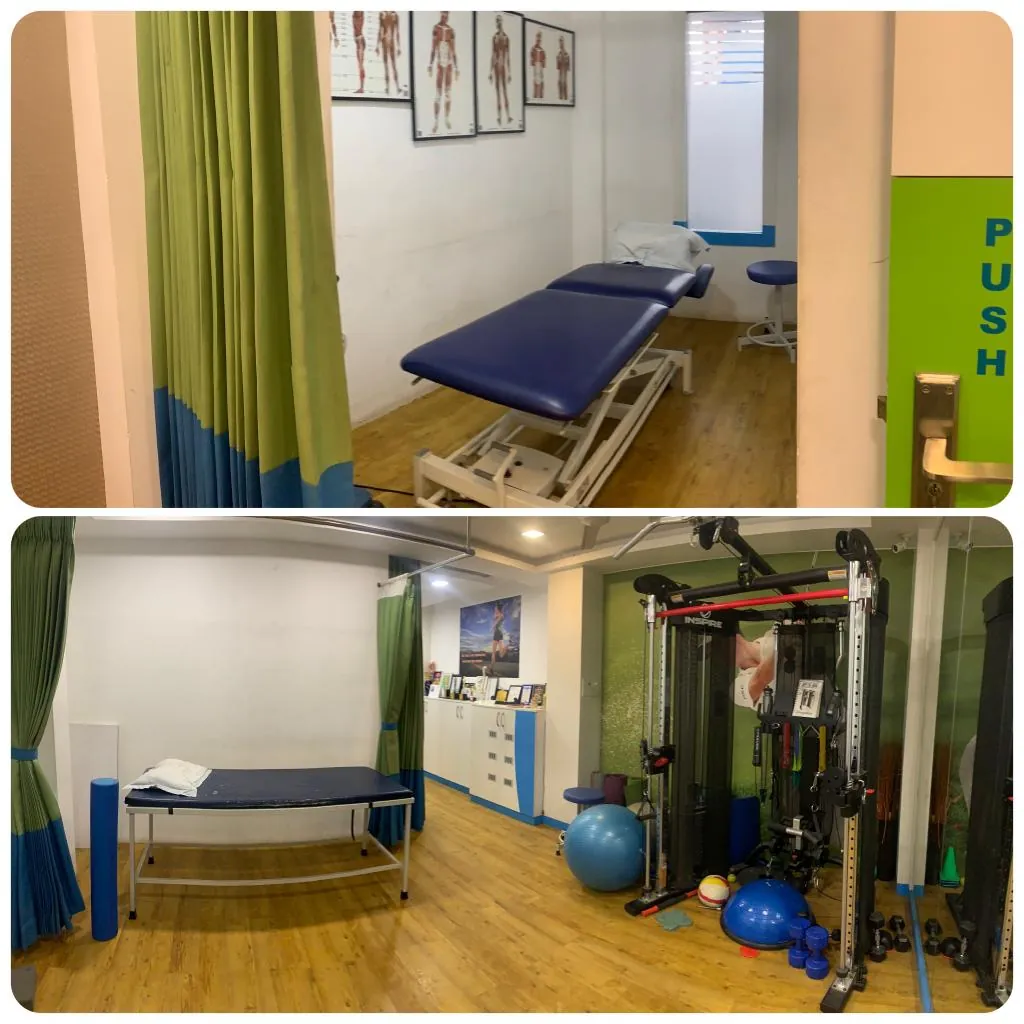
What to expect at your visits
Your first visit takes 45 to 60 minutes, and follow-up visits take 30 to 45 minutes. Each session is one-on-one with your physiotherapist.
At your first visit:
- We listen to how the injury happened and what you want to get back to. That might be a weekend match, a race or your daily walk.
- Your physiotherapist assesses the severity of the strain and what may be contributing.
- We explain what we find and start early pain relief if suitable.
- You leave with a clear plan and simple exercises to begin.
At follow-up visits, your physiotherapist checks how your leg is responding. Your plan then moves forward one stage at a time, at a pace that suits your hamstring.
Our staff speak Tamil and English, so you can explain your injury in Tamil or English.
Things you can try at home
These ideas are gentle and general. They do not replace an assessment by a physiotherapist.
- Pause sprinting.
Take a break from sprinting, kicking, fast bowling and hard stretching for now. You can still stay active in ways that are comfortable for the leg.
- Rest and cold.
In the early days, resting from hard activity may ease pain and swelling. A cold pack wrapped in a thin cloth may also help. Do not put ice directly on bare skin. Use it for short spells only (for example, about 10 to 15 minutes at a time). Skip cold if you have poor feeling or circulation in the leg.
- Walk gently.
Short, easy walks on flat ground can keep you moving, if they are comfortable. Take shorter steps and slow down if the back of the thigh tightens.
- Easy hamstring activation.
Once walking is comfortable, lie on your back with your knees bent. Gently press your heels into the floor for a few seconds, then relax. Keep the effort light. Stop if it hurts or the muscle cramps.
- Let comfort guide you.
Avoid pushing into strong stretches or sharp pain while the muscle is sore. Stop and get advice if pain gets worse.
Common questions
Should I stretch a pulled hamstring?
Gentle movement within comfort can help. Avoid pushing into strong stretches while the muscle is sore. Your physiotherapist will show you which movements suit your stage of healing.
When can I play cricket or football again?
It depends on how severe the strain is and how your body responds. We guide you through a phased return, from easy jogging towards faster running and sport movements, so your hamstring is prepared for it.
Can I still go for my morning walk?
Many people find short, easy walks on flat ground comfortable. Keep it gentle, and stop and get advice if pain gets worse.
How can I lower the chance of pulling it again?
Targeted strengthening, balance training and a gradual return to sprinting aim to lower the risk of re-injury. No one can promise it will never happen again, but a plan built around you can help.
Do I need a doctor's referral?
No, you do not need a referral. Please bring any reports, scans or prescriptions you have.
Can I ask for a female physiotherapist?
Yes. You can ask for a particular physiotherapist, or a female physiotherapist, at both branches.
Book an assessment
 Mobiphysio physiotherapists · RS Puram and Goldwins
Is the back of your thigh sore after sprinting, kicking or stretching? An assessment with a physiotherapist is a good first step. WhatsApp or call Mobiphysio on +91 73385 65909 to book your hamstring assessment.
- RS Puram: No.28, Captain Palaniswamy Layout, opposite the municipal park, RS Puram, Coimbatore 641 002. Open Monday to Saturday, 10 AM to 8 PM. Google Maps
- Goldwins, Avinashi Road: 11/23, Avinashi Road, opposite Sri Sai Dental Clinic, Karuparampalayam Pirivu, Coimbatore 641 014. Open Monday to Saturday, 8 AM to 1 PM and 4 PM to 8 PM. Google Maps
Both branches are closed on Sundays and on major festival days such as Pongal and Diwali. There is ample car parking at both branches. Tell us when you book if stairs are hard for you.
Dr. T.R. Vandana, PT, founded Mobiphysio and leads a team with 25+ years of experience and 3000+ patients treated. Have a question before you visit? Message us on WhatsApp or call; we will answer your questions.