
At a glance
- 1A PCL injury is damage to a strong ligament inside the knee.
- 2Physiotherapy aims to build thigh strength, balance and a steadier knee.
What is a PCL injury?
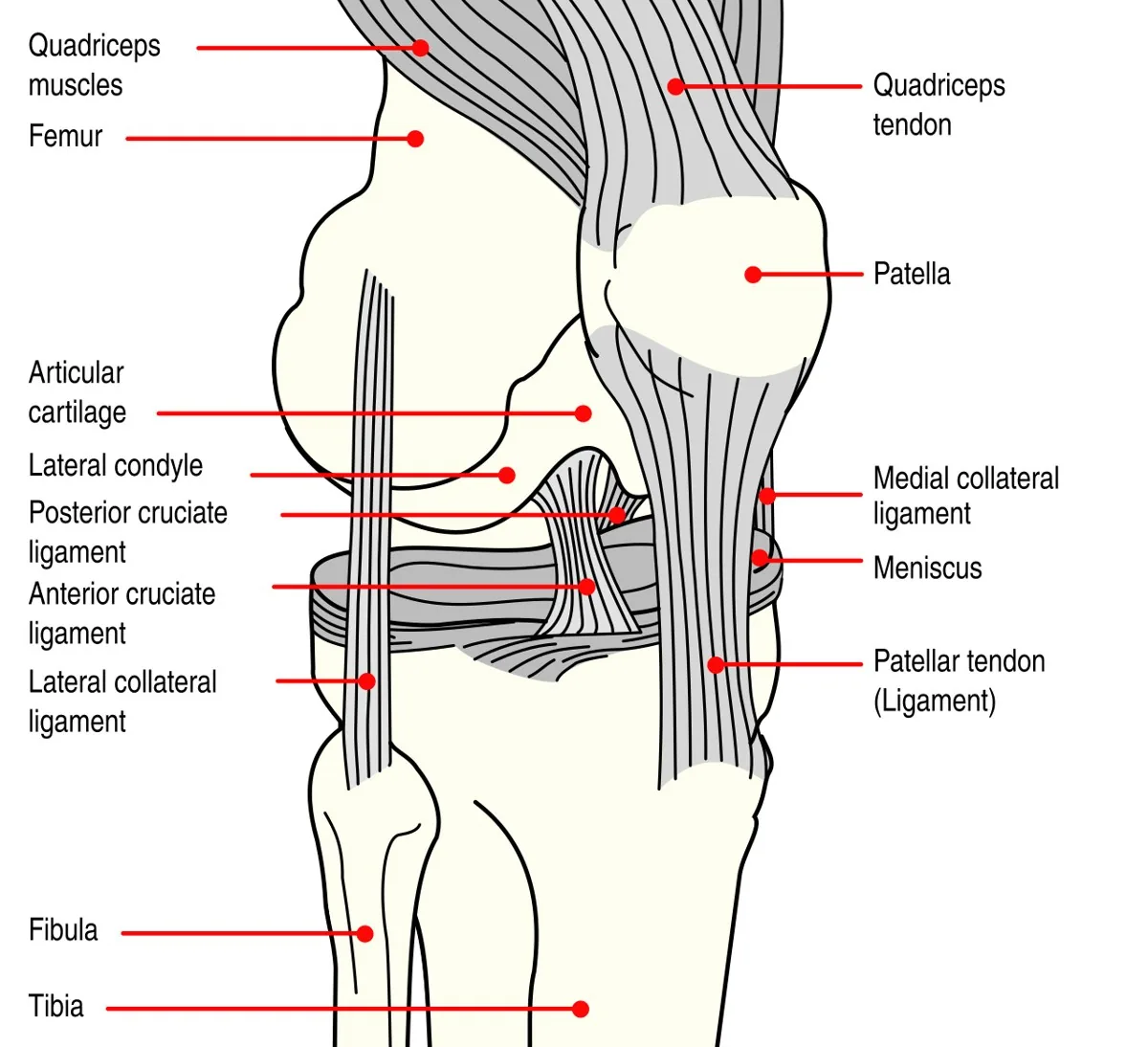
Deep inside your knee, two strong ligaments cross over each other like the letter X. "Cruciate" means cross-shaped, which is where the name comes from. The posterior cruciate ligament (PCL) sits towards the back of the knee. It joins your thigh bone to your shin bone and stops the shin bone from sliding backwards.
The anterior cruciate ligament (ACL) sits in front of the PCL. The ACL mainly stops the shin bone sliding forwards and helps control twisting. ACL injuries often happen with a sudden twist, turn or awkward landing. PCL injuries are more often linked to a direct blow to the front of the shin while the knee is bent.
A PCL injury can range from a mild stretch of the ligament to a partial or full tear. Some people notice pain at the back of the knee, swelling or stiffness. Others say the knee seems less steady, especially going down stairs or slopes. Because every knee is different, a physiotherapist's assessment can help work out what is likely going on in yours.
Common causes
PCL injuries usually happen when a force pushes the shin bone backwards, often with the knee bent. Common situations include:
- A two-wheeler fall where you land on a bent knee or hit your shin on the road
- A car accident where the bent knee strikes the dashboard
- Falling onto a bent knee during sport, such as football, kabaddi or cricket
- A tackle or collision that drives into the front of the shin
- A slip on a wet floor or rain-soaked road that lands you on your knees
- The knee being pushed back past straight in an awkward fall
A PCL injury can happen together with other knee injuries. That is why we look at the whole knee, not just one ligament.
How physiotherapy at Mobiphysio can help
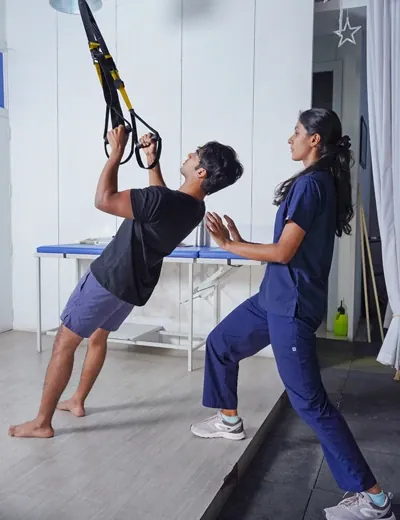
At Mobiphysio, treatment is one-on-one and starts with a thorough assessment. Your physiotherapist builds a plan around what they find and the goals you share. We listen, and you decide on the plan with us.
For a PCL injury, the heart of the plan is usually a focused thigh-strengthening programme. The quadriceps is the big muscle at the front of your thigh. It helps hold the shin bone in a good position. When it is strong and switches on at the right moment, it can take some load off the PCL. This aims to rebuild a steady knee you can trust.
Your plan may also include:
- Strength for the whole leg.Strong hip and calf muscles can help control the knee when you walk, climb stairs or turn. The muscles at the back of the thigh need extra care after a PCL injury. Your physiotherapist will guide when and how to work them.
- Balance and control.Balance work can help your knee react well on uneven roads, steps and the sports field. It can also help rebuild your confidence.
- Movement and stretching.Gentle, slow stretching and guided movement can help improve how far your knee bends and straightens.
- Hands-on manual therapy.Where it suits you, your physiotherapist may use massage and hands-on methods such as Mulligan and Stecco to help ease pain and stiffness.
- Electrotherapy and ultrasound.Both branches offer electrotherapy (including electrical muscle stimulation) and ultrasound therapy. These may be used if they suit your knee, for example to help the thigh muscle switch on.
- Getting back to activity.When your knee is ready, we build up step by step towards longer walks, stairs, riding again or sport. The pace depends on your knee and your goals.
Results differ from person to person. If you have had an operation on your knee, follow your surgeon's instructions alongside your physiotherapy.
What to expect at your visits
You do not need a doctor's referral to visit us. Bring any reports, scans or prescriptions you have. Your first visit takes 45 to 60 minutes. Follow-up visits take 30 to 45 minutes.
At your first visit:
- We ask how you hurt your knee, about your daily routine and what makes it worse
- Your physiotherapist examines your knee and watches how you walk, bend and balance
- We explain what may be going on and suggest a plan
- You learn simple exercises to start with, and we adjust them as your knee changes
Our staff speak Tamil and English. You can ask for a particular physiotherapist, or a female physiotherapist, at both branches. Tell us when you book if stairs are hard for you.
Things you can try at home
These are gentle, general ideas to try between visits. If you have had knee surgery, follow your surgeon's instructions and check with your physiotherapist before trying these. Move slowly and within comfort. Stop and get advice if pain gets worse or your knee feels unsteady.
- Thigh muscle tightening.
Sit or lie with your leg straight and a small rolled towel under your knee. Gently tighten the front of your thigh to press the knee down into the towel. Hold for a slow count of five, then relax. Repeat a few times.
- Gentle step-ups.
Once walking is comfortable, use a low step and hold a rail. Step up with your sore leg and bring the other foot up. Step back down with your sore leg first, so your stronger leg takes your weight on the way down. Keep your knee in line with your toes.
- Balance next to support.
Once you can stand and walk comfortably, stand beside a kitchen counter or sturdy chair and hold it lightly. Start by gently shifting your weight from foot to foot. When that feels easy, try standing on your sore leg for a few seconds with a soft bend in the knee. Build up slowly.
- Pace your day.
Break up long spells of standing or walking. If your knee is swollen by evening, rest with your leg raised on a pillow placed along your calf, so your whole lower leg is supported.
Common questions
Can physiotherapy help a PCL injury?
Physiotherapy can help many people with a PCL injury. It aims to strengthen the thigh and leg muscles, improve balance and help the knee move well. Results differ from person to person.
Why does my physiotherapist focus so much on my thigh?
The quadriceps, at the front of the thigh, helps hold the shin bone in a good position. A stronger thigh can take some load off the PCL and help your knee stay steady.
Will I be able to ride my two-wheeler or play sport again?
Getting back to riding and sport is a common goal, and we plan your exercises around it. Your physiotherapist builds up your activity step by step, based on how your knee responds. Every knee is different, so progress varies.
Can I come for physiotherapy after knee surgery?
Yes, you can. Follow your surgeon's instructions alongside your physiotherapy. Bring any reports or notes you have to your first visit.
Do I need a doctor's referral to visit Mobiphysio?
No, you do not need a doctor's referral. Bring any reports, scans or prescriptions you have to your first visit.
Can I ask for a female physiotherapist?
Yes. You can ask for a particular physiotherapist, or a female physiotherapist, at both branches. Just mention it when you WhatsApp or call.
Book an assessment
 Mobiphysio physiotherapists · RS Puram and Goldwins
If your knee has been hurt in a fall or during sport, an assessment is a good first step. Dr. T.R. Vandana, PT, and her team have 25+ years of experience in physiotherapy and have treated 3000+ patients.
WhatsApp or call +91 73385 65909 to book at either branch:
- RS Puram: No.28, Captain Palaniswamy Layout, opposite the municipal park, RS Puram, Coimbatore 641 002. Monday to Saturday, 10 AM to 8 PM. Map
- Goldwins, Avinashi Road: 11/23, Avinashi Road, opposite Sri Sai Dental Clinic, Karuparampalayam Pirivu, Coimbatore 641 014. Monday to Saturday, 8 AM to 1 PM and 4 PM to 8 PM. Map
Both branches are closed on Sundays and major festival days such as Pongal and Diwali. Both have ample car parking.