
At a glance
- 1Text neck: neck and shoulder strain from long spells looking down.
- 2Physiotherapy can help through assessment, hands-on care, exercise and habit advice.
What is text neck?
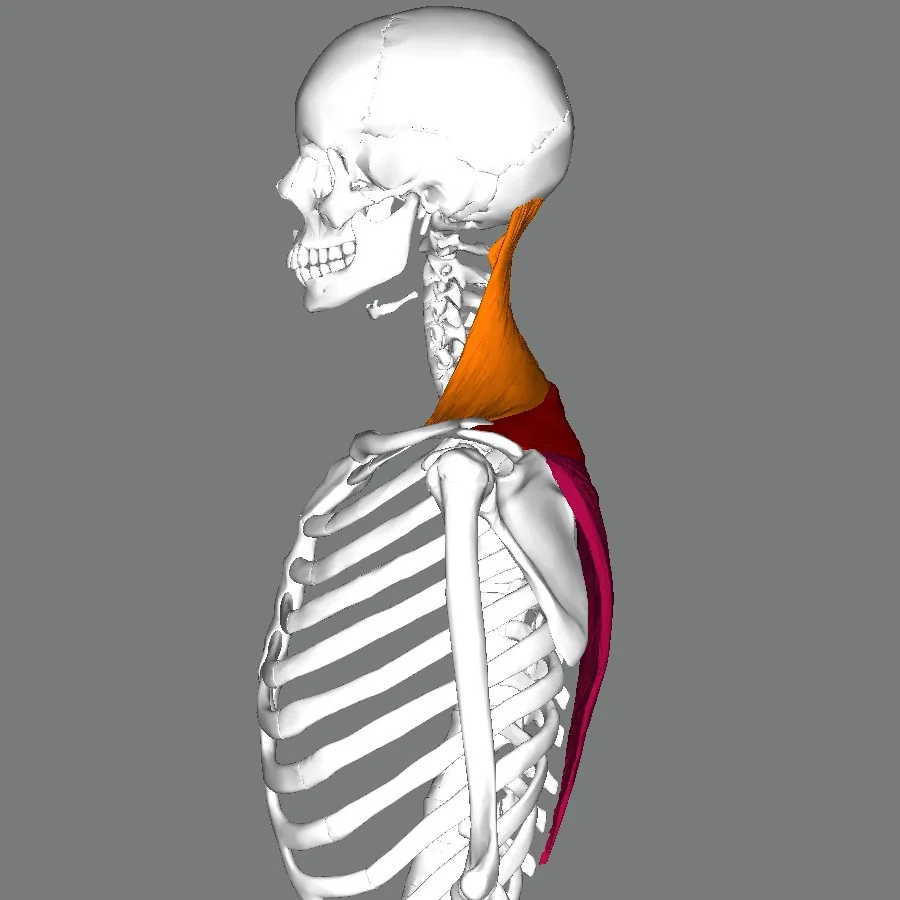
"Text neck" is an everyday name for the neck, shoulder and upper back strain some people get after looking down at a phone or tablet for long spells. Your phone is not the problem on its own. What often matters more is how long you stay in one position without a break.
Your head is fairly heavy. When it sits balanced over your shoulders, your neck carries it easily. When you tip it forward and down, the muscles at the back of your neck and upper back work harder to hold it. If you stay like this for long spells, day after day, these muscles can become tired, tight and sore. Some people notice stiffness, an ache across the shoulders, or a neck that is hard to turn by evening.
This strain is often tied to habits, and habits can change. Small changes, along with exercises for strength and movement, can help ease the load on your neck. Neck pain has many possible causes, so a physiotherapy assessment is a good way to understand yours.
Common causes
Neck strain usually builds up from a mix of things:
- Holding your phone low. Keeping it in your lap or at chest height means bending your neck further.
- Long spells without a break. Scrolling, watching videos or reading chats keeps your head in one position.
- Slouching on a sofa or bed. Lying back with your chin dropped towards your chest adds strain.
- Laptops and computers. A screen at the wrong height can keep you looking down at work too.
- Stress and muscle tension. Busy, stressful days can tighten the muscles around your neck and shoulders.
- Uncomfortable sleeping positions. An awkward position at night can add to daytime stiffness.
Your physiotherapist looks at your whole day, not just your phone.
How physiotherapy at Mobiphysio can help
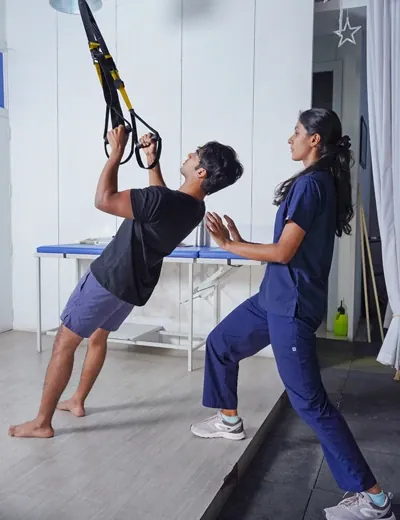
Treatment is one-on-one and starts with a thorough assessment. We aim to ease your pain, help your neck move more freely and help you build habits that suit your day. Your plan may include:
- Hands-on care and guided movement.Our physiotherapists use methods such as McKenzie, Mulligan and Stecco to help ease stiffness and tension.
- Neck and upper body stretches.Guided neck movements can help relax tight muscles and improve how freely you move. These may be combined with cat stretches and a corner stretch for the chest.
- Strengthening.Guided exercises work the deep muscles at the front of your neck and the muscles around your shoulder blades and upper back. Core work such as bridges may be added where it suits you. These aim to help your body hold your head up more easily.
- Posture and habit advice.We look at how you hold your phone, sit and move, and suggest small changes.
- Workstation check.If you also work at a desk, we review your setup.
- Electrotherapy, where suitable.Gentle electrical stimulation can help relieve pain.
Relief methods can make exercise more comfortable, but the main aim is to help you move well and stay strong. Results vary from person to person. We listen, you decide.
What to expect at your visits
Your first visit takes 45 to 60 minutes, and follow-up visits take 30 to 45 minutes. At your first visit:
- We listen to your story. We ask where it hurts, what makes it worse, and how you use your phone or laptop.
- We look at how you move. We check how your neck moves and how you sit, stand and hold your phone.
- We explain and plan together. We share what may be causing your pain in plain words and plan your treatment with you.
- You start with simple steps. You may begin with relief methods or a few exercises to continue at home.
Our staff speak Tamil and English. You can ask for a particular physiotherapist, or a female physiotherapist, at both branches.
Things you can try at home
These gentle ideas suit most people. Move slowly and stay within a comfortable range. Stop and get advice if pain gets worse, or if you are unsure whether an exercise suits you.
- Raise your phone.
Bring it closer to eye level so your head can stay more upright. Resting your elbows on a table or cushion can make this easier.
- Try gentle chin tucks.
Sit or stand tall and look straight ahead. Gently glide your chin straight back, as if making a small double chin. Do not force it. Hold for a few seconds, relax, and repeat a few times a day.
- Look up often.
Use the end of a video or chat, or a phone reminder, as a cue to look up and around. Then slowly turn your head side to side and roll your shoulders.
- Get up and move.
Between long spells of sitting or scrolling, stand up, stretch and walk around for a minute or two.
- Sit with support.
Choose a chair with good back support rather than a low or tilting seat, and try not to slump on a sofa or in bed.
Remember: stop and get advice if pain gets worse.
Common questions
Do I need to stop using my phone?
No. Phones are part of daily life for work, family and friends. Many people find that small changes help, such as holding the phone higher and taking regular breaks.
Can physiotherapy help with neck pain from phone use?
Yes, it can help. Treatment aims to ease pain, improve movement and build strength, along with habit changes that suit your day. Results vary from person to person.
How often should I take a break from my phone?
There is no single rule that suits everyone. Many people find it helps to look up and move whenever they finish a video or chat. Your physiotherapist can suggest a routine that fits your work and home life.
Can the way I sleep add to the problem?
An uncomfortable sleeping position is a common cause of neck pain. If you often wake up with a sore or stiff neck, mention it at your assessment.
Do I need a doctor's referral?
No, you do not need a referral. Please bring any reports, scans or prescriptions you have.
Book an assessment
 Mobiphysio physiotherapists · RS Puram and Goldwins
If phone use has left your neck, shoulders or upper back sore, a physiotherapy assessment can help you understand why and what to do next. To book, WhatsApp or call +91 73385 65909. Not sure yet? Message us on WhatsApp or call; we will answer your questions.
We have two branches in Coimbatore:
- RS Puram: No.28, Captain Palaniswamy Layout, opposite the municipal park, RS Puram, Coimbatore 641 002. Open Monday to Saturday, 10 AM to 8 PM. Google Maps
- Goldwins, Avinashi Road: 11/23, Avinashi Road, opposite Sri Sai Dental Clinic, Karuparampalayam Pirivu, Coimbatore 641 014. Open Monday to Saturday, 8 AM to 1 PM and 4 PM to 8 PM. Google Maps
Both branches have ample car parking and are closed on Sundays and major festival days such as Pongal and Diwali. Led by Dr. T.R. Vandana, PT, our team brings 25+ years of experience in physiotherapy and has treated 3000+ patients.