
At a glance
- 1Common age-related wear and tear in the lower back.
- 2Physiotherapy aims to keep you active with exercise and hands-on care.
What is lumbar spondylosis?
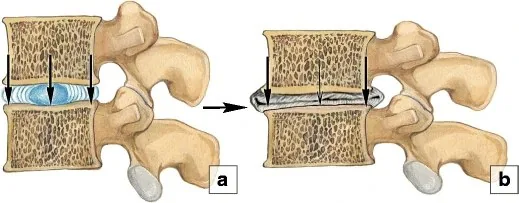
"Lumbar" means the lower back. "Spondylosis" is a word for wear-and-tear changes in the spine. Over the years, the discs between the bones of the spine can slowly lose some height. The small joints at the back of the spine can wear and become less smooth. These changes are a common part of getting older, a little like grey hair.
Your X-ray or scan report may use words such as "degenerative changes" or "osteophytes" (small bony edges). These words can sound worrying, but they describe changes that are common with age. Some people with these changes have little or no back trouble.
Others notice a stiff, achy lower back. It is often worst in the morning or after sitting or lying still. Many people find the stiffness eases once they get moving. Regular movement tends to help the back stay flexible. Wear and tear does not mean you have to stop being active.
Back pain can have more than one cause. A physiotherapy assessment helps us understand what is behind your symptoms and what may help.
What may play a part
Lumbar spondylosis usually develops slowly over many years. Getting older is the most common reason. Some things may also play a part, or add to stiffness or discomfort in the lower back:
- Family history: wear-and-tear changes can run in families
- An old back injury or strain
- Years of heavy lifting or hard physical work
- Long hours of sitting with little movement
- Extra body weight, which adds strain to the back
- Weak tummy and back (core) muscles or hip muscles, which give the spine less support
Often there is no single cause. Your physiotherapist will ask about your work, daily routine and past injuries to see what may be adding to your symptoms.
How physiotherapy at Mobiphysio can help
Physiotherapy cannot reverse wear-and-tear changes. It aims to ease stiffness and pain and help you stay active in daily life. Treatment at Mobiphysio is one-on-one and starts with a thorough assessment. Results differ from person to person, so your plan is built around you.
Your physiotherapist may combine several approaches:
- Mobility work: gentle movements and stretches that aim to ease stiffness and help your back bend and turn more freely.
- Strengthening: exercises for your tummy, back, hip and leg muscles that aim to give your spine better support during daily tasks.
- Hands-on care: manual therapy and massage that aim to ease pain and improve movement.
- Ultrasound therapy and electrotherapy: these may help ease muscle and joint pain as part of your plan.
- Rehabilitation and advice: a step-by-step plan with simple tips for sitting, lifting and daily tasks. It aims to help you return to the activities you enjoy.
Methods our physiotherapists use include McKenzie, Mulligan and Stecco.
We listen to what matters to you. That might be your morning walk, gardening, travelling to see family or playing with your grandchildren. We explain your options clearly, and you decide.
What to expect at your visits
Your first visit takes 45-60 minutes. You do not need a doctor's referral, but please bring any reports, scans or prescriptions you have.
At your first visit:
- We listen to your story, your daily routine and where it hurts.
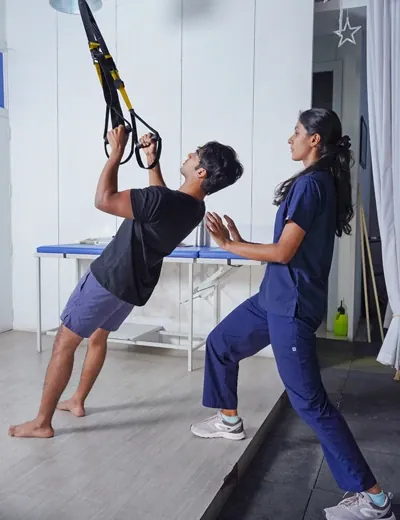
- Your physiotherapist checks how your back moves and tests key muscles with gentle pressure.
- We explain what may be causing your symptoms and suggest a plan with you.
- You may begin treatment or learn simple exercises to try at home.
Follow-up visits take 30-45 minutes. Each time, your physiotherapist checks how you are doing and adjusts your exercises and treatment as needed.
You can ask for a particular physiotherapist, or a female physiotherapist, at both branches. Our staff speak Tamil and English. Tell us when you book if stairs are hard for you.
Things you can try at home
These ideas are gentle and suit many people, but every back is different. Go slowly, and stop and get advice if pain gets worse.
- Warm up first
A warm (not hot) shower in the morning can help loosen a stiff back before you start moving. Take care on wet bathroom floors.
- Gentle back mobility
Lie on your back on a firm bed with your knees bent and feet flat.
- Knee rolls: Slowly let both knees roll a small way to one side, then the other. Keep the movement small.
- Knee towards chest: Ease one knee a little towards your chest, then lower it. Swap sides. Move only as far as is comfortable.
- Getting up: Roll onto your side and push up with your arms.
If you have had a hip or back operation, follow your surgeon's instructions alongside your physiotherapy before trying these movements.
If you have been told you have thin bones (osteoporosis), ask your physiotherapist before doing bending or twisting movements.
- Walk a little daily
Short, regular walks can help keep your back moving and your hip and leg muscles strong. Start on flat ground at a comfortable pace and build up slowly. Rest when you need to. If walking brings on pain or heaviness in your legs, sit down and tell your physiotherapist.
- Change position often
Sitting or lying still for long spells can add to stiffness. If you sit for long, get up and move around every 20-30 minutes.
- Keep up your exercises
If your physiotherapist gives you exercises, try to do them little and often. Many people find a short routine each day easier to keep up than a long one now and then.
Your physiotherapist can show you which movements suit your back.
Common questions
Is lumbar spondylosis just part of getting older?
Wear-and-tear changes in the spine are common as we get older. Having them does not mean you will always be in pain. Many people stay active with regular movement and the right exercises.
Should I rest when my back is stiff?
Short rests are fine, but staying still for long spells can add to stiffness. Regular, gentle movement tends to help. Your physiotherapist can suggest a balance that suits you.
Is walking good for back arthritis?
Many people find regular walking helps keep their back moving. Start with short, comfortable walks and build up slowly. Stop and get advice if pain gets worse.
Will exercise make my back worse?
Exercises chosen for you aim to support your back, not strain it. Your physiotherapist starts at a level that suits you and adjusts as you go. If an exercise hurts more, stop and tell us.
Do I need a doctor's referral?
No, you do not need a doctor's referral. Please bring any reports, scans or prescriptions you have.
Book an assessment
 Mobiphysio physiotherapists · RS Puram and Goldwins
Living with a stiff, achy back can be tiring, but you do not have to manage it alone. Our team, led by Dr. T.R. Vandana, PT, brings 25+ years of experience in physiotherapy and has treated 3000+ patients.
WhatsApp or call +91 73385 65909 to book an assessment at either branch:
- RS Puram: No.28, Captain Palaniswamy Layout, opposite the municipal park, RS Puram, Coimbatore 641 002. Monday to Saturday, 10 AM to 8 PM. (Google Maps)
- Goldwins, Avinashi Road: 11/23, Avinashi Road, opposite Sri Sai Dental Clinic, Karuparampalayam Pirivu, Coimbatore 641 014. Monday to Saturday, 8 AM to 1 PM and 4 PM to 8 PM. (Google Maps)
Both branches have ample car parking. We are closed on Sundays and major festival days (Pongal, Diwali).
Have questions before you book? Message us on WhatsApp or call; we will answer your questions.