
At a glance
- 1Runner's knee is an ache around or behind the kneecap.
- 2Physiotherapy can include graded (built up step by step) hip and thigh strengthening, which may ease pain.
What is runner's knee?
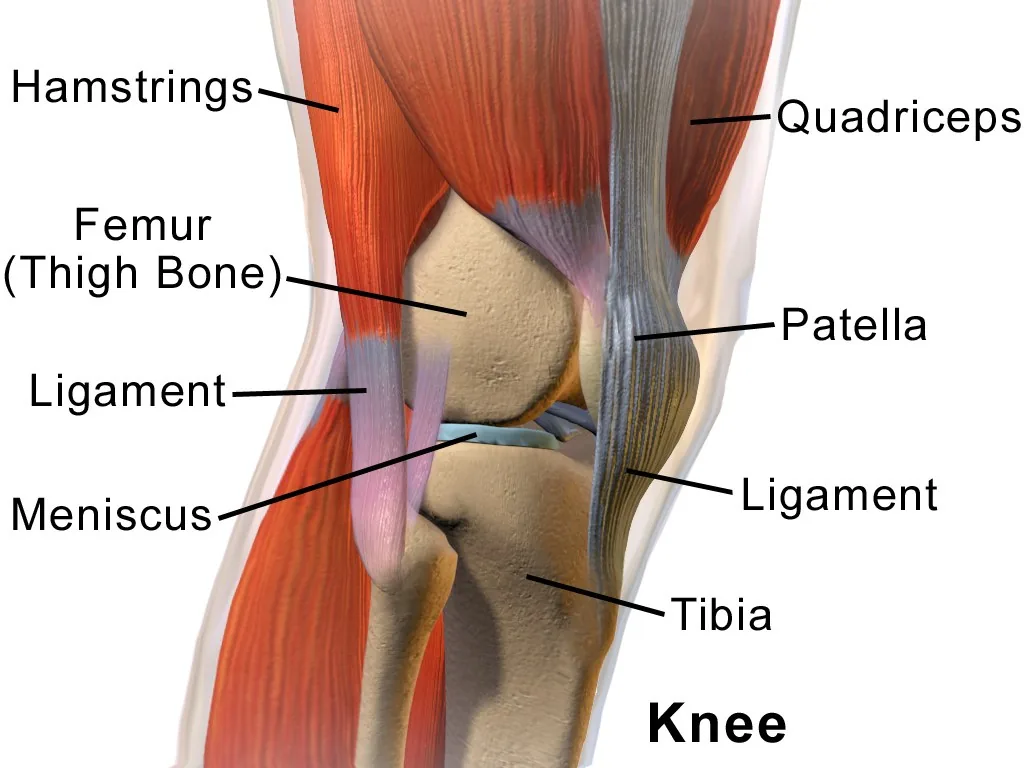
Your kneecap sits at the front of your knee. As you bend and straighten your leg, it glides in a groove at the end of your thigh bone. This is called the patellofemoral joint, which is why runner's knee is also known as patellofemoral pain. The name "runner's knee" is used loosely, and people sometimes use it for other kinds of knee pain too. In this guide, we use it to mean pain around the kneecap.
It is often felt as a dull ache around or behind the kneecap. Many people notice it on stairs, when squatting or kneeling, during or after a run, or after sitting for a long time with their knees bent.
Despite the name, it is not only a runner's problem. Gym-goers, people who play sport and active adults can feel it too. Pain at the front of the knee has many possible causes, so a physiotherapy assessment is a good way to understand your knee.
Common causes
There is often no single cause. A few things can add up and put more load (pressure and strain) through the kneecap joint than it is ready for.
- A sudden jump in activity. Running further or faster, adding hills or stairs, or starting a new gym routine too quickly can strain the kneecap joint before it has had time to adapt.
- Hip and thigh strength. The muscles at the front of your thigh (quadriceps) and around your hip help control how your knee bends and lines up. If they are weak or tired, the knee may drift inwards and the kneecap joint may take more pressure.
- Lots of deep bending. Deep squats, lunges, kneeling and climbing many stairs can press the kneecap more firmly into its groove.
- Long periods of sitting. Sitting with your knees bent for a long time can leave the knee feeling stiff and achy. This might be on a long drive, at a desk or in a cinema.
Knee pain can also come from arthritis, injury or other problems, so these are only possible factors. Your physiotherapist will look at what applies to you.
How physiotherapy at Mobiphysio can help
Every plan starts with a thorough assessment. Treatment is one-on-one, and our team is led by Dr. T.R. Vandana, PT. We look at what is putting strain on your knee and build a plan around it.
A graded strengthening plan. The main aim is to build strength in your hips and thighs so they can better support the kneecap joint. We start with exercises your knee is comfortable with, then make them a little harder step by step. Building up gradually gives your muscles and joint time to adapt.
Managing load. We help you adjust your running, gym work, stairs and squats so your knee is challenged but not overloaded. As your knee allows, we aim to plan a gradual return to the activities you enjoy.
Hands-on care. Depending on what suits your knee, your physiotherapist may use hands-on manual therapy, massage or gentle stretching. Our physiotherapists use methods such as Mulligan and Stecco where they fit your needs.
Clear explanations. We explain what may be behind your ache in plain words. We listen to your goals, and you decide on the plan with us. Results differ from person to person.
What to expect at your visits
Your first visit takes 45 to 60 minutes. You do not need a doctor's referral. Just bring any reports, scans or prescriptions you have.
At the first visit:
- We ask about your pain, your running, gym or daily routine, and what makes it worse.
- Your physiotherapist examines your knee, your hips and how you move. For example, they may watch you squat, step down or balance on one leg.
- We explain what may be causing the pain and suggest a plan.
- You learn a few simple exercises to start with at home.
Follow-up visits take 30 to 45 minutes. At each one, we check how your knee is responding and adjust your exercises, making them harder when you are ready. Staff speak Tamil and English.
Things you can try at home
These ideas are gentle and general, and they do not replace an assessment.
- Adjust running and walking.
Cut back how far or how fast you run or walk for a while, and pick flatter routes over hills. Build back up slowly, in small steps, as your knee allows.
- Pause deep squats.
Take a break from deep squats, lunges and kneeling for a while. At the gym, keep any bending to a range that feels comfortable.
- Strengthen your hips.
Lie on your side with your knees bent and feet together. Then, keeping your feet touching and your hips still, slowly lift the top knee and lower it again. Start with a few slow lifts on each side and add more over time.
- Work your thigh muscles.
Sit or lie with one leg straight, tighten the muscle on the front of your thigh for a few seconds, then relax. When this feels easy, lie on your back with the other knee bent. Tighten the front of your thigh, keep the knee straight, lift the leg a little (no higher than your other knee), then lower it slowly.
- Break up long sitting.
At your desk or at the cinema, straighten your legs or stand up every so often. On long drives, stop for short breaks to get out and walk.
Stop and get advice if pain gets worse. If you are pregnant or have recently had a baby, get your doctor's okay before starting these exercises. Your physiotherapist can check that you are doing these correctly and show you when to make them harder.
Common questions
Can I keep running with pain around my kneecap?
Many people keep some running going at a lower, comfortable level while they build strength. Your physiotherapist can help you find that level and plan a gradual build-up. If the ache is worse during the run or the next morning, cut back and get advice. Stop and get advice if pain gets worse.
Why does my knee hurt more on stairs?
Stairs bend your knee while it carries your body weight, and this puts more pressure through the kneecap joint. Building hip and thigh strength aims to help your knee handle this load. For now, bringing both feet onto each step before going to the next, and using the handrail, may feel easier.
Why does my knee ache after a long film or a long drive?
Sitting with your knees bent for a long time can leave the area around the kneecap feeling stiff and achy. The exact reason is not fully clear. In a cinema or at a desk, many people find it helps to straighten the leg or stand up every so often. On a long drive, take short breaks to get out and walk.
Do I have to give up squats for good?
A short break from deep squats can help your knee settle, but the aim is not to stop them forever. Your physiotherapist can guide you on how deep and how much to squat, and when to build back up.
Do I need a doctor's referral to visit Mobiphysio?
No, you do not need a doctor's referral. Please bring any reports, scans or prescriptions you have.
Can I ask for a female physiotherapist?
Yes. You can ask for a particular physiotherapist, or a female physiotherapist, at both RS Puram and Goldwins. Just mention it when you WhatsApp or call to book.
Book an assessment
 Mobiphysio physiotherapists · RS Puram and Goldwins
If an ache around your kneecap is getting in the way of running, the gym or daily life, an assessment is a good first step. WhatsApp or call us on +91 73385 65909 to book (open WhatsApp). We see patients by appointment first, so please book ahead.
Dr. T.R. Vandana, PT, and her team bring 25+ years of experience in physiotherapy and have treated 3000+ patients. Visit us at either branch:
- RS Puram: No.28, Captain Palaniswamy Layout, opposite the municipal park, RS Puram, Coimbatore 641 002. Monday to Saturday, 10 AM to 8 PM. Google Maps
- Goldwins, Avinashi Road: 11/23, Avinashi Road, opposite Sri Sai Dental Clinic, Karuparampalayam Pirivu, Coimbatore 641 014. Monday to Saturday, 8 AM to 1 PM and 4 PM to 8 PM. Google Maps
Both branches are closed on Sundays and on major festival days such as Pongal and Diwali. Both have ample car parking. Tell us when you book if stairs are hard for you.
Have a question before you book? Message us on WhatsApp or call; we will answer your questions.