
At a glance
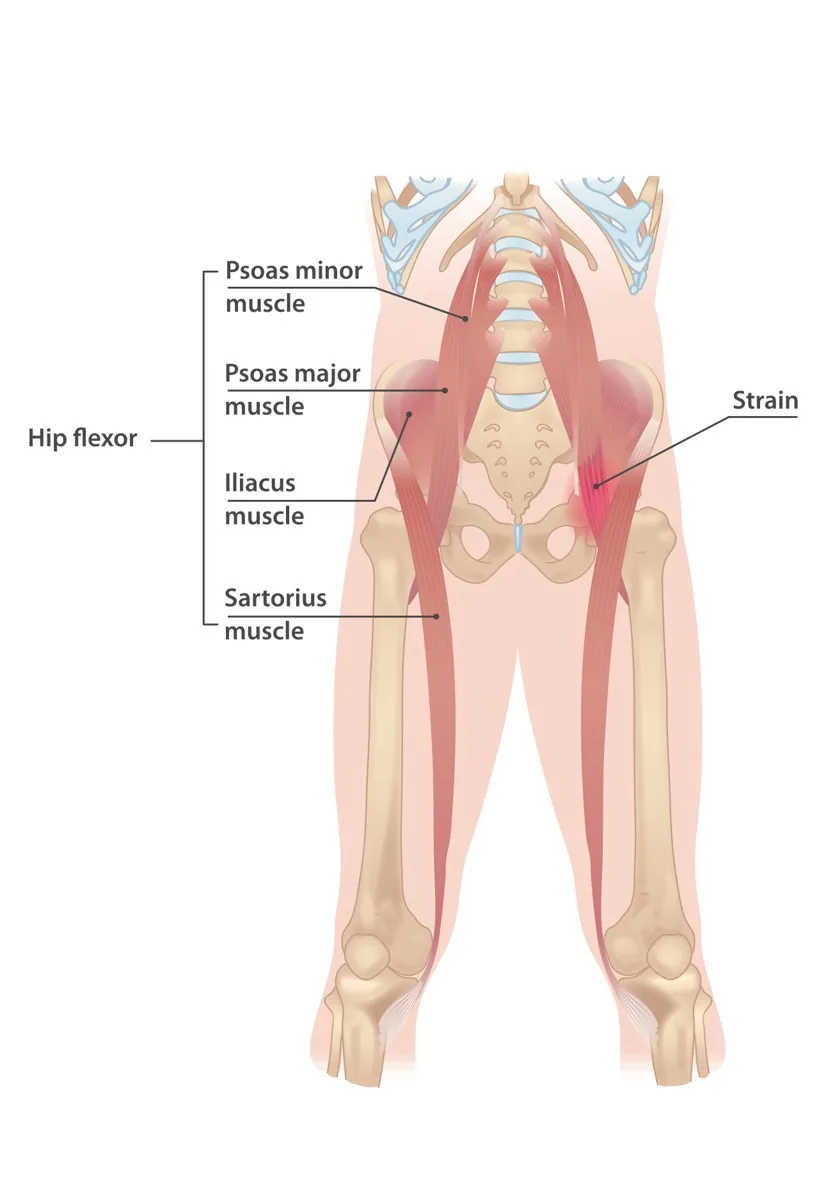
- 1A hip flexor strain is an overstretched or torn muscle at the front of the hip. Strains range from mild to more serious.
- 2Physiotherapy aims to settle pain, restore movement and rebuild strength.
What is a hip flexor strain?
Your hip flexors are a group of muscles at the front of your hip. They lift your knee towards your chest and swing your leg forward. You use them every time you walk, run, climb stairs or kick a ball.
A strain happens when one of these muscles is stretched too far or made to work too hard, too suddenly. This can cause tears in the muscle fibres.
People often notice pain when they lift the knee, climb stairs, get out of a car or start running. Some also feel tenderness, tightness or weakness.
Pain in this area can have other causes too. That is why a physiotherapist will check your hip carefully before suggesting a plan.
Common causes
Strains often happen in sport when the leg moves fast and with force. Common causes include:
- Sprinting or sudden bursts of speed, such as running between the wickets
- Kicking hard, as in football or martial arts
- Sudden changes of direction
- Starting hard training without a proper warm-up
- A sudden jump in how much or how hard you train
- Weak glute (buttock) and core muscles, which may add load to the front of the hip
- Tired muscles towards the end of a long session
- A previous strain in the same area
A strain often follows a single moment, such as a mistimed kick.
How physiotherapy at Mobiphysio can help
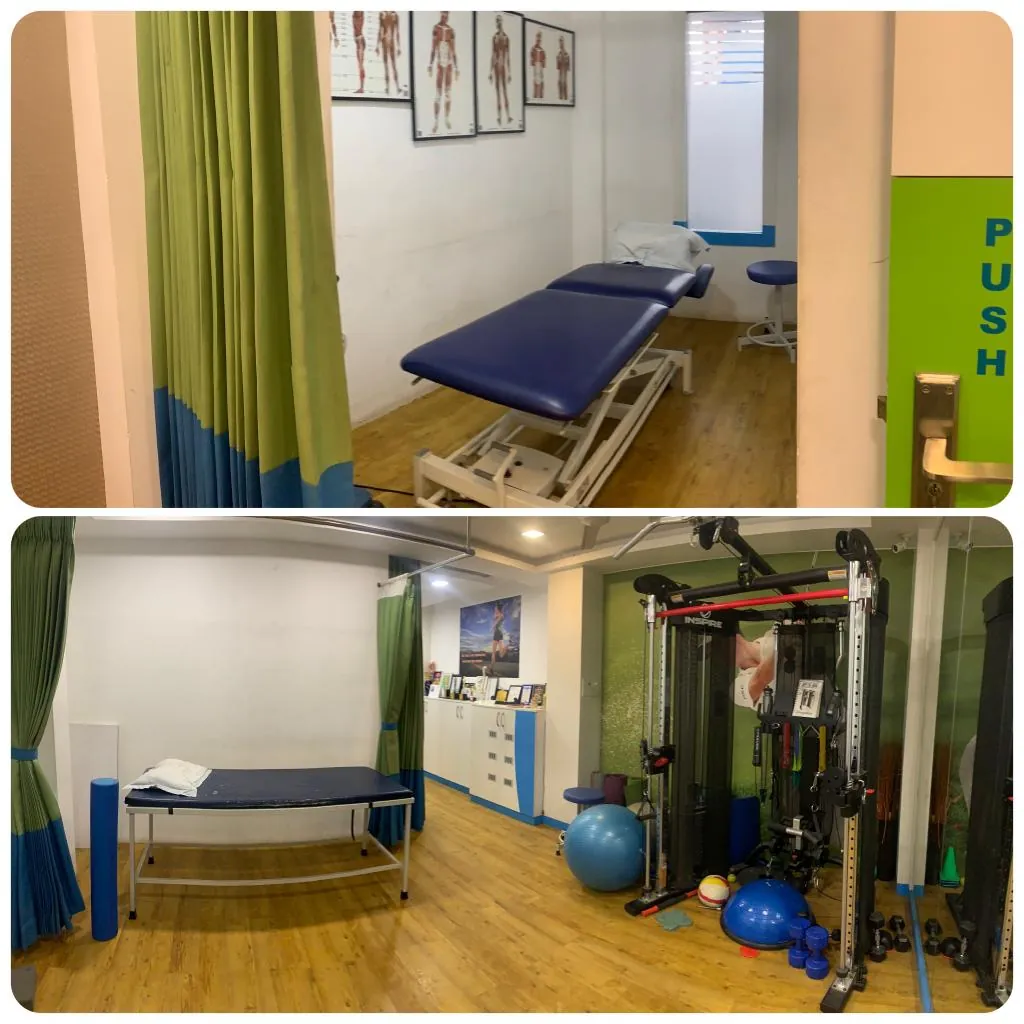
At Mobiphysio, treatment is one-on-one and always starts with an assessment. Care usually moves in stages, and your physiotherapist adjusts the plan as your hip responds.
Settling pain. Early on, we aim to protect the sore muscle and advise which activities to pause. For a recent sports injury, your physiotherapist may use cold therapy (cryotherapy). Electrotherapy, such as TENS (a mild electrical current through skin pads) or ultrasound therapy (a treatment, not a scan), may also help ease pain.
Restoring movement. As pain settles, hands-on manual therapy and massage aim to ease muscle and soft tissue tension and help your hip move freely again. Where they suit you, your physiotherapist may use methods such as Mulligan or Stecco. Taping may also support the area.
Rebuilding strength. A strained muscle needs to be strong again before sport. We build up your hip flexors gradually, along with the glute, core, back and pelvis muscles that support your hip. Electrical muscle stimulation (EMS) may also help with strengthening.
A gradual return to play. Going back too fast can stir up the injury again. Your physiotherapist will guide you step by step, from jogging to running, then sprinting, kicking and drills for your sport. Each step depends on how your hip responds, not on a fixed date.
At every stage, we explain your options clearly, and you decide.
What to expect at your visits
Your first visit takes 45 to 60 minutes, and follow-up visits 30 to 45 minutes.
At your first visit:
- We listen to how the injury happened, where it hurts and what makes it worse
- Your physiotherapist checks how your hip moves, and where it is tender or weak
- We explain the likely cause in simple words
- You get a treatment plan and exercises that suit you and your sport
At follow-up visits, your physiotherapist checks your progress and moves your exercises on when you are ready. Our staff speak Tamil and English.
Things you can try at home
These gentle, general ideas do not replace an assessment by a physiotherapist.
- Pause sprinting and kicking.
Avoid the movements that brought the pain on, so the sore muscle can settle. Easy walking and daily tasks within comfort can help you stay active.
- Break up long sitting.
Sitting for hours can leave the front of the hip stiff. Get up and walk around gently every so often.
- Gentle hip flexor stretch.
Wait until the pain has settled and walking feels comfortable. Kneel on one knee on a soft mat, with the other foot flat in front. Hold a chair or wall for balance. Keep your back upright and gently tuck your tailbone under. Slowly ease your hips forward until you feel a mild stretch at the front of the hip on the kneeling side. Hold for 20 to 30 seconds. Stop if it hurts. If kneeling is hard on your knees, ask your physiotherapist for a different stretch.
- Glute bridges.
Lie on your back with your knees bent and feet flat on the floor. Squeeze your buttock muscles and slowly lift your hips until your body is in a straight line from shoulders to knees. Do not arch your lower back. Lower gently. Start with a few repetitions, and add more only if your hip stays comfortable. If getting down to the floor is hard, ask your physiotherapist for another option.
- Warm up before sport.
When your physiotherapist says you are ready to train again, warm up with a few minutes of easy movement before you speed up. Your physiotherapist will guide how you build sprinting and kicking back in.
Stop and get advice if pain gets worse, or if you are unsure whether an exercise suits you.
Common questions
How do I know if it is a hip flexor strain?
Pain at the front of the hip can have more than one cause. A physiotherapist will check how your hip moves and where it is sore. We then explain the likely cause in simple words.
Should I stretch a strained hip flexor?
Gentle stretching may help once the pain has eased. Stretching hard while the muscle is still sore may irritate it. Your physiotherapist can show you which stretches suit your stage.
When can I go back to cricket or football?
It is best not to play through the pain. There is no fixed date, because it depends on your injury and how your hip responds. Your physiotherapist will guide a step-by-step return to running, sprinting and kicking.
Can a hip flexor strain come back?
It can, especially if you go back to full speed too soon. Building strength in your hip, glutes and core aims to lower the risk. No one can promise it will never happen.
Do I need a doctor's referral?
No, you do not need a doctor's referral. Please bring any reports, scans or prescriptions you have.
Can I ask for a female physiotherapist?
Yes. You can ask for a female physiotherapist, or a particular physiotherapist, at both branches. Just mention it when you book.
Book an assessment
 Mobiphysio physiotherapists · RS Puram and Goldwins
A physiotherapist can assess your hip and plan care that suits you. WhatsApp or call +91 73385 65909 to book.
Mobiphysio brings 25+ years of experience in physiotherapy and has treated 3000+ patients.
Our branches:
- RS Puram: No.28, Captain Palaniswamy Layout, opposite the municipal park, RS Puram, Coimbatore 641 002. Open Monday to Saturday, 10 AM to 8 PM.
- Goldwins, Avinashi Road: 11/23, Avinashi Road, opposite Sri Sai Dental Clinic, Karuparampalayam Pirivu, Coimbatore 641 014. Open Monday to Saturday, 8 AM to 1 PM and 4 PM to 8 PM.
Both branches are closed on Sundays and major festival days such as Pongal and Diwali. Have a question first? Message us on WhatsApp or call; we will answer your questions.