
At a glance
- 1What it is: damage to the knee's smooth joint lining.
- 2How physiotherapy can help: strength, movement control and building up activity step by step, which aim to help protect the joint.
What is a knee cartilage injury?
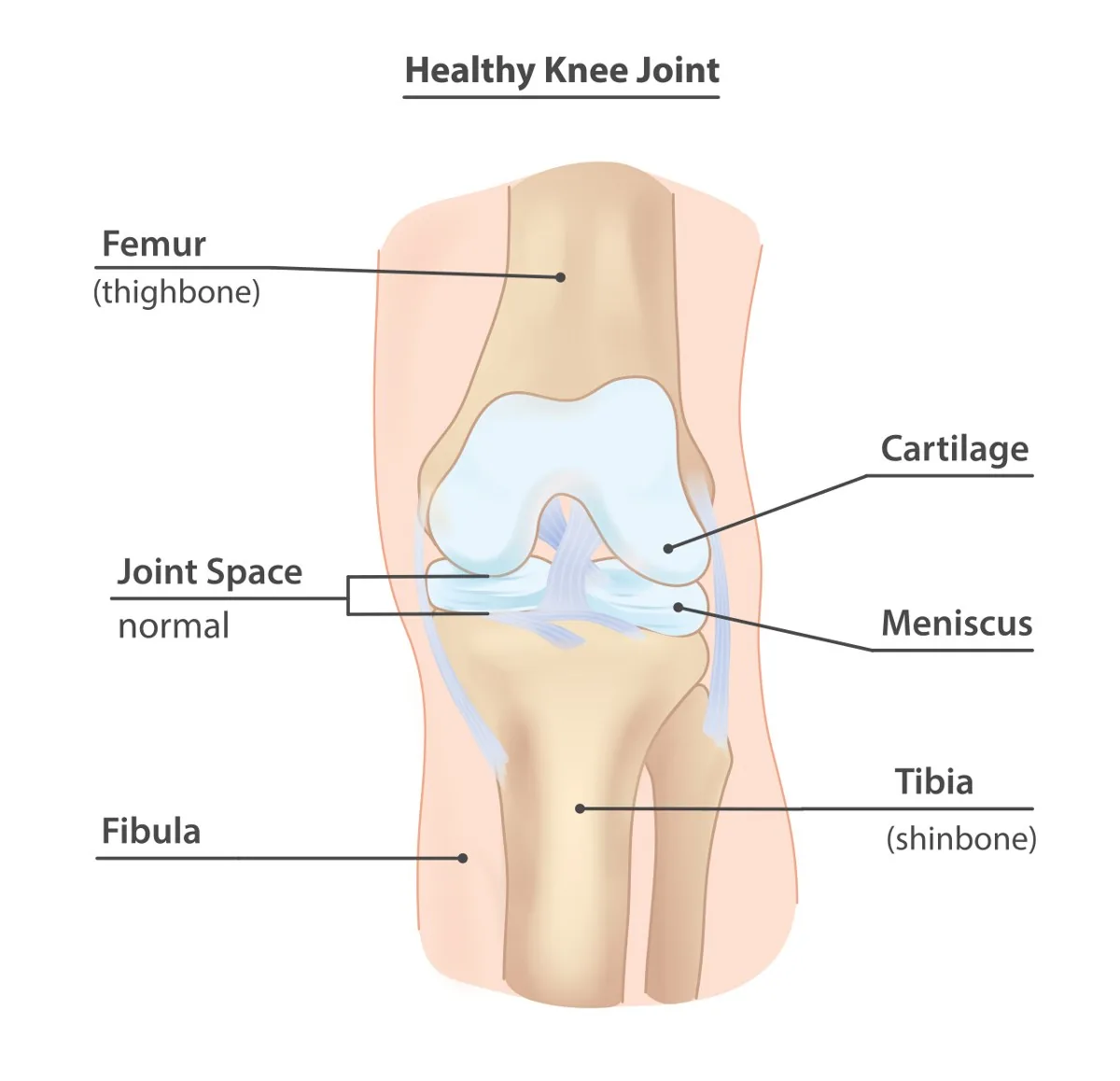
A thin, smooth layer called articular cartilage covers the ends of your thigh bone and shin bone, and the back of your kneecap. It is firm and slippery, so the bones glide easily as your knee bends and straightens. It also helps spread the load through the joint.
A knee cartilage injury means part of this lining has been damaged, for example bruised, cracked or partly worn away. People often notice aching, swelling after activity, or stiffness after sitting. Some find stairs, squatting or sitting cross-legged on the floor harder than before.
Cartilage has no blood supply of its own, so it may not repair itself fully. Physiotherapy cannot regrow cartilage. Instead, it aims to help the muscles and movement around your knee work well, so the joint is better protected.
How it differs from a meniscus tear. Each knee has two menisci. These are rubbery pads of tougher cartilage that sit between the thigh bone and shin bone as cushions. A meniscus tear is sometimes called "torn cartilage", but it affects these pads, not the smooth coating on the bone ends. Both can happen in the same twist and seem alike, so a careful assessment helps.
How it differs from osteoarthritis. Osteoarthritis usually develops slowly over many years, most often with age, and involves gradual changes across the whole joint. In a younger, active adult, a cartilage injury is usually linked to a specific twist, knock or repeated impact, and often affects one area. The two can also overlap.
Common causes
In active adults, common causes include:
- A twist with the foot planted, as in football, kabaddi, badminton or cricket
- A direct knock or fall onto the knee, for example from a two-wheeler
- A kneecap that slips out of place
- Repeated impact from running, jumping or landing, built up over time
- Weak thigh or hip muscles, or returning to sport too quickly after a break, which may add strain
Cartilage damage can happen alongside a ligament sprain or meniscus tear. Sometimes the ache builds slowly, with no single moment.
How physiotherapy at Mobiphysio can help
Every plan starts with a thorough assessment. We aim to help your knee cope with the activities that matter to you, and you decide on the plan with us.
- Strength training.We work on the thigh, hip and calf muscles. This aims to improve support and stability around the knee.
- Movement control.We check how your knee lines up as you squat, climb stairs, land or turn, and practise steadier movement. Better control may ease strain on the sore area.
- Gradual loading.We build up activity in small, planned steps, from walking and cycling towards running, jumping or sport if that is your goal. We adjust the pace to how your knee responds.
- Range of movement.Gentle, slow stretches and exercises can help your knee bend and straighten further, and may ease stiffness.
- Hands-on manual therapy.Our physiotherapists use methods such as Mulligan and Stecco, along with massage, to help ease pain and support movement.
- Other support.Electrotherapy (including electrical muscle stimulation) and ultrasound therapy may be used where they suit your knee.
If you have had knee surgery, follow your surgeon's instructions alongside physiotherapy. We plan your exercises with those instructions in mind.
What to expect at your visits
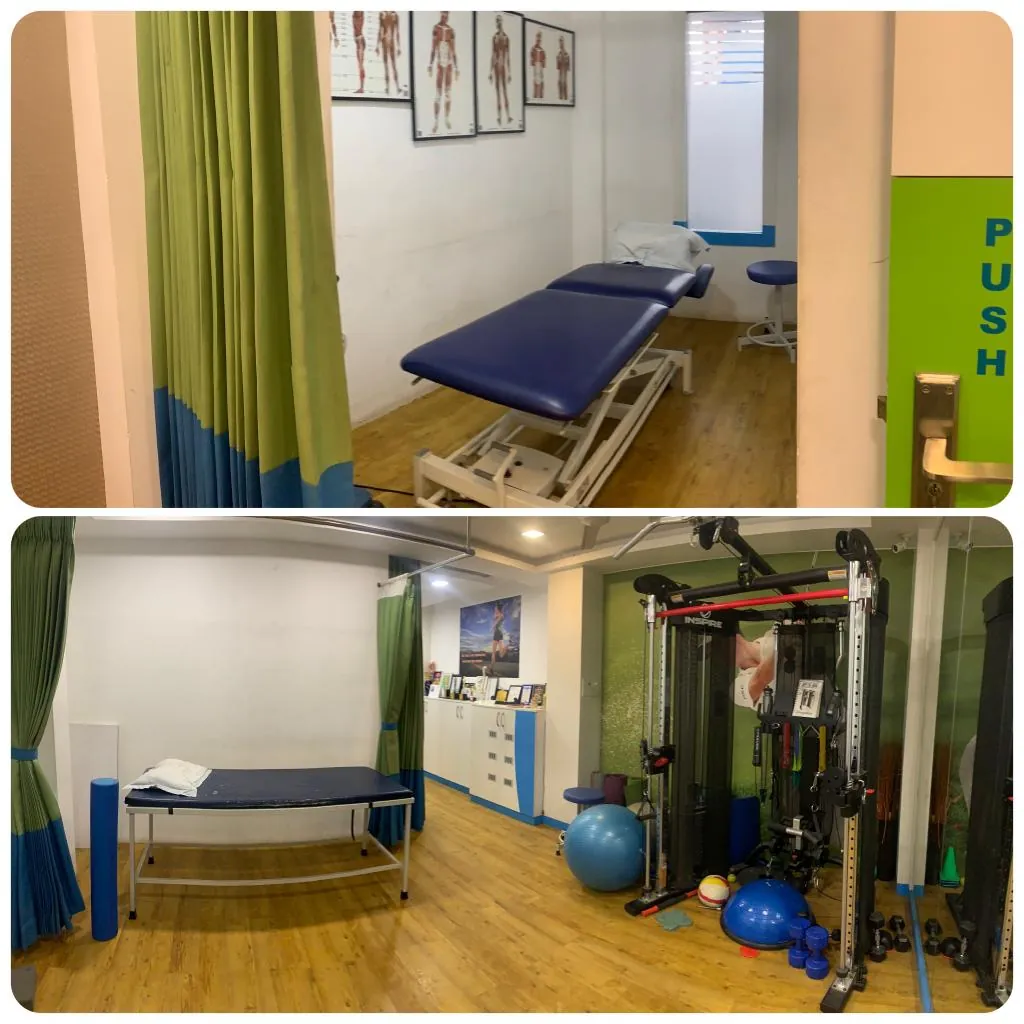
Your first visit takes 45 to 60 minutes. Treatment is one-on-one and begins with an assessment:
- We ask how the problem started, about your pain and routine, and what makes it worse
- Your physiotherapist examines your knee and watches how you walk, squat, step and balance
- We explain what may be causing your symptoms and suggest a plan
- You learn a few simple exercises and kinder ways to move and position your knee
Follow-up visits take 30 to 45 minutes, and we check how your knee has responded and adjust your exercises.
Bring any reports, scans or prescriptions you have. Our staff speak Tamil and English. Tell us when you book if stairs are hard for you.
Things you can try at home
These ideas are gentle and general. They do not replace an assessment.
- Choose low-impact exercise.
Cycling and swimming keep the knee moving with less pounding than running or jumping. On a stationary bike, set the seat so your knee is only slightly bent at the bottom of each pedal turn, and keep the resistance light. In the pool, a gentle up-and-down kick is usually easier on the knee than breaststroke. Start with short, easy sessions and build up slowly.
- Strengthen your thighs.
Sit with your leg straight out. Tighten the muscle at the front of your thigh, hold for a few seconds and relax. Slow straight-leg raises, lying on your back with the other knee bent, are another gentle option.
- Pace painful days.
When the knee aches or swells more, do a little less rather than stopping all activity. Break up long walks or standing with short rests.
- Keep it moving gently.
Slowly bend and straighten your knee a few times a day, especially after sitting for a long time.
- Listen to your knee.
Stop and get advice if pain gets worse or swelling increases. Message us on WhatsApp or call to book an assessment.
Common questions
Will damaged knee cartilage heal on its own?
It may not fully repair, because cartilage has no blood supply. Many people find that stronger muscles and better movement control help them stay active with less strain on the knee. Your physiotherapist can explain what this means for you.
Is it safe to exercise with a cartilage injury?
The right exercise is usually a key part of physiotherapy. Start gently and build up slowly. Low-impact options such as cycling or swimming are often easier on the knee. Stop and get advice if pain gets worse.
Can I go back to cricket, football or running?
Many people aim to return to sport, and we plan the steps with you. We build up strength, control and impact gradually, based on how your knee responds. Every knee is different, so we do not promise a timeline.
Can I still sit cross-legged or squat on the floor?
Deep bending puts a lot of load through the knee, so some people find these positions difficult. Your physiotherapist can suggest easier ways to manage at home. They can also help you work towards these positions if that is your goal.
Do I need a doctor's referral?
No. Just bring any reports, scans or prescriptions you have.
Can I ask for a female physiotherapist?
Yes, at both branches. You can also ask for a particular physiotherapist.
Book an assessment
 Mobiphysio physiotherapists · RS Puram and Goldwins
Has your knee started to ache, swell or stiffen after a twist, knock or repeated impact? An assessment can help you understand what is going on. WhatsApp us or call +91 73385 65909 to book.
Mobiphysio has 25+ years of experience and has treated 3000+ patients.
- RS Puram: No.28, Captain Palaniswamy Layout, opposite the municipal park, RS Puram, Coimbatore 641 002. Monday to Saturday, 10 AM to 8 PM. View on Google Maps
- Goldwins, Avinashi Road: 11/23, Avinashi Road, opposite Sri Sai Dental Clinic, Karuparampalayam Pirivu, Coimbatore 641 014. Monday to Saturday, 8 AM to 1 PM and 4 PM to 8 PM. View on Google Maps
Both branches are closed on Sundays and on major festival days (Pongal and Diwali).