
At a glance
- 1Poor sleeping posture can strain your neck and back overnight.
- 2Physiotherapy can help ease pain and improve how you move.
What is poor sleeping posture?
Poor sleeping posture means lying with your neck or back bent, twisted or unsupported for a long time. During the day you shift position often, but at night you may stay in one awkward position for hours.
This can leave muscles and joints tight and sore. Many people notice it most in the morning: a stiff neck, an ache between the shoulder blades, or a lower back that eases once they start moving.
Not every morning ache comes from how you sleep. If aches keep coming back, last well into the day, or do not ease with simple changes, a physiotherapy assessment can help find what may be behind them.
Whether you sleep on a mattress, a cot or a mat on the floor, the aim is to keep your head, neck and back in a comfortable, fairly even line.
For a neck that suddenly locks, see our guide on wry neck.
Common causes
Morning aches often come from a mix of small things, including:
- A pillow that is too high or too flat. A thick pillow, or two stacked, can push your head forward or sideways. A flat or worn pillow can let it drop.
- Sleeping on your stomach. Your head stays turned to one side for hours, and your lower back may arch.
- A mattress that does not suit you. A sagging or very soft mattress can let your hips sink, while some people find a very hard surface uncomfortable.
- Curling up tightly. Pulling your knees high and tucking your chin down can leave your back and neck stiff.
- An arm under your head or pillow. This can leave your neck and shoulder in an awkward position.
- Dozing off in the wrong place. Falling asleep on a sofa, in a chair or on a bus often leaves your neck at an odd angle.
- Daytime habits. Long hours on a phone or computer, poor posture and stress can tighten neck and back muscles, so a bad night can add to an existing ache.
Your physiotherapist can help work out which of these may apply to you.
How physiotherapy at Mobiphysio can help
At Mobiphysio, we look for what may be behind your pain, not just where it hurts. Treatment is one-on-one and starts with a thorough assessment. We listen, and you decide.
Depending on your assessment, treatment may include:
- Hands-on manual therapy.Techniques that aim to ease pain and improve movement.
- Neck and back exercises.Guided stretches and movements that aim to improve flexibility.
- Strengthening and mobility.Exercises such as bridges can help strengthen the muscles that support your back, and the cat stretch can ease stiffness.
- Electrotherapy and ultrasound therapy.Electrotherapy uses gentle stimulation that can help relieve pain, and ultrasound therapy may help some people with muscle and joint pain. Both are available at our two branches.
- Simple changes for home.We can suggest changes to your sleeping position and pillow, and exercises to continue at home.
Your physiotherapist may use methods such as McKenzie, Mulligan and Stecco, which combine guided movements, exercises and hands-on techniques.
Results vary from person to person. We aim to help you move with more confidence.
What to expect at your visits
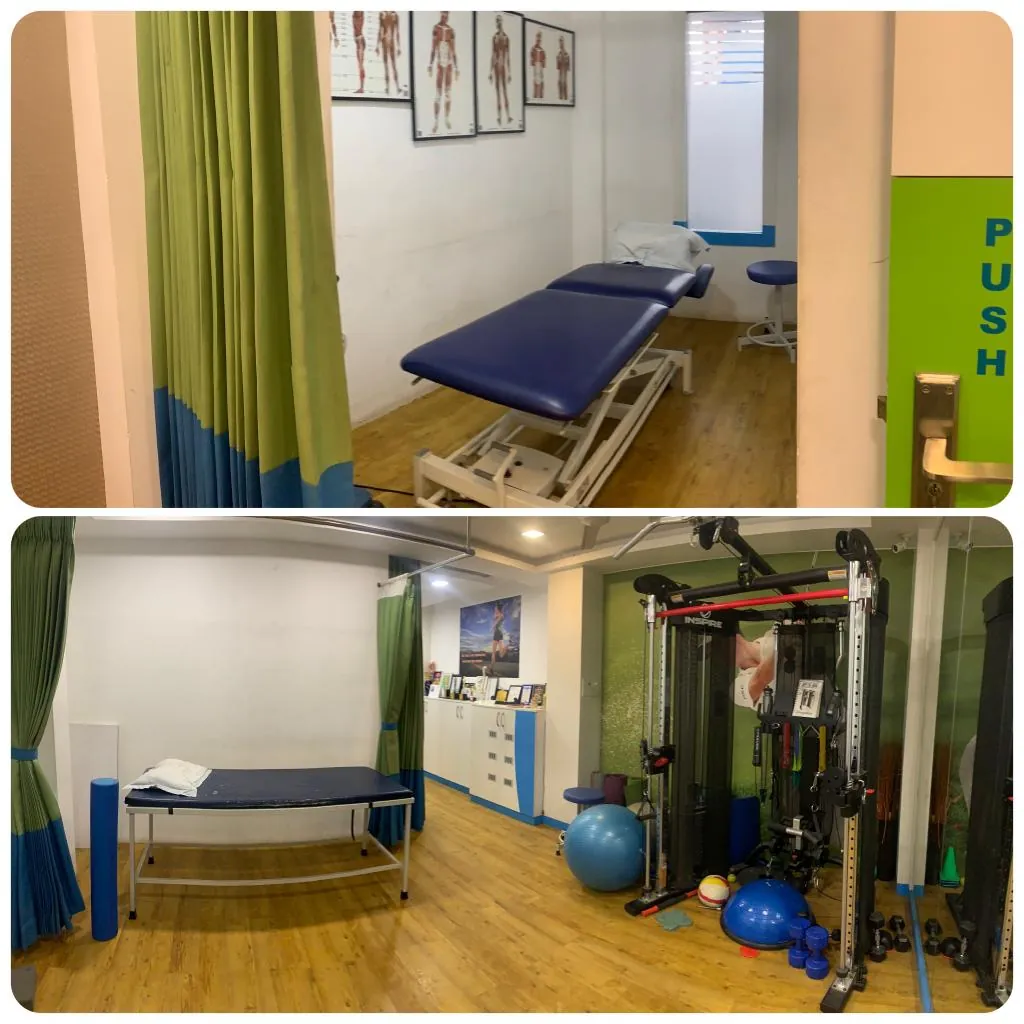
Your first visit takes 45 to 60 minutes, and follow-up visits take 30 to 45 minutes.
At your first visit:
- We listen to your story. We ask where it hurts, when it is worse and what eases it. We may also ask about your sleeping position, pillow and mattress.
- We check how you move. Your physiotherapist looks at how your head, neck and back move, checks your posture, and may test key muscles with gentle pressure.
- We plan together. We explain what we find and plan your treatment with you.
- You may start treatment. This may be relief methods or simple exercises to continue at home.
Please bring any reports, scans or prescriptions you have. Our staff speak Tamil and English. You can ask for a particular physiotherapist, or a female physiotherapist, at both branches.
Things you can try at home
These ideas are general and gentle. Go slowly, and stop and get advice if pain gets worse. If you are pregnant, check with your doctor before trying new positions or stretches. If you have had an operation, follow your surgeon's instructions.
- Keep your neck level.
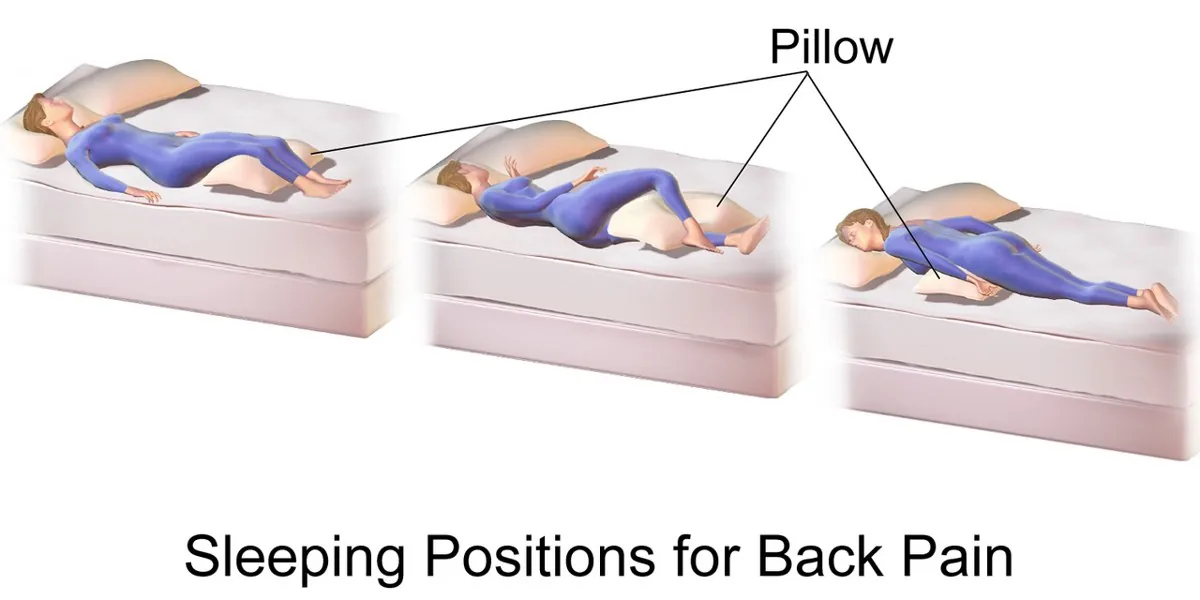
Choose a pillow that supports your head so your neck stays in line with your back. If you sleep on your side, it should fill the space between your ear and the mattress.
- Pillow between your knees.
If you sleep on your side, a pillow between your knees can keep your hips and lower back in a more even line. Back sleepers may find a small pillow under the knees more comfortable.
- Ease off stomach sleeping.
If you usually sleep this way, try starting the night on your side or back. A new position can take a while to feel natural.
- Gentle stretches after waking.
Before getting up, slowly turn your head from side to side and roll your shoulders, staying within a comfortable range. Then, lying on your back with knees bent, gently rock your knees from side to side a few times.
- Get up gently.
Roll onto your side and push yourself up with your arms, rather than sitting straight up from lying flat.
Common questions
Which sleeping position is best for neck and back pain?
There is no single best position for everyone. Many people find lying on their back or side easier on the neck and back than lying on their stomach. What matters most is that your head, neck and back stay in a comfortable, even line. If you are pregnant, check with your doctor about which positions suit you.
How high should my pillow be?
It should be high enough to keep your neck level with the rest of your back. Side sleepers often need a slightly thicker pillow than back sleepers, to fill the space between the shoulder and head. If you are unsure, your physiotherapist can check this with you.
Is sleeping on the floor good for back pain?
Some people find a firm surface on the floor comfortable, while others wake up stiffer. What matters is whether your back is well supported and you wake up comfortable. Your physiotherapist can talk this through with you.
Can physiotherapy help if I wake up sore most mornings?
It can help. Treatment aims to ease pain, improve movement and build strength, along with simple changes to how you sleep. Results vary from person to person.
Do I need a doctor's referral?
No, you do not need a doctor's referral. Please bring any reports, scans or prescriptions you have.
Book an assessment
 Mobiphysio physiotherapists · RS Puram and Goldwins
If you often wake with an aching neck or back, WhatsApp or call us on +91 73385 65909 to book an assessment.
- RS Puram: No.28, Captain Palaniswamy Layout, opposite the municipal park, RS Puram, Coimbatore 641 002. Open Monday to Saturday, 10 AM to 8 PM. Map
- Goldwins, Avinashi Road: 11/23, Avinashi Road, opposite Sri Sai Dental Clinic, Karuparampalayam Pirivu, Coimbatore 641 014. Open Monday to Saturday, 8 AM to 1 PM and 4 PM to 8 PM. Map
Both branches are closed on Sundays and major festival days such as Pongal and Diwali, and both have ample car parking.
Mobiphysio brings 25+ years of experience in physiotherapy, with 3000+ patients treated. Have a question before you book? Message us on WhatsApp or call; we will answer your questions.