
At a glance
- 1An ache or tightness between the shoulder blades, often after sitting.
- 2Physiotherapy can help through hands-on care, exercises and posture advice.
What is upper back pain?
Upper back pain is pain or discomfort in the middle and upper back, between and around the shoulder blades. Some people describe a dull ache or a tight band across the back. Others notice a tender spot, or stiffness when they turn or reach.
It may build up slowly or start after a particular task. Many people find it is worse after long spells of sitting, driving or bending forward, and eases a little once they move about. It can be on one side, such as upper left back pain, or across both sides.
There are many possible causes, and this guide cannot tell you what is behind yours. A physiotherapist can assess you and explain what may be going on.
Common causes
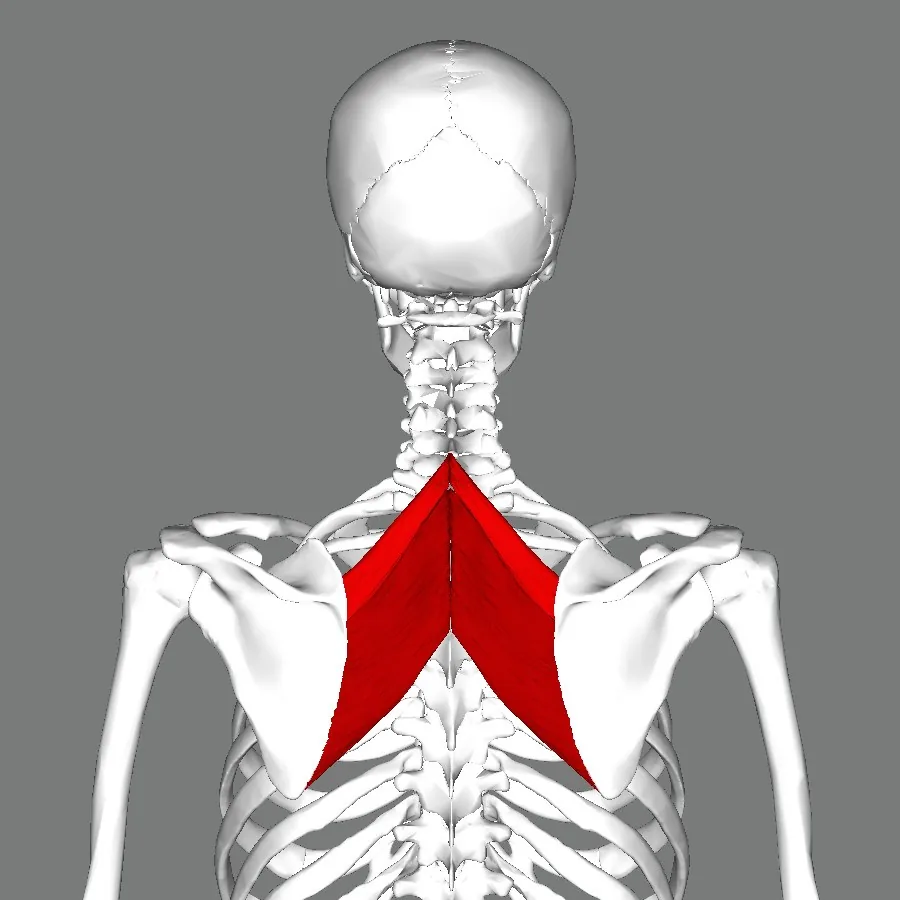
Muscle strain. The muscles in this area help hold your shoulder blades and upper back steady. Long hours in one position, lifting, carrying or a sudden awkward movement can overwork them. They may then ache, tire or tighten.
Trigger points. These are small, tight, tender spots in a muscle. They can ache when pressed, and the ache may be felt nearby or a little further away. Ongoing muscle pain linked to trigger points is often called myofascial pain.
Posture habits. Slouching at a desk or over your phone, and sitting a long time without a break, can put extra load on the upper back. Low or tilting seats and a computer at the wrong height or position may add to this.
Your daily tasks. Office workers often sit for long hours at a screen. Drivers and people with long commutes may stay in one position for hours. Homemakers often bend forward while cooking, cleaning, washing clothes or lifting children.
Other causes. Joint strain, sports injuries, arthritis and fibromyalgia can also be linked to back pain. Pain felt between the shoulder blades can sometimes come from the neck.
Often more than one thing plays a part. An assessment helps your physiotherapist understand your pain.
How physiotherapy at Mobiphysio can help
Our team of physiotherapists is led by Dr. T.R. Vandana, PT, our founder and senior physiotherapist. We look for what is causing your pain, not just where it hurts. Care is one-on-one, and we explain your options so you can decide.
Assessment first. Your physiotherapist checks where the pain is coming from. They use targeted muscle testing with gentle pressure on certain muscles.
Hands-on care. Manual therapy uses hands-on techniques that aim to ease pain and improve movement. Depending on your assessment, your physiotherapist may use hands-on methods such as Mulligan or Stecco. They may also use McKenzie, which uses guided movements and exercises. Dr. Vandana has trained in all three.
Ultrasound and electrotherapy. Ultrasound therapy may help with muscle and joint pain, trigger points and myofascial pain. Electrotherapy is also available at both branches. Your physiotherapist will tell you if either may suit you.
Strengthening and stretches. Therapeutic exercises aim to build strength, flexibility, mobility and coordination. For the upper back, this often includes work for the muscles around your shoulder blades. The aim is to help them cope with long hours of sitting, driving or bending.
Posture and workstation advice. We can talk through your desk set-up and suggest changes to its height and position. We also share tips for your job and daily tasks, and teach safe ways of moving things.
A step-by-step plan. Rehabilitation aims to help you return to work, daily activities and sport, and to lower the chance of re-injury. Results differ from person to person.
What to expect at your visits
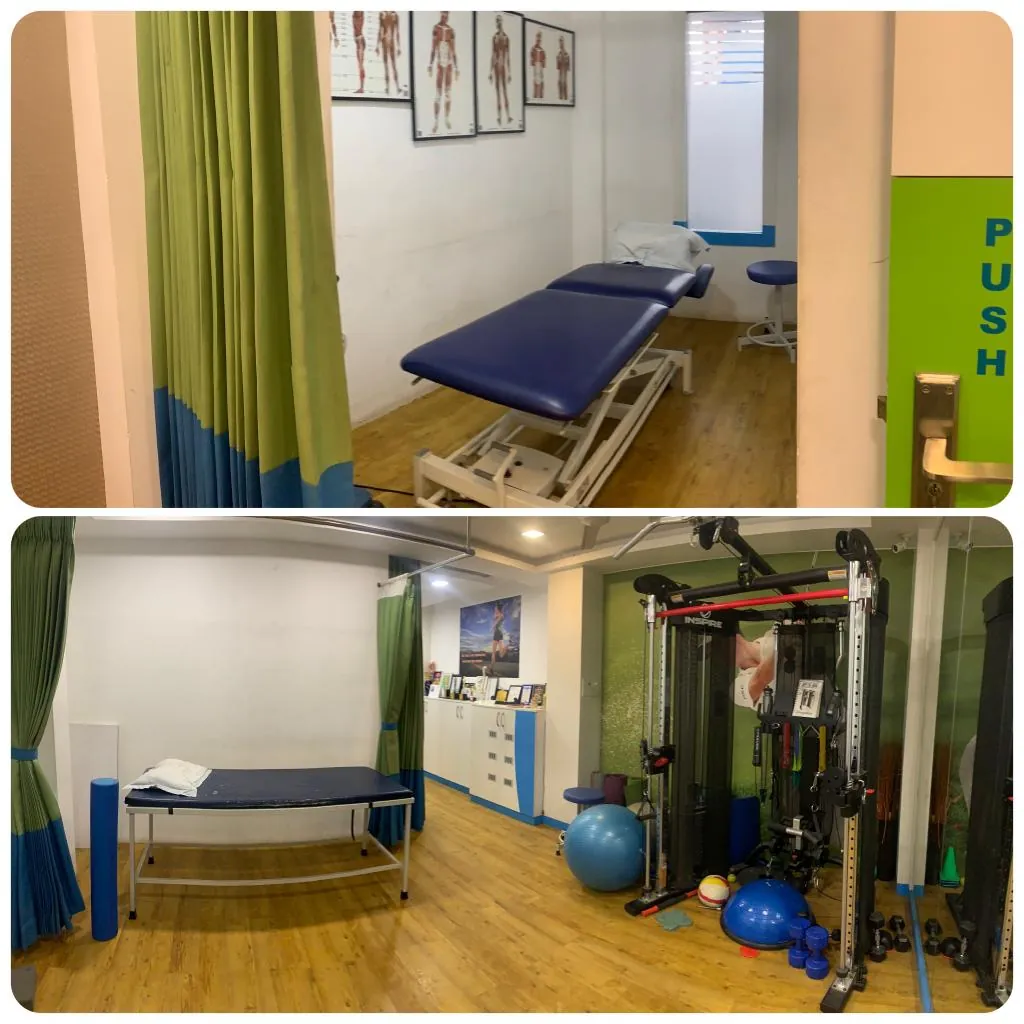
Your first visit takes 45 to 60 minutes. We listen to your story and where it hurts, and ask about your job and daily routine. Your physiotherapist checks your back, looks at how you sit, stand and move, and tests key muscles with gentle pressure.
We then explain, in plain words, what may be causing the pain and suggest a plan. You may begin treatment or learn simple exercises to try at home.
Follow-up visits take 30 to 45 minutes. Each visit is one-on-one. Your physiotherapist checks how you are getting on and may adjust your plan.
Good to know. You do not need a doctor's referral. Bring any reports, scans or prescriptions you have. Staff speak Tamil and English. You can ask for a particular physiotherapist or a female physiotherapist at both branches.
There is ample car parking at both branches.
Things you can try at home
Try these gentle ideas, moving slowly and staying within comfort. Stop and get advice if pain gets worse.
- Break up long sitting.
Every so often, stand up, roll your shoulders gently and walk a few steps. On long drives, take short breaks when it is safe to stop.
- Shoulder blade squeezes.
Sit or stand tall and gently draw your shoulder blades back and slightly down. Keep your neck relaxed and hold for a few seconds. Then let go and repeat a few times.
- Gentle chair-back stretch.
Sit on a sturdy chair without wheels. Its backrest should come up to around your shoulder blades. Keep your feet flat on the floor. Rest your hands lightly behind your head to support your neck, or keep your chin gently tucked so your head does not drop back. Lean back gently over the backrest, only as far as is comfortable. Hold for a slow breath, then sit up. Repeat a few times.
- Check your sitting set-up.
Sit upright in a chair with good back support. Avoid low or tilting seats, and try not to cross your legs. Keep your screen at a height where you do not need to bend your head forward to see it.
- Ease bent-forward tasks.
For cooking, ironing or washing, work at a height that lets you stay more upright, where you can. Pause now and then to stand tall and stretch gently.
These ideas are general. Stop and get advice if pain gets worse. At your visit, your physiotherapist can show you which exercises suit you.
Common questions
Why does my upper back ache after a long day at the computer?
Several things can play a part, such as long spells of sitting, slouching and a screen at the wrong height. A physiotherapist can look at how you sit and work, and suggest changes that suit you.
Can physiotherapy help with pain between the shoulder blades?
It can help. We aim to find what is behind your pain, then use hands-on care, exercises and posture advice. Results differ from person to person.
Can long hours of driving make my upper back ache?
For some people, it can add to the ache, as long drives keep you in one position. Short breaks when it is safe to stop may help. Your physiotherapist can also look at how you sit.
Will I need to do exercises at home?
Often, yes. Regular stretches and exercises can help build strength and flexibility. Your physiotherapist will show you what suits you.
Do I need a doctor's referral to visit Mobiphysio?
No, you do not need a referral. Please bring any reports, scans or prescriptions you have.
Can I ask for a female physiotherapist?
Yes. You can ask for a female physiotherapist, or a particular physiotherapist, at both branches. Just let us know when you book.
Book an assessment
 Mobiphysio physiotherapists · RS Puram and Goldwins
An assessment with a physiotherapist is a good first step towards understanding what may be behind your upper back pain.
Message us on WhatsApp or call +91 73385 65909 to book; we will answer your questions.
- RS Puram: No.28, Captain Palaniswamy Layout, opposite the municipal park, RS Puram, Coimbatore 641 002. Monday to Saturday, 10 AM to 8 PM. Google Maps
- Goldwins, Avinashi Road: 11/23, Avinashi Road, opposite Sri Sai Dental Clinic, Karuparampalayam Pirivu, Coimbatore 641 014. Monday to Saturday, 8 AM to 1 PM and 4 PM to 8 PM. Google Maps
Both branches are closed on Sundays and major festival days, such as Pongal and Diwali.
Mobiphysio has 25+ years of experience in physiotherapy and has treated 3000+ patients. We look forward to meeting you.