
At a glance
- 1An ACL injury is a sprain or tear of a key knee ligament.
- 2Physiotherapy aims to ease swelling and rebuild strength and stability.
What is an ACL injury?
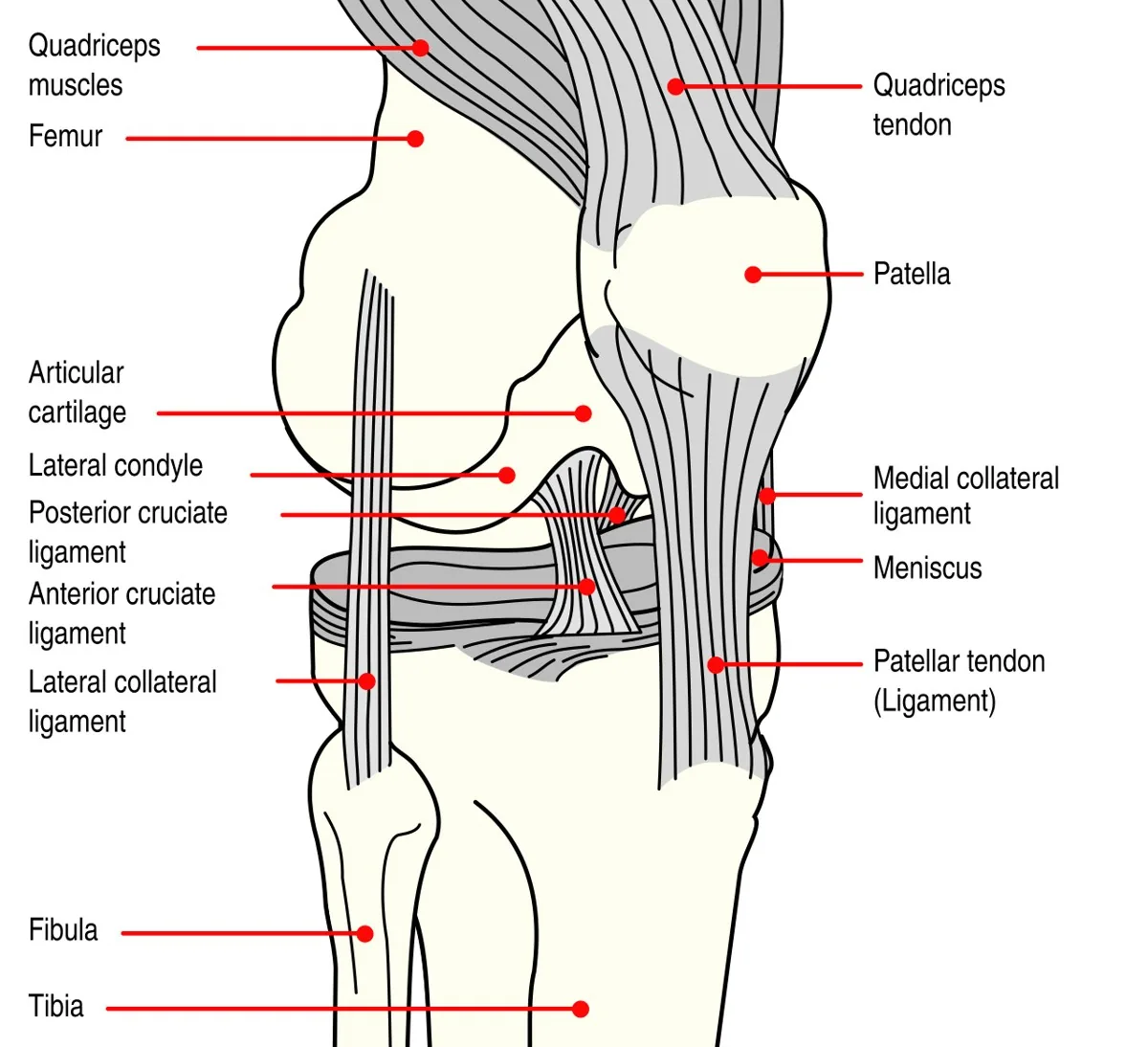
The ACL (anterior cruciate ligament) is a strong band of tissue deep inside your knee. It joins your thigh bone to your shin bone. It helps stop the shin bone sliding forward and helps control twisting. This keeps the knee steady when you turn, stop or land.
An ACL injury can range from a stretch or partial tear to a full tear. Many people describe a pop, sudden pain and swelling that comes up soon after. The knee may then feel stiff, weak or unsteady, as if it could give way again.
Other knee injuries can feel very similar, so it is best not to guess. A physiotherapist can assess your knee and explain what they find in plain words.
Common causes
Many ACL injuries happen without contact from another player. They often occur when the foot is planted and the body twists. They can also happen when you land, stop suddenly or change direction fast. On the ground or court, with or without contact, this might look like:
- Football: turning sharply, swerving past a defender or a mistimed tackle.
- Kabaddi: twisting while being held, or pushing off hard to escape a tackle.
- Basketball: landing awkwardly after a jump or a quick pivot.
- Cricket: stopping suddenly while fielding, diving, or turning fast between the wickets.
A direct blow to the knee, a fall or a slip can also injure the ACL. Tired legs, a rushed warm-up or a long break from sport may make a sudden twist harder to control.
How physiotherapy at Mobiphysio can help
Physiotherapy does not replace surgery in many cases. Some people go on to have an ACL operation and others do not. Either way, physiotherapy aims to settle the knee first. It then aims to rebuild a stable, strong knee for daily life and sport. Care is led by Dr. T.R. Vandana, PT, our founder and senior physiotherapist, and her team.
Your plan may include:
- Settling early swelling.We use cold therapy (cryotherapy) for fresh sports injuries, along with compression and raising the leg, to help manage swelling. We can also recommend and provide compression garments. If it suits your knee, your physiotherapist may also use gentle hands-on manual lymphatic drainage.
- Getting the knee moving.Gentle exercises and stretches help you work back towards normal knee bending and straightening.
- Building strength.Gradual exercises build the quadriceps (front of the thigh), hamstrings (back of the thigh) and other leg muscles that support the knee.
- Balance and control.Balance and agility exercises, and exercises that train your sense of where your knee is, aim to improve stability. They also aim to lower the risk of another injury, though no one can promise it will never happen.
- Step-by-step return to sport.A gradual plan includes sport-specific rehab. It helps check that your knee is ready for football, kabaddi, basketball, cricket or whatever you play.
Electrotherapy and ultrasound therapy are available at both branches. Your physiotherapist will explain if they suit your plan. We also use hands-on manual therapy where it helps.
Before an operation, physiotherapy can help get the knee ready by easing swelling, restoring movement and building strength. After an operation, follow your surgeon's instructions alongside your physiotherapy. Rehab after ACL surgery is covered in detail in our separate guide on recovery after ACL surgery.
What to expect at your visits
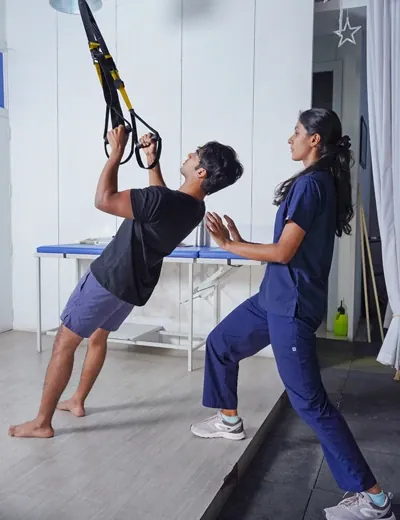
Treatment is one-on-one and starts with an assessment. Your first visit takes 45 to 60 minutes. Follow-up visits take 30 to 45 minutes.
At your first visit:
- We listen to your injury story: how it happened, how the knee feels and what you want to get back to.
- We assess your knee movement, swelling and muscle strength, and how steady the knee feels.
- We explain a plan that fits where you are, whether or not surgery is part of it. We listen, you decide.
- You learn simple exercises to start, with a home programme to follow.
Please bring any reports, scans or prescriptions you have. You can ask for a particular physiotherapist, or a female physiotherapist, at both branches. Our team speaks Tamil and English.
Tell us when you book if stairs are hard for you. Both branches have ample car parking.
Things you can try at home
These are gentle, general ideas for the first days after a knee twist. They do not replace an assessment. Move slowly and stay within comfort.
- Thigh muscle squeeze.
Sit or lie with your leg straight. Gently tighten the muscle at the front of your thigh, pressing the back of your knee gently down. Hold for a few seconds, relax and repeat a few times.
- Raise the leg.
When you rest, lie down and support your whole leg on pillows so the knee sits a little higher than your heart. Many people find this helps swelling settle.
- Gentle knee bends.
Slowly bend and straighten your knee as far as it comfortably goes, a few times through the day. Stop before it starts to hurt, and do not force it.
- Pause twisting sports.
Take a break from football, kabaddi, basketball, cricket and other twisting or jumping activities. Wait until your physiotherapist says it is safe to start returning, step by step. Keep up gentle daily movement within comfort.
Stop and get advice if pain gets worse. Get advice too if the swelling increases. If you have had an operation, follow your surgeon's instructions alongside your physiotherapy plan.
Common questions
I heard a pop and my knee swelled. Does that mean my ACL is torn?
Not always. A pop and swelling can happen with different knee injuries. A physiotherapist can assess your knee and explain what they find.
Can physiotherapy replace ACL surgery?
In many cases it cannot. Whether or not you have surgery, physiotherapy aims to ease swelling and rebuild movement, strength and stability. Before an operation, it can help get your knee ready.
Should I put ice on my swollen knee?
Many people find that a cold pack helps ease swelling. Wrap it in a thin cloth and use it for a short time. Resting with the leg raised may also help. Skip cold packs if you have poor feeling or poor circulation in your legs, and ask your physiotherapist instead. Stop if the skin feels numb or burning. Stop and get advice if pain gets worse.
When can I go back to football, kabaddi or cricket?
It depends on how your knee responds, so we cannot give a set date. We plan a step-by-step return with sport-specific rehab. We check that your knee is ready before you play fully again.
Do I need a doctor's referral to visit Mobiphysio?
No, you do not need a doctor's referral. You can book directly by WhatsApp or phone call.
Book an assessment
 Mobiphysio physiotherapists · RS Puram and Goldwins
Has your knee twisted, swollen or given way? An assessment with a physiotherapist is a good place to start. WhatsApp or call Mobiphysio on [+91 73385 65909](tel:+917338565909) to book at either branch:
- RS Puram: No.28, Captain Palaniswamy Layout, opposite the municipal park, RS Puram, Coimbatore 641 002. Monday to Saturday, 10 AM to 8 PM. Google Maps
- Goldwins, Avinashi Road: 11/23, Avinashi Road, opposite Sri Sai Dental Clinic, Karuparampalayam Pirivu, Coimbatore 641 014. Monday to Saturday, 8 AM to 1 PM and 4 PM to 8 PM. Google Maps
Both branches are closed on Sundays and major festival days such as Pongal and Diwali.
Mobiphysio brings 25+ years of experience in physiotherapy and has treated 3000+ patients. Have a question before you book? Message us on WhatsApp or call; we will answer your questions.