
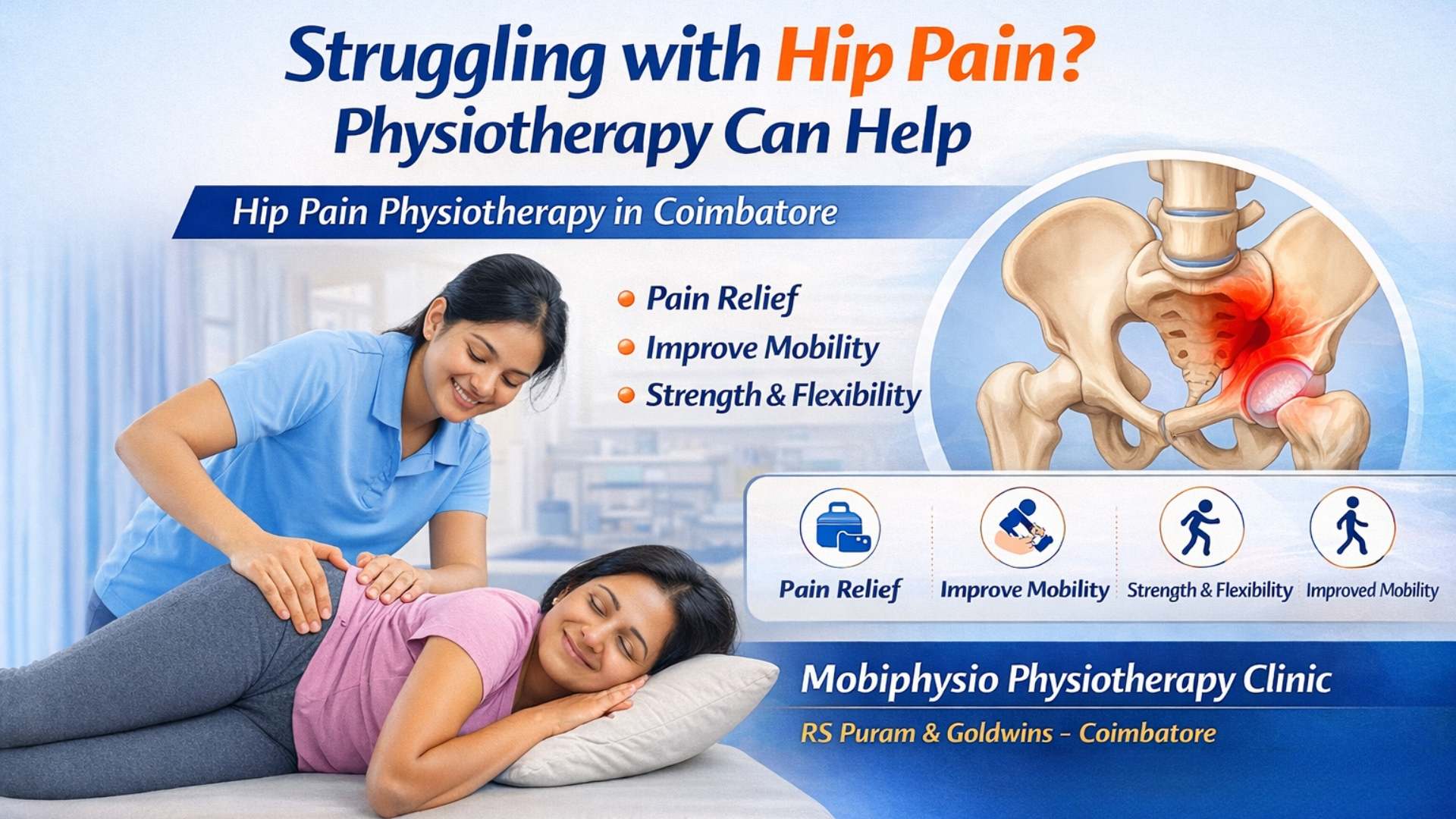
Struggling with Hip Pain? Physiotherapy Can Help
Simple everyday activities such as walking, sitting or climbing stairs can be tedious due to hip pain. The pain can get better and start to influence your life and mobility, which is why it is important to be treated. At Mobiphysio Physiotherapy Clinic in Coimbatore, we offer professional treatment of physiotherapy which helps to relieve hip pain, enhance mobility and resume your normal routine.
Physiotherapy is aimed at locating the cause of the problem-inducing pain and delivering the solutions that can be safe, effective, and long-lasting without much reliance on medication.
Understanding Hip Pain
One of the biggest joints in the body is the hip joint which contributes significantly to movement and balance. This joint may cause pain because of injuries, muscle strain, joint issues or medical conditions.
Hip pains can affect people of any age, although the majority of them are physically active people, people who are older and those who sit on hard surfaces.
Common Causes of Hip Pain
The causes of hip pain can be attributed to multiple factors. It may be provoked by one of the most frequent causes:
Arthritis
The hip joint is inflamed, stiff and sore due to osteoarthritis and rheumatoid arthritis. The elderly are more likely to develop this condition.
Bursitis
These are fluid-filled sacs (bursae) that encompass the hips and are inflamed to produce pain during movement.
Tendinitis
This disease occurs in cases of overuse of the muscles and tendons around the hip joint.
Hip Fractures
Hip fractures are normally caused by falls or accidents. They are prevalent in elderly individuals who have fragile bones.
Muscle or Tendon Strain
The muscles surrounding the hip can be strained due to repetitive activities, sporting injuries or abrupt movements.
Labral Tears
A cartilage that stabilises the hip joint is known as the labrum. The presence of tears in this cartilage may result in pain and limited movement.
How Hip Pain Affects Daily Life
The hip pain can have serious repercussions on your daily life and limit your ability to perform normal activities in life.
Mobility Issues
Hip pain patients may experience walking difficulties, stair climbing, and standing difficulties as long as they are standing.
Sleep Disruptions
The pain may get worse at night, and an individual might find it difficult to get into a comfortable position to sleep.
Problem with Work Performance
Standing, walking, and lifting work may be difficult.
Limited Physical Activities
Sports, physical exercise and recreational activities may be painful or uncomfortable.
Rarely Attended Physical activities
Sports, exercise and recreational activities can be painful or uncomfortable.
When Should You See a Physiotherapist?
You ought to pay a visit to a physiotherapy clinic in Coimbatore when you have:
-
Constant pain in the hips over a number of days.
-
Problems with walking or leg motion.
-
Pain after an injury or fall
-
Limited or stiff hip movement.
-
Sensation of pain that interferes with your sleeping or normal routines.
The condition can be treated early through physiotherapy to avoid its further severity.
Benefits of Physiotherapy for Hip Pain
Physiotherapy is one of the most effective non-surgical treatments for hip pain. It focuses on pain relief, muscle strengthening, and restoring normal movement.
Pain Relief procedure
Physiotherapists apply a number of methods to minimise pain and inflammation.
Heat and Cold Therapy
Cold pack. A cold pack lowers swelling, and heat therapy can treat tight muscles.
Manual Therapy
Manual therapy procedures enhance joint mobility and decrease stiffness.
Electrotherapy
Electric shock treatment is used to decrease pain and encourage healing.
Strengthening and Stretching Exercises
An exercise is also a significant aspect of the treatment of hip pain.
Strengthening Exercises
These practices make the muscles around the hip joint stronger, making them more supportive.
Stretching Exercises
Stretching enhances flexibility and decreases tightness of the muscles.
Muscle Balance Training
Specials eliminate muscle imbalances and enhance hip stability.
Improving Mobility and Function
Physiotherapy aids in the resumption of the normal movement that occurs in the hip joint.
Range of Motion Exercises
These are exercises performed in order to increase the flexibility and movement of the joints.
Functional Training
The activities are meant to help the patients to engage in their daily routine with ease.
Gait Training:
The physiotherapists ensure that walking patterns are corrected in order to reduce stress experienced in the hip.
Physiotherapy Treatment Process at Mobiphysio
At Mobiphysio Physiotherapy Clinic in Coimbatore, treatment follows a structured approach to ensure effective recovery.
Initial Assessment
Your physiotherapist will perform a detailed evaluation, which includes:
-
Reviewing your medical history
-
Checking hip movement and muscle strength
-
Identifying the root cause of the pain
In some cases, imaging tests such as X-rays or MRI scans may be recommended.
Personalized Treatment Plan
Once the diagnosis is completed, the personalized physiotherapy program will be designed. This may include:
-
Pain management procedure
-
Stretching exercises and strengthening.
-
Improvement exercises for mobility.
Every treatment plan is planned as per the condition of the patient and his recovery objectives.
Physiotherapy procedure for Hip Pain
Physiotherapists use different treatment methods to improve hip health.
Manual Therapy
Manual therapy includes hands-on procedures such as:
-
Manipulation to relax tight muscles
-
Joint Mobilisation to improve joint movement
-
Myofascial Release to reduce muscle tension
These procedures help reduce pain and improve flexibility.
Therapeutic Exercises
Therapeutic exercises are designed based on your condition.
They may include:
-
Strength training exercises
-
Stretching exercises
-
Balance and stability exercises
These exercises improve strength, flexibility, and overall function.
Home Care Tips for Managing Hip Pain
Simple home care methods may be used to manage hip pain, in addition to physiotherapy treatment.
Cold and Heat Therapy
Ice packs are used to decrease swelling, and heat packs are used to relax muscles.
Light Stretching
Flexible muscles are maintained by regular stretching.
Rest and Activity Balance
Do not perform activities that exacerbate pain, but perform mild movements.
Tips to Prevent Hip Pain
There are a number of healthy practices that prevent hip pain.
Have a Healthy Weight
The extra weight on your hips is a burden on the hip joints.
Keep Moving
Hips are made strong by light exercises such as walking, swimming or cycling.
Wear Supportive Shoes
Good shoes can assist in relieving the pressure on the hip joint.
Good Posture
When sitting and standing, sit and stand in a good posture in order to avoid unnecessary strain.
Regular physiotherapy check-ups
By attending a physiotherapy clinic on a regular basis, one will be able to detect and rectify the problems at a tender age.
Conclusion
Hip pain may complicate everyday activities. Physiotherapy helps in the reduction of pain, enhances movement and muscle strengthening around the hip. You can bounce back quickly and get back to the normal routine with the help of the right exercises and treatment. In the event of hip pain, you can visit a physiotherapy clinic such as Mobiphysio in Coimbatore, where you will be attended to and receive long-term treatment.
Recent Post
- Struggling with Hip Pain? Physiotherapy Can Help
- Overcoming Neck Pain with Physiotherapy: Proven Methods for Relief
- World Physiotherapy Day 2025 | Mobiphysio Coimbatore
- Shoulder Pain
- Understanding Pelvic Floor Dysfunction
- Mechanical Back Pain – Short Guide
- Knee Pain Treatment In Coimbatore
- Lower Back Pain Treatment